
花状肉齿耳

Search documents
首次发现此真菌,广西发现花状肉齿耳
Qi Lu Wan Bao· 2025-08-01 03:05
Core Viewpoint - The discovery of the flower-shaped meat ear fungus in Guangxi represents a significant addition to the region's biodiversity and provides new insights for further ecological research [1][3]. Group 1: Discovery Details - The flower-shaped meat ear fungus was found for the first time in the Qipo sub-area of the Qipo Forest Farm during biodiversity monitoring [1]. - Samples were collected for microscopic observation and molecular sequencing at Jilin Agricultural University, confirming the species [1]. Group 2: Species Information - The flower-shaped meat ear belongs to the family of original hair leather fungi, characterized by its flower-like appearance and specific spore shapes [3]. - It is listed in the "Red List of Biodiversity in China - Large Fungi Volume" with a protection level of DD, indicating a lack of data for accurate threat assessment [3]. Group 3: Ecological Significance - The discovery enriches the local fungal diversity and provides new clues for studying the ecological habits and distribution of this species [3].

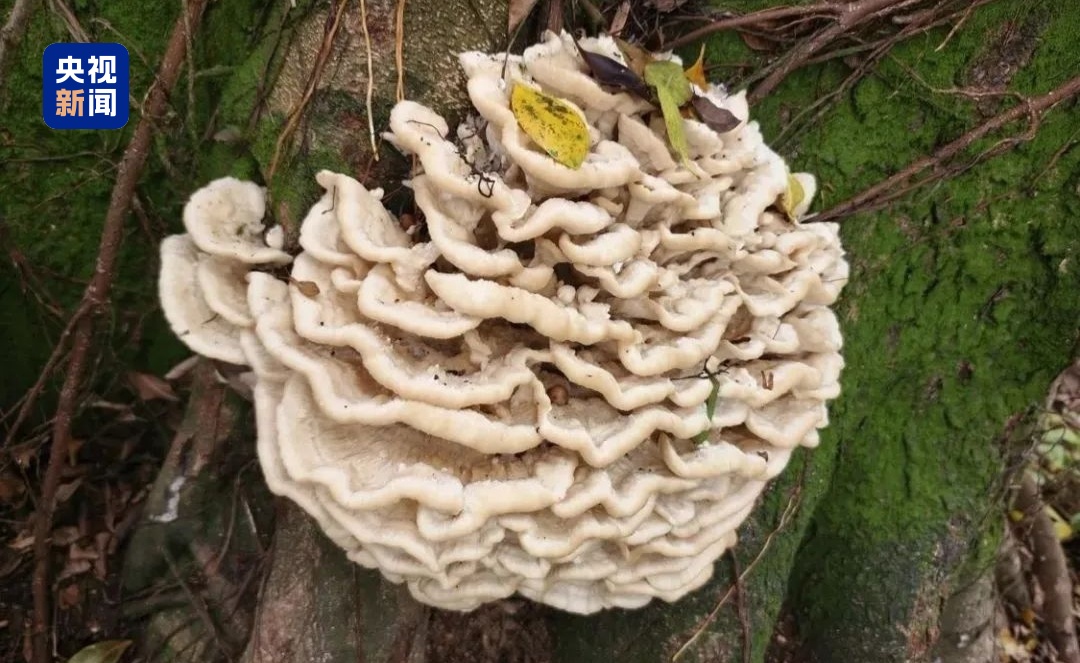
首次发现此真菌 广西发现花状肉齿耳
Yang Shi Xin Wen· 2025-07-31 16:35
Core Viewpoint - The discovery of the flower-shaped meat ear fungus in Guangxi represents a significant addition to the region's biodiversity and provides new opportunities for ecological research [1][3]. Group 1: Discovery and Identification - The Guangxi Forestry Bureau reported the first discovery of a yellow-white fungus with a tile-like growth pattern in the Qipo Forest Farm [1]. - Samples were collected for microscopic observation and molecular sequencing at Jilin Agricultural University, confirming the fungus as the flower-shaped meat ear [1][3]. Group 2: Taxonomy and Conservation Status - The flower-shaped meat ear belongs to the original hair leather fungus family, characterized by its flower-like fruiting body and broad oval spores [3]. - It is listed in the "Red List of Biodiversity in China - Large Fungi Volume" with a conservation status of DD (Data Deficient), indicating insufficient data to assess its threat level [3]. Group 3: Ecological Significance - This discovery enriches the local fungal diversity in Guangxi and provides new clues for further research on the ecological habits and distribution of this species [3].