
英仙座流星雨

Search documents
九月英仙座ε流星雨将于9日迎来极大
Xin Hua She· 2025-09-07 12:54
Core Viewpoint - The September epsilon Perseids meteor shower will peak on September 9, providing an opportunity for enthusiasts to observe this relatively lesser-known meteor shower if weather conditions are favorable [1]. Group 1: Meteor Shower Characteristics - The September epsilon Perseids is a small meteor shower that occurs annually from September 5 to 21, typically peaking around September 9 to 10 [1]. - The radiant point of this meteor shower is located in the Perseus constellation, giving it some recognition, but it is not on the same level as the more famous Perseids meteor shower [3]. - During its peak, the zenithal hourly rate (ZHR) for the September epsilon Perseids is usually in single digits, with notable past peaks reaching around 30 in 2008 and 2013, although such occurrences are unlikely in the coming decades [3]. Group 2: Observation Conditions - Observers can view the meteor shower from 10 PM to dawn, with the best visibility in areas with minimal light pollution, such as rural or mountainous locations [5]. - This year, the peak of the September epsilon Perseids coincides with a waning gibbous moon, making it more challenging to observe the few meteors that may be visible [5]. - Despite the potential difficulty in observing the September epsilon Perseids, the clearer skies of early autumn may allow for the chance to see sporadic meteors [5].


绝美瞬间!全年最适合观测的流星雨“点亮”夜空
Xin Hua She· 2025-08-13 08:26
Core Viewpoint - The Perseid meteor shower reached its peak on the night of August 12 to the early morning of August 13, providing a spectacular viewing experience despite some moonlight interference [2][5][9]. Group 1: Observational Highlights - The Perseid meteor shower is one of the three major meteor showers in the Northern Hemisphere, known for its rich meteor count and vibrant color variations [7]. - Observers in Inner Mongolia's Xilin Gol League reported a successful viewing experience, capturing many bright meteors despite the moonlight [5][11]. - Various locations, including Ningxia and Gansu, also hosted enthusiastic viewers who celebrated the colorful meteors that broke through the moonlight [9][10][12]. Group 2: Community Engagement - Organizations such as the Shanghai Planetarium and the Chinese Academy of Sciences initiated live broadcasts of the meteor shower to engage a wider audience [11]. - Astronomy enthusiasts actively participated in capturing the stunning moments of the meteor shower, contributing to a vibrant community experience [11]. Group 3: Future Observations - The active period of the Perseid meteor shower extends from late July to late August, allowing continued observation opportunities even after the peak [13]. - Although the number of visible meteors may decrease post-peak, the reduced moonlight interference could enhance the chances of spotting bright meteors [13].
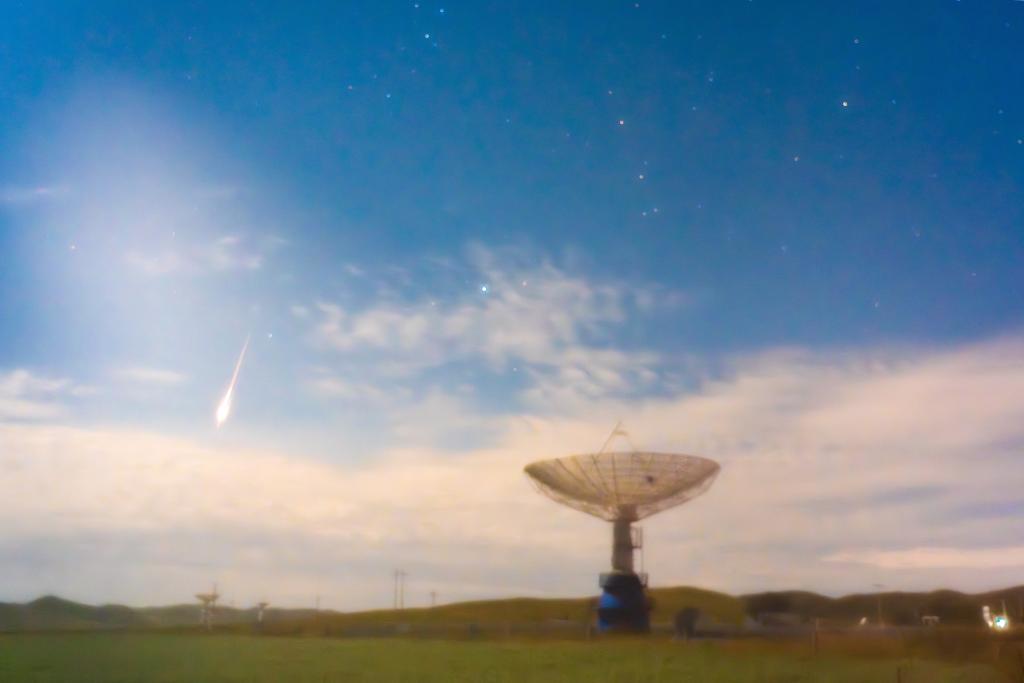
星空有约|英仙座流星雨13日晨迎来极大 或见彩色火流星
Xin Hua She· 2025-08-11 02:55
Core Viewpoint - The Perseid meteor shower, one of the three major meteor showers in the Northern Hemisphere, will peak on the morning of August 13, providing an excellent opportunity for public observation during the summer season [1][2]. Group 1: Meteor Shower Characteristics - The Perseid meteor shower is characterized by a stable flow of meteors, with a Zenithal Hourly Rate (ZHR) of approximately 100 during its peak [1]. - It is known for its fast-moving, bright meteors that leave noticeable trails, making it ideal for observation [1]. Group 2: Observation Timing and Conditions - The active period of the Perseid meteor shower lasts from late July to late August, with the best observation time being the night of August 12 to the morning of August 13 [2]. - Factors that may negatively impact observation include weather conditions, moonlight, and light pollution; however, the presence of colorful fireballs may still allow for visibility despite moonlight interference [2]. Group 3: Observation Recommendations - No special equipment is needed for observation, and it is recommended to observe with the naked eye [2]. - Observers are advised to choose open areas with minimal light pollution, dress appropriately for the weather, and consider going in groups for safety [2].
星空有约|多场流星雨7月底迎来极大 点亮夏日夜空
Xin Hua She· 2025-07-28 03:37
Group 1 - The article discusses the upcoming meteor showers, including the Delta Aquariids, Alpha Capricornids, and Gamma Draconids, which will peak at the end of July, providing opportunities for observation [1][2] - The Delta Aquariids meteor shower is expected to peak around July 30, with its activity period spanning from July 12 to August 23, making it a notable event for sky watchers [1] - The Alpha Capricornids meteor shower will also peak during the same period, known for its bright and slow fireballs, potentially offering a better visual experience compared to the Delta Aquariids [1] Group 2 - The Gamma Draconids and Southern Fish meteor showers will also reach their peak at the end of July, although they are characterized by weaker activity and shorter durations [2] - The Perseids meteor shower, one of the major meteor showers in the Northern Hemisphere, is currently active from July 17 to August 24, adding to the overall meteor activity during this period [2] - Observers are advised to choose open areas with minimal light pollution for the best viewing experience, as meteors can appear in any part of the sky [2]