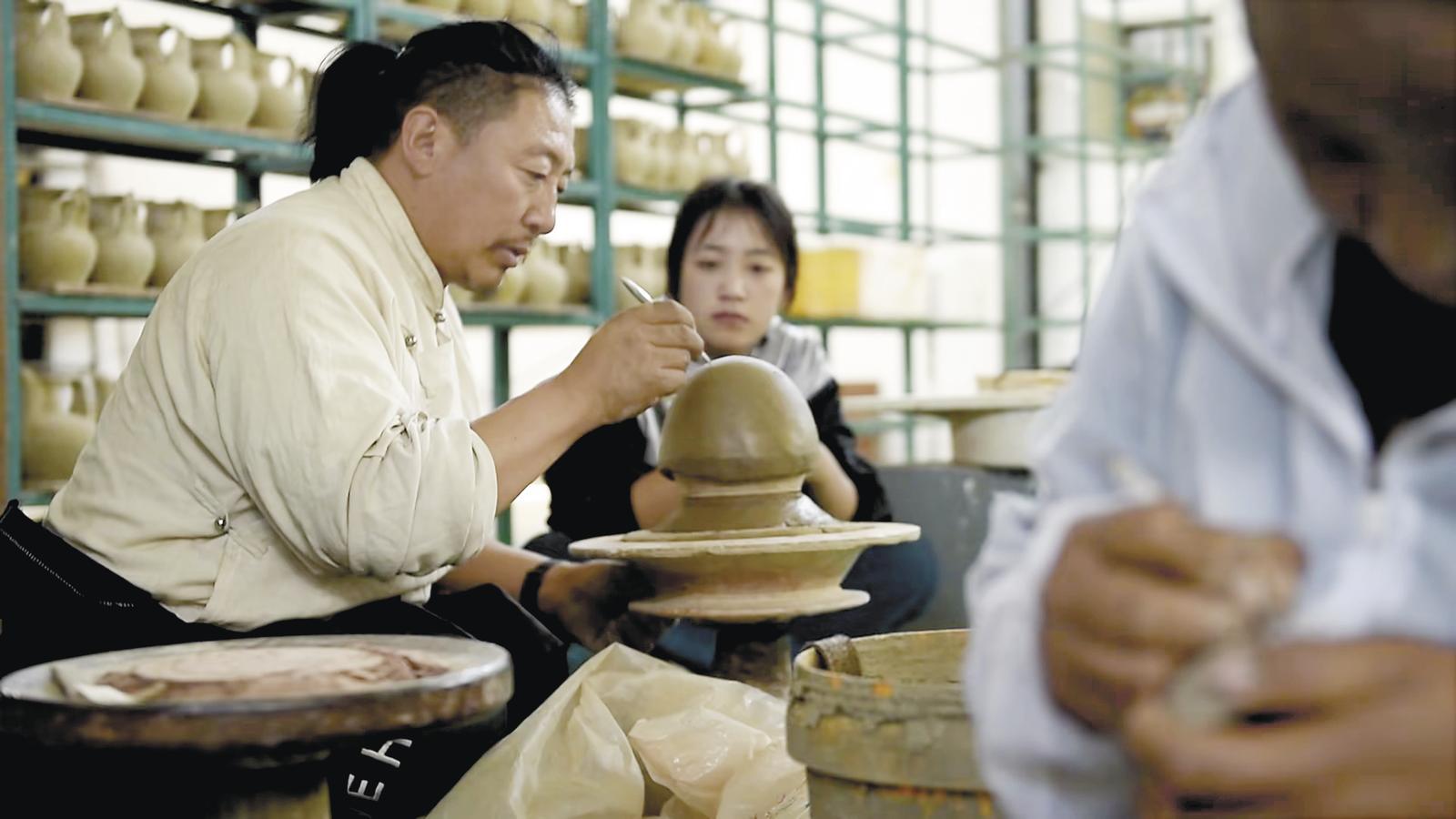
藏黑陶

Search documents
超越泥土藏黑陶
Xin Lang Cai Jing· 2025-12-28 21:32
Core Viewpoint - The article highlights the journey and achievements of Bai Ma Qun Jia, a master of Tibetan black pottery, emphasizing the cultural significance and modern development of this traditional craft in Nangqian County, Qinghai Province [2][5]. Group 1: Cultural Heritage and Craftsmanship - Bai Ma Qun Jia's studio showcases the intricate craftsmanship of Tibetan black pottery, which combines practicality and aesthetics, reflecting the cultural wisdom of the Tibetan people [2]. - The unique characteristics of Tibetan black pottery, such as its durability and artistic appeal, are attributed to the meticulous handcrafting process, which has been preserved through generations [2][5]. Group 2: Development and Modernization - In 2006, Bai Ma Qun Jia established a pottery factory to modernize the production of Tibetan black pottery, aiming to create job opportunities and promote local craftsmanship [4]. - The recognition of Tibetan black pottery as a national intangible cultural heritage in 2008 significantly boosted its popularity and the number of apprentices seeking to learn the craft [5]. Group 3: Social Impact and Community Support - Bai Ma Qun Jia's initiatives have included training programs for local youth, including marginalized groups, helping them find employment and improve their livelihoods through the craft [5]. - The establishment of the Nangqian Tibetan Black Pottery Cultural Research and Development Company in 2014 has further enhanced the visibility and marketability of Tibetan black pottery, expanding its product range and increasing prices [5]. Group 4: Recognition and Future Outlook - Bai Ma Qun Jia was awarded the title of National Rural Craftsman Master in 2024, solidifying his role in the preservation and development of Tibetan black pottery [5]. - The future of Nangqian Tibetan black pottery is viewed positively, with expectations for continued growth and recognition in the modern era [6].