贝因美·爱加

Search documents
研判2025!中国婴幼儿营养品行业发展背景、产业链、产量、市场规模及竞争格局分析:国民消费力不断提高,刺激婴幼儿营养品需求增长[图]
Chan Ye Xin Xi Wang· 2025-04-14 01:26
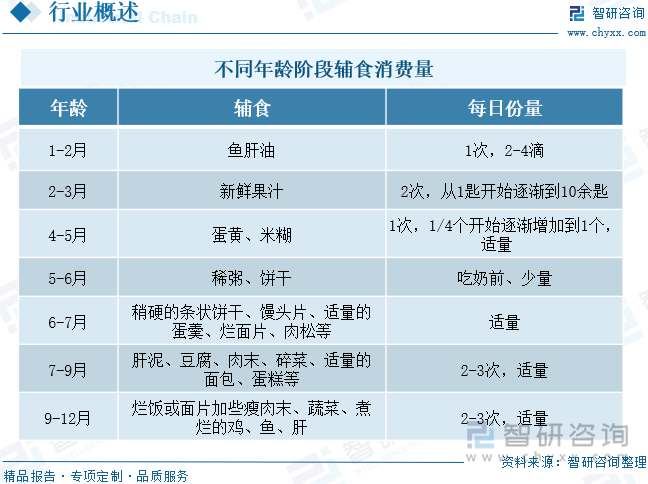
Core Insights - The demand for infant nutrition products in China has significantly changed, with consumers increasingly prioritizing safety, scientific formulation, and functionality, leading to a willingness to pay higher prices for quality products [1][20] - The market size of China's infant nutrition industry has grown from 86.7 billion yuan in 2015 to 156.78 billion yuan in 2023, with a compound annual growth rate (CAGR) of 7.69%, and is projected to reach approximately 168.83 billion yuan in 2024 [1][20] - The industry is expected to focus more on technological innovation and research and development to enhance product nutritional value and safety in response to diverse and personalized consumer demands [1][20] Industry Overview - The infant nutrition industry caters to infants aged 0-3 years, providing essential nutritional supplements and complementary foods tailored to their developmental stages [3] - The industry has evolved through four stages, from a weak foundation post-1949 to a robust market with over 700 manufacturers and a complete product system by the 1990s [9] Market Dynamics - In 2024, China's birth population is projected to be 9.54 million, marking the first year-on-year increase in eight years, which presents new opportunities for the infant nutrition market [6] - The average per capita consumption expenditure for residents in 2024 is expected to be 28,227 yuan, with food and beverage spending accounting for 29.8% of this amount [6] Production and Supply Chain - The infant nutrition product supply chain is structured as an "inverted pyramid," with a wide range of upstream raw materials, including fruits, vegetables, fresh milk, and grains, leading to the production and manufacturing of infant nutrition products [11] - The production of infant nutrition products in China is projected to reach approximately 1.77 million tons in 2024, with infant formula accounting for about 1.563 million tons and complementary foods for about 207,000 tons [16] Competitive Landscape - The market features a diverse and segmented competitive landscape, with both international brands like Wyeth and Mead Johnson and domestic brands like Feihe and Yili competing vigorously [22] - Companies are increasing R&D investments to launch new products that meet the growing demand for high-end, specialized infant nutrition products [22] Future Trends - The industry is expected to emphasize product diversification and refinement, targeting specific age groups and dietary needs with scientifically formulated nutrition products [29] - Technological innovation and R&D capabilities will be crucial competitive factors, with companies collaborating with research institutions to drive advancements [30] - The integration of online and offline sales channels will be a significant trend, enhancing consumer shopping experiences and satisfaction [32] - Brand building and market competition will be vital, with companies focusing on increasing brand awareness and market share through effective marketing strategies [33]