辽宁舰航母编队

Search documents
军情时间到丨我军在台岛周边联合演练阵容显著升级
Yang Shi Xin Wen Ke Hu Duan· 2026-01-03 13:21
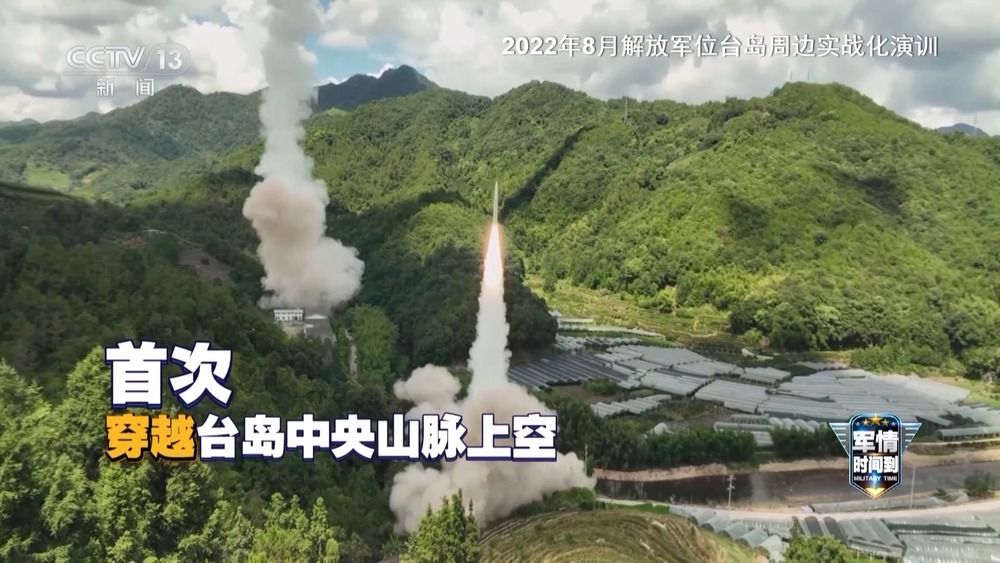
Core Viewpoint - The recent military exercises conducted by the Chinese People's Liberation Army (PLA) around Taiwan demonstrate a significant enhancement in operational capabilities and readiness to defend national sovereignty and territorial integrity [1][10]. Group 1: Military Exercises Overview - The "Justice Mission-2025" exercise began on December 29, 2025, involving multiple branches of the military, including land, sea, air, and rocket forces, focusing on combat readiness and joint operational capabilities [1]. - Since the establishment of the Eastern Theater Command in February 2016, the PLA has been responsible for military readiness and realistic training exercises around Taiwan [1]. - In August 2022, the Eastern Theater Command conducted a series of joint military actions, marking the first time multiple military branches engaged in integrated operations around Taiwan [3]. Group 2: Recent Exercises and Developments - From April 8 to 10, 2023, the Eastern Theater Command organized the "Joint Sword" exercise, which included the participation of the Shandong aircraft carrier for the first time, focusing on regional air dominance and maritime strike operations [5]. - In May and October 2024, the "Joint Sword-2024A" and "Joint Sword-2024B" exercises emphasized joint battlefield control and precision strikes on critical targets, with the Liaoning aircraft carrier participating for the first time [7]. - In April 2025, the "Strait Thunder-2025A" exercise featured the army's long-range firepower conducting live precision strikes on simulated critical targets in the East China Sea [9]. Group 3: Enhanced Capabilities and Strategies - The joint exercises have seen a significant upgrade in the participating forces and equipment, showcasing improved coordination and operational effectiveness among different military branches [10]. - The integration of advanced aircraft like the J-20 and J-16 has demonstrated enhanced offensive capabilities, allowing for effective joint training and operational readiness in close proximity to Taiwan [11][13]. - The exercises have been designed with increased specificity, with some training locations being less than nine kilometers from Taiwan's coastline, enhancing deterrent effects and operational readiness [15]. Group 4: Intelligence and Coordination Improvements - The PLA has improved firepower coordination and intelligence sharing among different military regions, enhancing the efficiency of joint operations [18]. - The ongoing increase in U.S. arms sales to Taiwan has prompted the PLA to adapt its training standards and improve its defensive and offensive capabilities against such threats [20].

辽宁舰编队远海训练视频公布:日本自卫队飞机多次恶意抵近滋扰,冲闯中方演训区,最近距离不到50公里
中国基金报· 2025-12-19 06:51
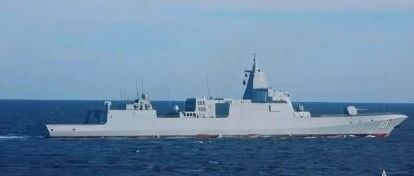
Core Viewpoint - The article discusses the recent training exercises conducted by the Chinese Navy's Liaoning aircraft carrier group in the Miyako Strait, highlighting the communication between Chinese and Japanese naval forces during the operation [2][4]. Group 1: Training Exercises - The Chinese Navy's Liaoning aircraft carrier group organized flight training for carrier-based fighter jets in the eastern waters of the Miyako Strait, with prior notification of the training area to nearby Japanese naval forces [2]. - The Chinese naval vessel, the 055-class destroyer Nanchang (hull number 101), served as the command ship for the carrier group, indicating its role in coordinating the training exercises [7]. Group 2: Japanese Response - Following the commencement of the training, Japanese Self-Defense Force aircraft reportedly approached and interfered with the Chinese training area, coming as close as 50 kilometers [8]. Group 3: Naval Strategy - Destroyers are described as the "sword-bearing attendants" of aircraft carriers, capable of offensive and defensive operations, and play a crucial role in command and control within naval task forces [10]. - The command structure of the carrier group may be located on the destroyer rather than the aircraft carrier itself, as destroyers possess sufficient communication capabilities and space for command personnel [10].