
海马斯

Search documents
军情时间到丨我军在台岛周边联合演练阵容显著升级
Yang Shi Xin Wen Ke Hu Duan· 2026-01-03 13:21
Core Viewpoint - The recent military exercises conducted by the Chinese People's Liberation Army (PLA) around Taiwan demonstrate a significant enhancement in operational capabilities and readiness to defend national sovereignty and territorial integrity [1][10]. Group 1: Military Exercises Overview - The "Justice Mission-2025" exercise began on December 29, 2025, involving multiple branches of the military, including land, sea, air, and rocket forces, focusing on combat readiness and joint operational capabilities [1]. - Since the establishment of the Eastern Theater Command in February 2016, the PLA has been responsible for military readiness and realistic training exercises around Taiwan [1]. - In August 2022, the Eastern Theater Command conducted a series of joint military actions, marking the first time multiple military branches engaged in integrated operations around Taiwan [3]. Group 2: Recent Exercises and Developments - From April 8 to 10, 2023, the Eastern Theater Command organized the "Joint Sword" exercise, which included the participation of the Shandong aircraft carrier for the first time, focusing on regional air dominance and maritime strike operations [5]. - In May and October 2024, the "Joint Sword-2024A" and "Joint Sword-2024B" exercises emphasized joint battlefield control and precision strikes on critical targets, with the Liaoning aircraft carrier participating for the first time [7]. - In April 2025, the "Strait Thunder-2025A" exercise featured the army's long-range firepower conducting live precision strikes on simulated critical targets in the East China Sea [9]. Group 3: Enhanced Capabilities and Strategies - The joint exercises have seen a significant upgrade in the participating forces and equipment, showcasing improved coordination and operational effectiveness among different military branches [10]. - The integration of advanced aircraft like the J-20 and J-16 has demonstrated enhanced offensive capabilities, allowing for effective joint training and operational readiness in close proximity to Taiwan [11][13]. - The exercises have been designed with increased specificity, with some training locations being less than nine kilometers from Taiwan's coastline, enhancing deterrent effects and operational readiness [15]. Group 4: Intelligence and Coordination Improvements - The PLA has improved firepower coordination and intelligence sharing among different military regions, enhancing the efficiency of joint operations [18]. - The ongoing increase in U.S. arms sales to Taiwan has prompted the PLA to adapt its training standards and improve its defensive and offensive capabilities against such threats [20].

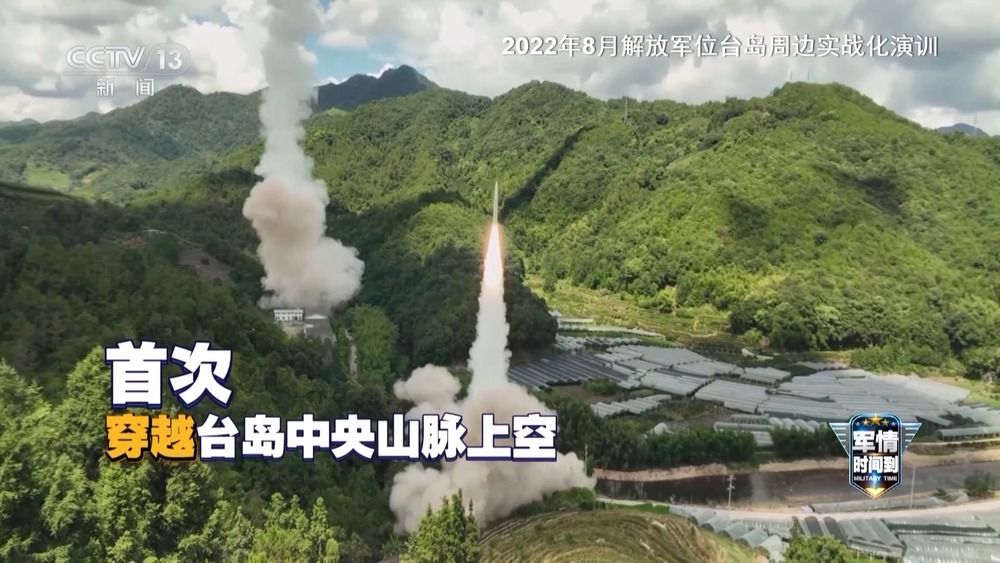
我军在台岛周边联合演练阵容显著升级
Zhong Guo Xin Wen Wang· 2026-01-03 13:14
Core Viewpoint - The recent military exercises conducted by the Chinese People's Liberation Army (PLA) around Taiwan demonstrate a significant upgrade in joint operational capabilities, reflecting a strong commitment to safeguarding national sovereignty and territorial integrity [1][3]. Group 1: Military Exercises Overview - The "Justice Mission-2025" exercise, starting on December 29, 2025, involves multiple branches of the military, including land, sea, air, and rocket forces, focusing on combat readiness and joint operational capabilities [1]. - The "Joint Sword" exercises in April 2023 and subsequent drills in 2024 emphasized integrated operations, including regional air dominance and precision strikes on critical targets [2]. - The PLA's joint exercises have evolved since August 2022, showcasing a comprehensive approach to military operations around Taiwan, with significant advancements in equipment and tactics [3]. Group 2: Tactical Enhancements - The integration of advanced aircraft such as the J-20 and J-16 has enhanced the effectiveness of joint training, demonstrating a high level of operational synergy among different military branches [3]. - Recent exercises have been characterized by their proximity to Taiwan's coastline, with some operations occurring within nine kilometers, significantly increasing the deterrent effect [4]. - The PLA's ability to coordinate firepower and intelligence sharing across different military regions has improved, allowing for more efficient operational responses [5]. Group 3: Response to External Threats - The ongoing increase in U.S. arms sales to Taiwan has prompted the PLA to enhance its defensive and offensive capabilities, ensuring readiness to counter any potential threats [5]. - The PLA's training objectives remain focused on improving real combat capabilities in response to evolving strategic conditions in the Taiwan Strait [5].
军事专家:民进党当局购买多少武器都无法改变两岸军力对比
Zhong Guo Xin Wen Wang· 2025-12-30 02:28
Core Viewpoint - The recent military exercise "Justice Mission-2025" conducted by the Eastern Theater Command of the People's Liberation Army (PLA) demonstrates China's overwhelming military advantage over Taiwan, regardless of external arms purchases by Taiwan's government [1][2]. Group 1: Military Exercise Details - The exercise commenced on December 29 and involved various military operations, including maritime strikes and long-range assaults in the southeastern air and sea areas around Taiwan [1]. - Notably, the exercise featured the participation of China's domestically produced amphibious assault ships, which serve as strategic platforms for land attacks and troop deployment [1]. Group 2: Analysis of External Arms Sales - The expert analysis indicates that external arms sales to Taiwan have significant shortcomings, including low cost-effectiveness and poor adaptability to Taiwan's terrain, which primarily consists of hills and rivers [1]. - Specific equipment mentioned, such as the "HIMARS" and anti-tank missiles, are considered downgraded versions of U.S. military equipment and are expensive [1]. Group 3: Advancements in Military Equipment - The exercise showcased a range of new military equipment, including destroyers, fighter-bombers, drones, early warning aircraft, and electronic warfare planes, highlighting the systematic and integrated use of advanced military assets [2]. - Recent years have seen a rapid modernization of the Chinese military, with new land combat equipment, large surface vessels, and advanced aircraft being inducted into service, enhancing overall combat capability [2]. - The introduction of the third aircraft carrier, Fujian, and the new amphibious assault ship, Sichuan, further exemplifies the advancements in China's military capabilities [2].
“正义使命-2025”演习向台湾岛内传递什么信号?专家解读
Yang Shi Wang· 2025-12-29 19:37
Group 1 - The military exercise "Mission of Justice-2025" is a response to Taiwan's recent military procurement proposals and actions perceived as provocative by the mainland [1][2] - The U.S. has recently sold $11.1 billion worth of arms to Taiwan, including offensive weapons, marking a significant escalation in military support [4] - The exercise serves as a warning against "Taiwan independence" forces and external interference, emphasizing the commitment to national sovereignty and territorial integrity [6] Group 2 - The exercise conveys a clear message to Taiwan, focusing on punishing "Taiwan independence" actions and deterring foreign intervention, encapsulated in the phrase "punish independence, deter America" [7] - It is emphasized that the military drills are not aimed at the Taiwanese public but specifically target "Taiwan independence" forces, highlighting the incompatibility of "Taiwan independence" with peace [9] - The majority of the Taiwanese population has recognized the futility of "Taiwan independence" and the dangers it poses, understanding that external support is unreliable and primarily serves foreign interests [11][13]
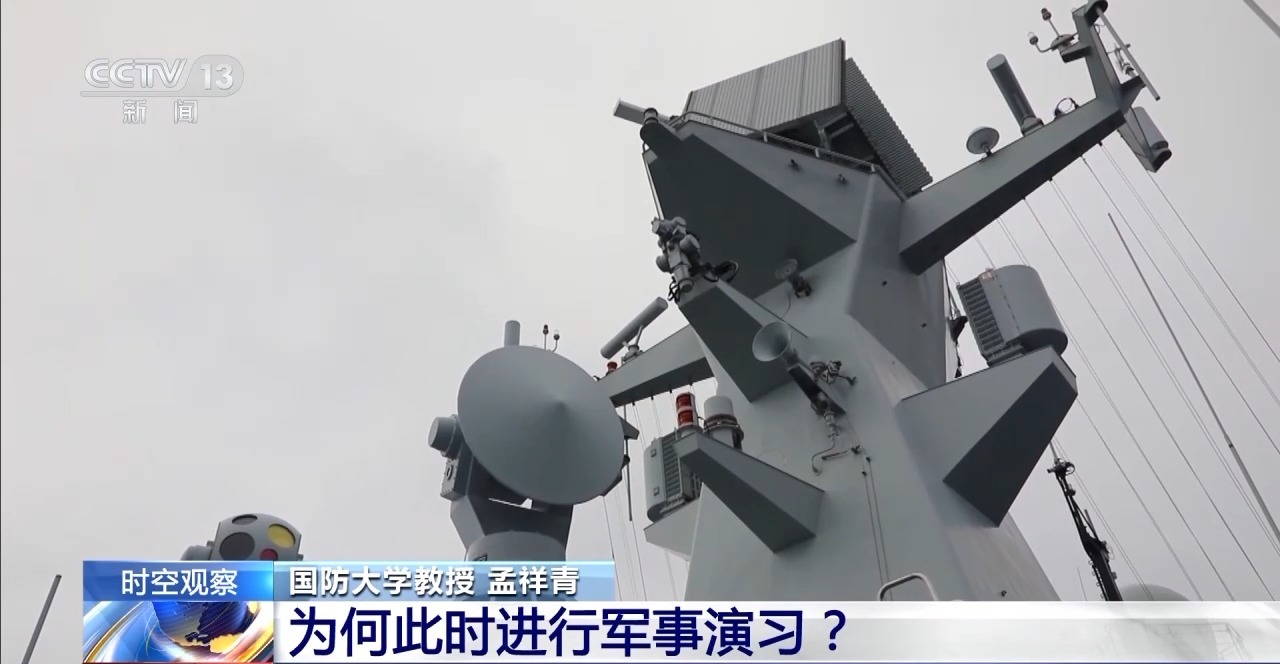
敏感时刻,075两栖攻击舰“首次亮相”
Bei Jing Ri Bao Ke Hu Duan· 2025-12-29 14:49
Core Viewpoint - The ongoing "Mission of Justice-2025" exercise showcases the capabilities of the new amphibious assault ship fleet, bombers, and drones, highlighting the advanced military strength of the People's Liberation Army (PLA) compared to Taiwan's military shortcomings [1][2]. Group 1: Military Capabilities - The 075 amphibious assault ship, which has a displacement of over 30,000 tons, is designed for amphibious assault operations and can deploy a significant number of helicopters and landing craft, capable of delivering approximately one reinforced battalion in a single operation [2][3]. - The exercise features diverse combat modes, including vertical landings using armed helicopters, heavy equipment landings via hovercraft, and parallel landings with amphibious tanks, demonstrating the advanced operational capabilities of the PLA's amphibious assault ships [3][6]. - The PLA's exercise aims to deter external military interference and enhance its ability to conduct joint operations across different military branches, showcasing a high level of coordination and rapid response [6][1]. Group 2: Taiwan's Military Situation - Taiwan's military is heavily reliant on foreign equipment, which often has low cost-effectiveness and poor adaptability to local terrain, leading to operational challenges [4][5]. - Reports indicate that Taiwan's military faced significant issues during the PLA's exercise, including equipment malfunctions and personnel incidents, highlighting the inadequacies in its operational readiness [5][6]. - The integration of Taiwan's military systems is low, lacking in long-range strike capabilities and effective communication between branches, which severely impacts its joint operational effectiveness [6][4].
075型两栖攻击舰首次亮相围台演习 专家:解放军战斗力有四个“十分”
Huan Qiu Wang· 2025-12-29 11:38
Core Viewpoint - The ongoing "Mission of Justice-2025" exercise showcases the capabilities of the new amphibious assault ship fleet, bombers, and drones, highlighting the advanced military strength of the People's Liberation Army (PLA) compared to Taiwan's military shortcomings [1][2]. Military Capabilities - The 075 amphibious assault ship, described as a "weapon for seizing islands," has a displacement of over 30,000 tons and features a full-length flight deck with multiple helicopter landing spots, capable of deploying over 30 helicopters and several hovercraft landing boats [2][3]. - The exercise demonstrated diverse combat modes, including vertical landings using armed helicopters, over-the-horizon landings with hovercraft, and parallel landings with amphibious tanks, showcasing the advanced operational capabilities of the PLA [3]. Strategic Objectives - The exercise aimed to deter external military interference and to simulate precise strikes against key targets to prevent support for Taiwan's independence movement, indicating a strategic focus on both internal and external threats [3][6]. - The PLA's operational strategy was characterized by "internal pressure and external expansion," indicating a tightening of control around Taiwan while pushing back against external interference [3][6]. Comparison with Taiwan's Military - Taiwan's military is heavily reliant on foreign equipment, which has proven to be of low cost-effectiveness and unsuitable for the local terrain, leading to operational challenges [4][5]. - Reports indicate that Taiwan's military faced significant issues during the exercise, including equipment failures and personnel incidents, highlighting the inadequacies in their military readiness compared to the PLA [5][6].
超111亿美元,对台军售美国究竟意欲何为?军事专家犀利点评
Yang Shi Wang· 2025-12-24 07:06
Group 1 - The core viewpoint of the article emphasizes that no amount of advanced weapon sales to Taiwan can prevent China's eventual reunification, and China will take necessary measures to safeguard its sovereignty and territorial integrity [1] - The recent arms sale from the U.S. to Taiwan amounts to over $11.1 billion, marking the largest arms sale in history to Taiwan, with a focus on anti-landing combat equipment [3] - The arms package includes 82 sets of M142 "HIMARS" rocket launchers and 420 M57 "Army Tactical Missiles," valued at $4 billion, which will increase Taiwan's total HIMARS to 111 sets [5] Group 2 - The arms sale also features 1,000 ALTIUS-600M and 700M suicide drones, valued at $1.1 billion, capable of targeting armored land vehicles and surface ships [5] - Additionally, the package includes 1,050 "Javelin" anti-tank missiles and 1,545 TOW-2B anti-tank missiles, totaling $700 million, aimed at post-landing heavy armored targets [5] - The sale further comprises 120 M109A7 "Paladin" self-propelled howitzers, valued at over $4 billion, which will complement the HIMARS systems [5] Group 3 - The U.S. strategy appears to focus on enhancing Taiwan's anti-landing capabilities while reducing the likelihood of direct military intervention, indicating a shift towards accelerating Taiwan's armament [7] - This approach aims to maximize the costs for China in pursuing reunification, while also suggesting that the U.S. is preparing for a potential abandonment of Taiwan by profiting from arms sales [7]
军工的逻辑全变了
Hu Xiu· 2025-05-11 02:50
Core Viewpoint - The article discusses the dynamics of the global arms trade, particularly focusing on the potential rise of China's military exports in the context of declining capabilities of traditional arms suppliers like the US and Russia [20][24]. Group 1: Military Export Dynamics - The article highlights that despite the ongoing conflicts, countries like China are positioned to increase their military exports due to the weakening of traditional powers like the US and Russia [20][24]. - It notes that the US military export capabilities are declining, with specific examples such as the F-35 program facing delays due to material shortages [10]. - The article emphasizes that China has the potential to become a leading military exporter, with a projected export value of $1,030 billion by 2024, suggesting a doubling of current figures [24][25]. Group 2: Competitive Landscape - The article points out that the traditional arms suppliers, namely the US, Russia, and Europe, are facing challenges that could allow China to capture a larger market share [9][10]. - It mentions that European countries are reliant on NATO for military sales, which may limit their individual capabilities to compete effectively [7][8]. - The article also discusses the strategic relationships in the Middle East, where countries like Saudi Arabia continue to purchase US weapons despite the availability of alternatives [5][6]. Group 3: Future Prospects - The article suggests that the current geopolitical climate, including conflicts and the need for cost-effective defense solutions, may drive countries to consider Chinese military products [14][22]. - It indicates that the comprehensive supply chain capabilities of Chinese military manufacturers could lead to significant cost reductions and increased competitiveness in the global market [25]. - The article concludes that the ongoing conflicts and the need for modernization in various countries could create opportunities for Chinese military exports to expand rapidly [20][24].