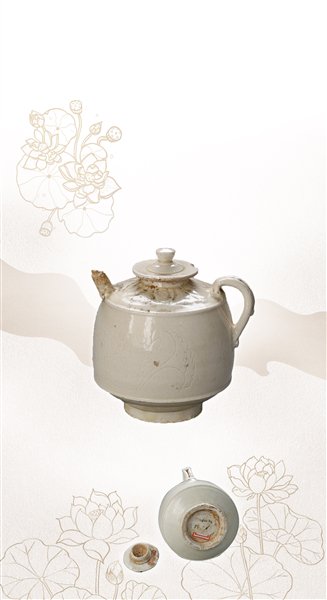
辽白瓷

Search documents
共同创造中华文明
Xin Lang Cai Jing· 2026-01-08 20:05
Group 1 - The establishment of the "Chanyuan Treaty" led to over a century of peace between the Song and Liao dynasties, fostering cultural and trade exchanges, and promoting the development of handicrafts, particularly Liao porcelain [1] - The Northern Song period marked the peak of Ding kiln development, especially in the mid to late Northern Song, where the white porcelain production techniques reached maturity, resulting in thin, fine, and high-quality porcelain with intricate decorations [1] - Archaeological findings indicate that fine Liao white porcelain was primarily produced during the mid to late Liao period, showing significant influence from Ding kiln techniques [1] Group 2 - The rise of "Han-style" porcelain, based on the Cizhou kiln, emerged as the Khitan people absorbed more elements of Central Plains culture, with Liao porcelain showcasing this style in its later products [2] - Liao porcelain products commonly utilized cosmetic clay techniques, featuring simple and plain decorations, and incorporated techniques such as ink painting, calligraphy, and relief carving, reflecting a blend of artistic styles similar to those of the Song dynasty [2] - The influence of Central Plains kilns like Ding and Cizhou on Liao porcelain was both comprehensive and profound, illustrating the cultural exchange and mutual learning between Khitan and Central Plains cultures, contributing to the richness of Chinese civilization [2]
白釉莲开瓷注雅
Xin Lang Cai Jing· 2026-01-08 20:05
Core Viewpoint - Liao white porcelain holds significant value in the history of ceramics, showcasing a blend of cultural influences from the Tang and Song dynasties, and is characterized by its unique aesthetic that reflects both nomadic and agrarian cultures [4][5][6]. Group 1: Historical Context - Liao white porcelain can be traced back to the Tang dynasty's Xing kiln and was influenced by the Song dynasty's Ding kiln, earning the nickname "Northern Ding" [4][5]. - The Liao dynasty, established by the Khitan people, lasted for 218 years and coexisted with the Northern Song and Western Xia dynasties, leading to cultural exchanges [5][6]. - The signing of the "Chanyuan Treaty" in 1005 between the Song and Liao dynasties marked the end of hostilities and fostered peaceful relations, allowing for economic and cultural interactions [5][6]. Group 2: Characteristics of Liao White Porcelain - Liao white porcelain is characterized by a slightly yellowish white glaze, with common shapes including bowls, plates, and jars, primarily decorated with incised or impressed designs [5][6]. - The craftsmanship of Liao porcelain reflects a more rustic quality compared to Central Plains ceramics, influenced by the region's kiln technology and firing conditions [6][7]. - The decorative techniques of Liao porcelain include carving, incising, and dot painting, often featuring motifs from nature, such as plants and animals, with a focus on simplicity and natural beauty [6][7]. Group 3: Cultural Significance - The lotus motif, prevalent in Liao white porcelain, symbolizes purity and is deeply rooted in Confucian ideals, representing a harmonious blend of nomadic and agrarian cultures [7]. - The artistic expression of the lotus in Liao porcelain reflects both the traditional meanings from Central Plains culture and the Khitan people's reverence for nature, showcasing a unique cultural synthesis [7].