迷你胃

Search documents
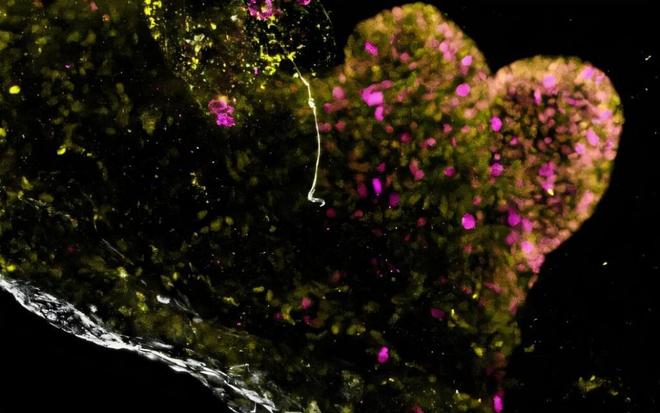
首个全功能“迷你胃”培育成功
Huan Qiu Wang Zi Xun· 2026-01-29 01:35
Core Insights - Scientists from University College London and Great Ormond Street Hospital have developed the world's first "mini-stomach" that includes all key structures of the human stomach, providing a new platform for studying gastric diseases and developing new therapies [1][3] Group 1: Development of the Mini-Stomach - The research team extracted stem cells from patient gastric tissue and guided their development into organoids that simulate real gastric functions, creating three independent organoids representing the fundus, body, and antrum of the stomach, which were then assembled into a multifunctional structure [3] - This "mini-stomach" retains the biological characteristics of the original regions and can collaborate like a real stomach, even secreting gastric acid, which is crucial for food digestion [3] Group 2: Research Applications - The team utilized this model to simulate a rare genetic gastric disease: PMM2-HIPKD-IBD, which is associated with abnormal gastric mucosa that may lead to bleeding, inflammation, and increased cancer risk [3] - The mini-stomach allows for the validation of pathogenic hypotheses and efficient screening of potential drugs, significantly shortening the time for new therapies to move from the lab to clinical settings [3] Group 3: Future Implications - Traditional animal models and single organoids fail to replicate the regional differences and complex functions of the human stomach, while this new technology represents a major breakthrough in accurately simulating specific gastric physiological and pathological states in vitro [4] - This platform is expected to advance personalized medicine, tailoring treatment plans for rare disease patients and becoming a powerful tool in tackling difficult diseases [4]