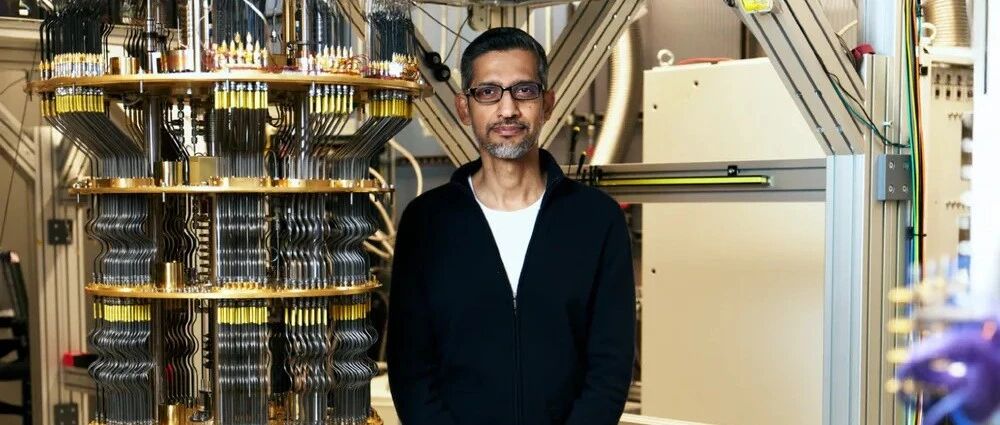
量子回声(Quantum Echoes )算法

Search documents
刚刚,谷歌重大突破!量子计算首次可验证,登《Nature》封面
机器之心· 2025-10-23 02:22
Core Viewpoint - Google's new Quantum Echoes algorithm demonstrates a significant advancement in quantum computing, achieving a speed 13,000 times faster than traditional supercomputers for solving atomic interaction problems, completing calculations in hours that would take the Frontier supercomputer approximately 3.2 years [1][2][5]. Group 1: Algorithm and Technology - The Quantum Echoes algorithm measures a quantum observable known as OTOC (out-of-time-order correlator), which describes how quantum dynamics become chaotic [4]. - This breakthrough is based on decades of technological accumulation and key advancements over the past six years, including the introduction of the Willow quantum chip [5][6]. - The algorithm's results are verifiable, meaning they can be repeated on other quantum computers, confirming the accuracy of the outcomes [14][15]. Group 2: Practical Applications - The new algorithm can utilize nuclear magnetic resonance to explain atomic interactions in molecules, paving the way for future applications in drug development and materials science [6][25]. - The research involved collaboration with institutions like UC Berkeley and Dartmouth College, highlighting the interdisciplinary nature of the work [5][6]. - The algorithm's ability to simulate quantum mechanical phenomena is crucial for understanding molecular structures, which is foundational in chemistry, biology, and materials science [25][26]. Group 3: Experimental Validation - In a verification experiment, Google ran the Quantum Echoes algorithm on the Willow chip to study two molecules, one with 15 atoms and another with 28 atoms, confirming that the quantum results aligned with traditional NMR results while providing additional insights [26]. - This experiment represents a significant step towards a new quantum scope, enabling the measurement of previously unobservable natural phenomena [26].