
金缕玉衣

Search documents
从红薯窖掘出汉王陵 中国考古从“挖宝”到“读史”
Zhong Guo Qing Nian Bao· 2025-12-04 22:20
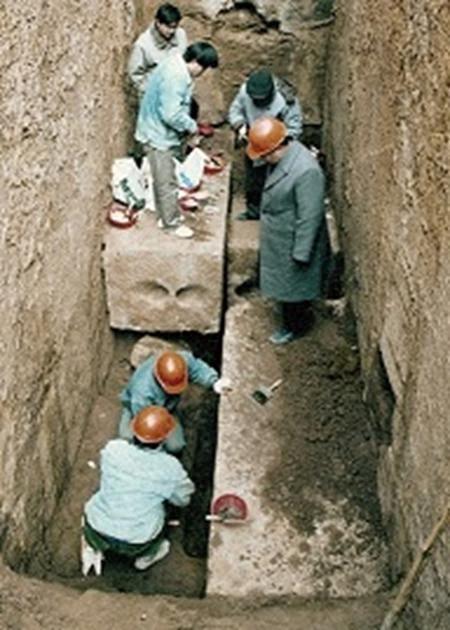
Core Insights - The excavation of the Lion Mountain Western Han Chu King Tomb revealed over 2,000 precious artifacts, including a gold-threaded jade suit made from over 4,000 pieces of jade, and a significant collection of Han dynasty jade artifacts, filling many gaps in Han archaeological studies [4][12] - The excavation process faced numerous challenges, including skepticism from the academic community regarding the site's significance, as it was previously thought that only the Qin Emperor could have such elaborate burial practices [10][12] - The project marked a significant shift in Chinese archaeology from merely "treasure hunting" to a focus on understanding historical contexts and societal structures through artifacts [13][16] Summary by Sections Excavation Details - The Lion Mountain Chu King Tomb is a large-scale Western Han royal tomb, featuring a complex structure with over 12 distinct chambers, showcasing unique burial practices and architectural techniques [4][12] - The excavation began in 1994 after a decade of preliminary investigations, which included advanced technological methods that were not initially successful due to the challenging geological conditions [9][10] Archaeological Significance - The artifacts discovered include over 200 official seals from the Western Han Chu Kingdom, hundreds of thousands of copper coins, and a variety of gold, silver, and bronze items, which are crucial for understanding the burial customs of the Han dynasty [4][12] - The identity of the tomb's occupant remains a topic of academic debate, with theories suggesting it could be the third generation Chu King Liu Wu, based on the tomb's construction and burial practices [16][18] Personal Journey of the Archaeologist - The lead archaeologist, Ge Mingyu, was inspired by his family's cultural background and made a significant career choice to participate in the excavation, which he considers a rare opportunity in an archaeologist's life [7][12] - Ge's experiences reflect a deep commitment to archaeology, emphasizing the importance of preserving and interpreting historical artifacts for future generations [18] Future Directions - There are aspirations to establish a museum at the Lion Mountain site to better showcase the artifacts in their original context, enhancing public understanding of the Chu King's burial practices [18] - The excavation has prompted calls for further research and protection of similar cliff tombs across China, highlighting their cultural and historical significance [18]

西班牙小哥徐州博物馆探秘记
人民网-国际频道 原创稿· 2025-08-06 03:40
Core Points - Xuzhou Museum has been rated as a national first-class museum, showcasing national treasures such as Han Terracotta Warriors, Han Stone Carvings, and Gold Threaded Jade Clothes [2] Group 1 - The museum is recognized for its significant collection of cultural artifacts from the Han dynasty [2] - The collaboration with a Spanish individual highlights the museum's international appeal and cultural exchange [2]