
钒电池

Search documents
钒涨价解读及后续行情展望
2026-03-06 02:02
Summary of Vanadium Market Conference Call Industry Overview - The vanadium market is experiencing a fluctuating upward trend in prices, with a core range between 70,000 to 95,000 CNY per ton in 2026. Short-term price increases are driven by U.S. strategic stockpiling and overseas replenishment, pushing prices near 85,000 CNY, but oversupply is limiting further increases [1][2][7]. Key Points Supply Dynamics - The supply side is highly concentrated, with the top nine companies, including Pangang and Chenggang, accounting for over 90% of the market. The cost of extracting vanadium from stone coal is approximately 90,000 CNY, leading to a halt in production at current average prices of 70,000 to 80,000 CNY. Steel slag extraction has become the dominant method, with costs around 68,000 CNY [1][3][4]. - A confirmed supply increase of about 10,000 tons is expected from the Qinhuangdao project, bringing total supply to approximately 170,000 tons in 2026. If prices exceed 90,000 CNY, flexible production capacities like stone coal extraction may be released, further limiting price increases [2][19]. Demand Trends - The demand structure is shifting, with a decline in construction steel demand and an increase in vanadium battery demand. It is projected that battery demand will reach 35,000 tons in 2026, up from 25,000 tons in 2025, and could grow to 70,000 tons by 2028 [1][12][20]. - The primary consumption sectors for vanadium are steel production and vanadium batteries, with the steel sector's demand declining due to weak real estate and infrastructure-related activities [11][20]. Price Mechanisms - The pricing mechanism is influenced by the concentration of supply, where leading suppliers establish a relatively consistent price range. However, when supply slightly exceeds demand, competitive transactions can lead to price declines. Conversely, when prices approach the cost line of major suppliers, production cuts may be implemented to support price recovery [4][5][11]. - The average cost of vanadium has been decreasing over the past three years, with 2023 averaging around 100,000 CNY, 2024 at 80,000 CNY, and 2025 at 74,000 CNY. A significant selling pressure is expected around the 80,000 CNY mark due to historical inventory costs [5][6][10]. Market Sentiment and Trading Characteristics - Recent price increases since late February 2026 are attributed to external factors, particularly U.S. strategic stockpiling plans, which have led to a rapid price rise in the U.S. market, significantly higher than domestic prices [7][8]. - The domestic market is characterized by a "cash upfront" trading model for raw materials, enhancing the bargaining power of suppliers in the supply chain [2][8]. Inventory and Trading Activity - Current social inventory is approximately 50,000 tons, primarily in the form of vanadium pentoxide and vanadium iron. The inventory has been accumulating since 2020, with significant quantities held by various trading entities [15][20]. - The trading activity is notably influenced by regional dynamics, with significant stocks located in Northeast China and other areas, where speculative trading behaviors are observed [15][20]. Future Outlook - The price trend for 2026 is expected to show two phases: an initial rise driven by market sentiment and capital, followed by a likely correction due to persistent supply exceeding demand. A second wave of demand-driven price increases is anticipated in the latter half of 2026 as battery demand ramps up [12][21]. - The potential for price increases is capped by the ongoing supply from various sources, including the anticipated production from the Qinhuangdao project and the possibility of increased stone coal extraction if prices rise significantly [13][19]. Profit Distribution in the Industry - Profit distribution within the vanadium industry is heavily skewed towards the raw material segment, which accounts for 50%-80% of total profits. Processing segments, such as vanadium nitrogen alloy production, have seen a significant reduction in the number of companies due to long-term losses, dropping from 50 to about 20 [26][27]. Conclusion - The vanadium market is poised for a complex interplay of supply and demand dynamics, with significant implications for pricing and investment opportunities. The ongoing shifts in demand towards vanadium batteries and the concentrated supply structure will be critical factors to monitor in the coming years.
涨价题材能与科技股媲美!马年研究哪些主线?
Sou Hu Cai Jing· 2026-02-21 13:02
Group 1 - The core theme of the article revolves around the investment opportunities in price-increasing themes within the A-share market, particularly in the context of the upcoming horse year [1][2] - Price-increasing themes have gained significant recognition, with notable stocks emerging, such as Xingye Yinxin, Zhongtung Gaoxin, and Zhaojin Gold [1][2] Group 2 - Various price-increasing themes have been identified, including export-controlled metals like rare earths, the impact of US dollar depreciation on gold, silver, copper, and aluminum prices, and the demand from AI driving up prices of tin, electronic fabrics, fiberglass, copper-clad laminates, passive components, and sputtering targets [3][4][5][6] - It is suggested that capturing two or three of these price-increasing varieties can be considered a success [7] Group 3 - Six insights are provided regarding investment in price-increasing themes: 1. Avoid buying high-priced varieties to maintain a better safety margin [8] 2. Focus on varieties with expanding demand rather than those with declining demand [10] 3. Choose companies that directly benefit from price increases, such as mining companies over smelting companies [11][12] 4. Be aware of the high volatility of price-increasing stocks [8] 5. Select varieties with accessible information for better judgment [8] 6. Low-priced varieties may experience a rebound if positive news emerges [16] Group 4 - For the horse year, potential price-increasing themes under consideration include lithium carbonate and vanadium battery storage, with lithium carbonate expected to benefit from controlled production and increased demand for energy storage batteries [19][20] - The global demand for lithium is projected to double by 2030, with significant price increases anticipated for lithium products [20] - The vanadium battery market is expected to grow due to the increasing scale of wind and solar power generation, which requires long-duration energy storage solutions [21][22]

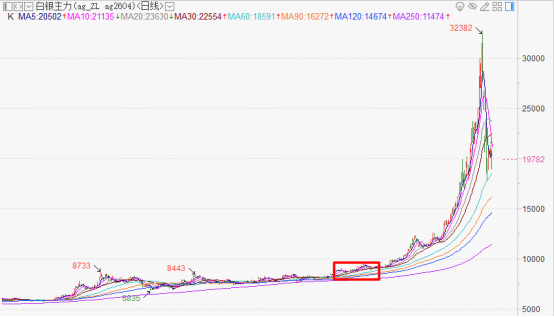
钒钛股份(000629) - 000629钒钛股份投资者关系管理信息20260116
2026-01-16 12:36
Group 1: Company Overview and Products - The company produces a range of vanadium products including vanadium pentoxide, high-vanadium iron, vanadium-nitrogen alloy, and vanadium-aluminum alloy, with an annual production capacity of 185,000 tons of titanium concentrate and 30,000 tons of vanadium products (measured as V2O5) [2][3] - Titanium products include titanium dioxide and titanium slag, with a comprehensive production capacity of 24,000 tons [2] Group 2: Key Projects and Innovations - The company has a 60,000-ton molten salt chlorination titanium dioxide production line, a key project in Sichuan, utilizing local titanium slag and achieving cost-effective resource utilization [4] - The all-vanadium redox flow battery offers advantages such as high power, large capacity, long lifespan, and safety, suitable for large-scale energy storage [4] Group 3: Strategic Partnerships - Since signing a strategic cooperation agreement with Dalian Rongke in September 2021, the company has established a joint venture for a 2,000 cubic meters/year vanadium electrolyte production line, which is operating effectively [4] - In 2024, the company plans to supply approximately 15,000 tons of vanadium products to Dalian Rongke, accounting for 28% of the total vanadium product sales for that year [4] Group 4: Market Response and Performance Improvement Measures - The company is actively sourcing social resources to maximize vanadium product line capacity and is pushing for timely production ramp-up of new titanium dioxide lines [5] - It conducts market research to adjust production based on demand, optimizing product mix to enhance overall profitability [5] - Cost control measures are implemented to reduce manufacturing costs of vanadium and titanium products, while maintaining and expanding sales channels to alleviate sales pressure [5]

这场大会签约22个项目、总金额85亿元
Xin Lang Cai Jing· 2025-12-25 22:29
Core Viewpoint - The conference aims to strengthen the competitiveness of China's vanadium-titanium industry ecosystem through collaboration and project agreements, focusing on advanced materials and technology [1] Group 1: Conference Overview - The "Titanium Metal New Materials Modern Industry Chain Co-Chain Action Conference" was held in Chengdu, with the theme "Gathering Strength in Vanadium and Titanium, Linking the Future" [1] - The conference featured industry exchanges, matchmaking, investment promotion, and concentrated signing of 22 projects with a total value of 8.5 billion yuan [1] Group 2: Project and Economic Impact - The signed projects aim to promote the construction of a more competitive vanadium-titanium industry ecosystem in China [1] - The conference released supply-demand lists for vanadium-titanium products and technologies in Sichuan and Panzhihua, establishing a collaborative system from resource development to high-end applications [1] Group 3: Industry Focus and Growth - Sichuan will focus on cutting-edge fields such as vanadium batteries, energy storage, aerospace carbon, titanium materials, and medical devices, promoting the green, high-end, and intelligent transformation of the vanadium-titanium industry [1] - Panzhihua has established a national vanadium-titanium industry alliance and built the Tianfu Jinjing Laboratory, gathering 58 national and provincial-level innovation platforms [1] - The vanadium-titanium industry in Panzhihua is expected to achieve an output value of over 59 billion yuan this year, maintaining an annual growth rate in double digits, laying a solid foundation for cultivating a trillion-yuan industry cluster [1]
这场钒钛产业供需对接大会,22个项目签约85亿元
Xin Lang Cai Jing· 2025-12-25 14:16
Core Viewpoint - The conference focused on building a competitive ecosystem for the vanadium-titanium industry in China, with a total of 22 projects signed, amounting to 8.5 billion yuan, aimed at enhancing the industry chain and promoting green, high-end, and intelligent transformation [1] Group 1: Conference Overview - The conference titled "Gathering Strength in Vanadium and Titanium, Linking the Future" was held in Chengdu, featuring industry exchanges, matchmaking, investment promotion, and centralized signing [1] - A supply-demand list for vanadium-titanium products and a technology supply-demand list for Panzhihua City were released, aiming to create a collaborative system from resource development to high-end applications [1] Group 2: Industry Development - Panzhihua City ranks third and first globally in vanadium and titanium resource reserves, respectively, and has established a national vanadium-titanium industry alliance [1] - The city has focused on "resource security and controllability, and breakthroughs in high-end materials," with a projected industry output value of 59 billion yuan this year, maintaining double-digit growth annually [1]
投资5亿元!一储能项目签约湖南长沙
鑫椤储能· 2025-10-17 02:09
Core Viewpoint - The article highlights the successful signing of 12 industrial projects in the Yuelu High-tech Zone of Changsha, Hunan, including a significant investment by Hunan YinFeng New Energy Co., Ltd. in the vanadium battery research and production base and headquarters, which aims to enhance the development of the new energy and new materials industry in the region [1]. Summary by Relevant Sections - Investment Details - Hunan YinFeng New Energy Co., Ltd. is investing 500 million yuan to establish a vanadium battery research and production base and headquarters in Changsha [1]. - Industry Impact - The establishment of the vanadium battery base is expected to inject new momentum into the development of the new energy and new materials industry in the Yuelu High-tech Zone [1].

永泰能源以“光储融合”促进矿山绿色转型
Zheng Quan Ri Bao Zhi Sheng· 2025-09-26 15:40
Core Viewpoint - The recent guidance from the National Energy Administration emphasizes the development of high-quality energy storage equipment, particularly focusing on low-cost long-duration flow battery systems and enhancing the intrinsic safety performance of storage batteries [1][2]. Group 1: Energy Storage Equipment Development - The guidance highlights the need for a high-safety and high-reliability energy storage equipment system, specifically mentioning the construction of low-cost long-duration vanadium-based, iron-based, and organic flow battery systems [1]. - The "mining + energy storage" model is being explored by traditional mining companies to achieve safe operations and low-carbon development, with Yongtai Energy leveraging its advantages in the vanadium battery storage industry [1][2]. Group 2: Yongtai Energy's Initiatives - Yongtai Energy's Nanshan Coal Mine launched a vanadium battery storage project in September last year, integrating a 2.7MWp distributed photovoltaic system with a 1.5MW/6MWh vanadium battery storage system, providing 4 hours of long-duration storage capacity [3]. - As of September this year, the Nanshan Coal Mine's photovoltaic system has generated 2.94 million kWh, with the storage system completing 186 charge-discharge cycles, saving significant electricity costs and providing emergency power [3]. Group 3: Technological Innovations and Challenges - Despite the promising outlook, the large-scale promotion of vanadium battery systems in mining faces challenges, including high initial costs (2 to 3 times that of lithium-ion batteries), low energy density, and temperature limitations [4]. - Yongtai Energy's subsidiary, Vnergy, is addressing these challenges with innovative solid capacity-enhancing materials, which can reduce the cost of positive electrolyte solutions by 40% to 60% and expand the operational temperature range [4][5]. Group 4: Market Potential and Policy Support - The "mining + energy storage" market has significant potential, supported by national policies such as the "New Type Energy Storage Scale Construction Special Action Plan (2025-2027)," which aims to increase the installed capacity of new energy storage [5]. - The integration of photovoltaic and long-duration storage models aligns with the trend of green transformation in mining, indicating a strong demand for energy storage solutions in high-energy-consuming sectors [5].

永泰能源:迎接储能黄金十年,执光储“黄金钥”开启绿色矿山新纪元
Zheng Quan Shi Bao Wang· 2025-09-25 10:20
Core Insights - The article emphasizes the importance of developing a self-controlled supply chain for key energy equipment in China by 2030, particularly focusing on high-safety and high-reliability energy storage systems [1] - The policy encourages the integration of traditional mining operations with renewable energy solutions, specifically through the use of vanadium-based flow batteries [1][2] - Yongtai Energy is highlighted as a leader in this transition, leveraging its full industry chain advantages in vanadium battery storage to drive green transformation in mining [2][8] Policy and Industry Context - The National Energy Administration and other departments have issued guidelines to promote high-quality development in energy equipment, aiming for a low-cost, long-duration flow battery system [1] - The mining sector is adopting a "solar-storage integration + technological innovation" model to address safety and low-carbon development challenges [1] - A specific requirement from Shanxi Province mandates that all operational coal mines must implement dual-circuit power supply and emergency power systems, creating a favorable policy environment for energy storage applications [1] Technological Advancements - Yongtai Energy's Nanshan Coal Mine project integrates 2.7 MWp of distributed solar power with a 1.5 MW/6 MWh vanadium battery storage system, demonstrating a successful model for clean energy supply and safety [2][4] - The vanadium battery storage project has achieved significant milestones, including 294,000 MWh of cumulative solar generation and over 76,000 MWh of discharge, providing substantial cost savings and emergency power support [4] - Vnergy, a subsidiary of Yongtai Energy, has developed a groundbreaking solid-state material for vanadium flow batteries, significantly reducing costs and expanding operational temperature ranges [6][7] Market Opportunities and Future Outlook - The comprehensive approach of Yongtai Energy, combining resources, technology, and projects, positions the company to capitalize on policy incentives and technological innovations [8] - The implementation of the "New Type Energy Storage Scale Construction Special Action Plan (2025-2027)" is expected to create new opportunities for vanadium battery technology in the mining sector [8] - Yongtai Energy aims to facilitate the transition from traditional coal to green energy, injecting innovative vitality into the new energy system construction [8]
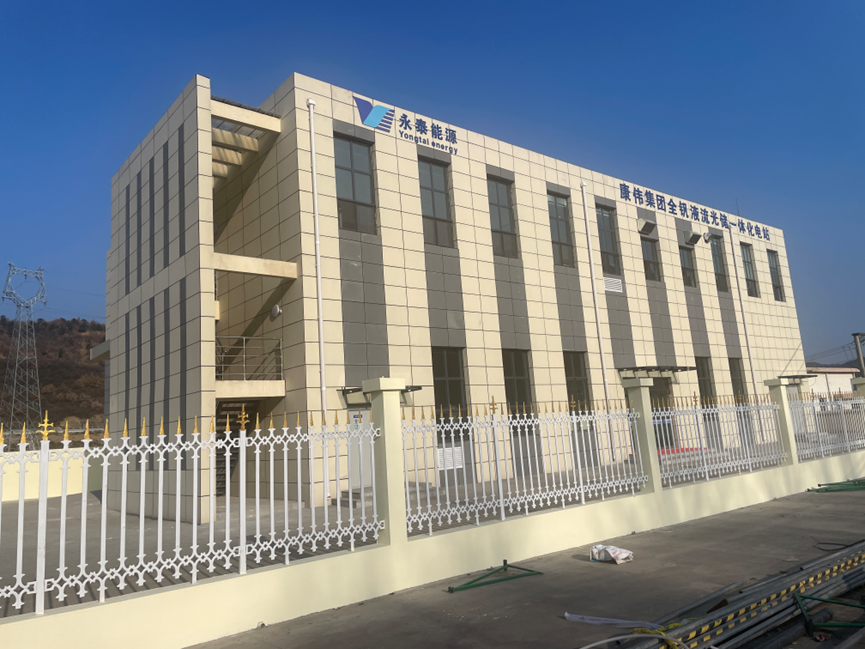
钒钛产业存在低端产能过剩现象 业内人士:应避免资源超前过度开发
Mei Ri Jing Ji Xin Wen· 2025-06-11 14:11
Core Insights - The vanadium battery industry is in its early development stage compared to lithium batteries, despite gaining significant market attention as a storage technology [1][2] - The "2025 China Vanadium-Titanium Industry Development Micro Report" indicates a shift in vanadium application from steel to energy storage, with energy storage applications reaching 16.3% in China, significantly higher than the 9.93% seen internationally [1][2] Industry Overview - The report highlights that the domestic vanadium industry is forming a strong leadership structure, with companies like Dalian Rongke and Shanghai Electric emerging as key players in the vanadium battery sector [2] - The projected growth for vanadium battery installations is substantial, with an expected addition of 2.3 GW by 2025 and 4.5 GW by 2030, leading to a cumulative installed capacity of 24 GW [2] Market Challenges - Despite the growth in vanadium battery applications, the industry faces significant cost pressures, with the system investment cost for vanadium batteries estimated at 2300-2500 RMB/kWh, compared to 1500-2000 RMB/kWh for lithium-ion batteries [4] - The report notes that the vanadium industry is experiencing overcapacity and low profitability due to excessive focus on resource extraction rather than balancing supply and demand [5] Future Directions - Industry experts suggest that the future of vanadium batteries lies in accelerating technological innovation, expanding production scale, and exploring new business models [3][4] - The establishment of collaborative research initiatives and shared development centers is recommended to overcome key technological challenges [3]
我国钒钛产业产能产量保持全球第一
Zhong Guo Jing Ji Wang· 2025-06-11 06:24
Core Insights - The 2025 China Vanadium-Titanium Industry Development Report was released, highlighting the industry's potential for high-quality growth driven by strategic support and resource advantages [1] Group 1: Industry Characteristics - In 2024, China's vanadium-titanium industry maintained its position as the global leader in production capacity and output, supported by national policies and market demand [2] - China's titanium resource reserves are 110 million tons, ranking second globally, while vanadium reserves are the highest in the world, with current resources expected to last over 100 years [2] - The industry has formed a "3+N" spatial layout, with key resource clusters in the Panxi, Chengde-Chaoyang, and Hami-Kashgar regions, leading to increased concentration and competitiveness among leading enterprises [2] Group 2: Application and Growth - In the vanadium application sector, consumption reached 118,600 tons in 2024, a 2% increase from 2023, with energy storage applications accounting for 16.3% of total consumption, reflecting a 5.5 percentage point increase [2] - Titanium consumption in 2024 reached 150,000 tons, also a 2% increase year-on-year, driven by significant demand growth in the chemical and aerospace sectors [2] Group 3: Challenges - The industry faces challenges such as overheating investments and mismatched supply and demand, leading to low profitability due to excess low-end capacity in various production areas [3] Group 4: Development Recommendations - The reports recommend enhancing top-level design and optimizing industry layout through national planning and support for leading enterprises in key sectors [4] - Establishing industry entry barriers to prevent low-level redundant construction and promoting collaborative innovation to address common industry challenges [4] - Emphasizing green transformation and sustainable development by adopting energy-saving technologies and developing environmentally friendly production methods [4] - Advocating for the alignment of industry standards with international norms to enhance global influence and competitiveness [4] Group 5: Future Outlook - With the enhancement of high-end manufacturing capabilities and expanding application fields, the vanadium-titanium industry in China is poised to accelerate its high-quality development and potentially dominate the global value chain [5]