绿色转型

Search documents
中国海油:公司事件点评报告:油价下行拖累业绩、高储备低成本支撑盈利弹性-20260401
Huaxin Securities· 2026-04-01 08:24
Investment Rating - The report maintains a "Buy" investment rating for China National Offshore Oil Corporation (CNOOC) [1] Core Views - The company's performance in 2025 was primarily impacted by declining international oil prices, with a total revenue of 398.22 billion yuan, down 5.30% year-on-year, and a net profit of 122.08 billion yuan, down 11.49% year-on-year [1][2] - Despite the pressure from lower oil prices, the company demonstrated strong profitability resilience through production growth and cost control, achieving a net production of 777.3 million barrels of oil equivalent, a 6.95% increase year-on-year [2] - The company’s average realized oil price was $66.47 per barrel, a decrease of 13.4% year-on-year, while natural gas prices increased by 3.0% to $7.95 per thousand cubic feet [2] Summary by Sections Financial Performance - In Q4 2025, the company reported a revenue of 85.72 billion yuan, a decrease of 9.28% year-on-year and 18.28% quarter-on-quarter, with a net profit of 20.11 billion yuan, down 5.48% year-on-year and 38.00% quarter-on-quarter [1] - The company’s operating cash flow was 209.04 billion yuan, a decrease of 11.85 billion yuan compared to the previous year, mainly due to reduced oil and gas sales revenue [3] Cost Management - The company achieved a barrel of oil equivalent cost of $27.9, maintaining a cost advantage [2] - The expense ratios for sales, management, R&D, and financial costs were 0.99%, 1.95%, 0.42%, and 0.21% respectively, with slight increases in most areas due to production growth [3] Resource Development - CNOOC's proven reserves reached 7.77 billion barrels, with a reserve life of 10 years, supporting long-term production growth [7] - The company has 80 ongoing projects, including the successful launch of 16 new projects, which are expected to contribute to future growth [7] Profit Forecast - The forecast for net profit for 2026-2028 is 145.92 billion yuan, 150.17 billion yuan, and 163.76 billion yuan respectively, with corresponding P/E ratios of 13.4, 13.0, and 11.9 [8][10]

中国海油(600938):公司事件点评报告:油价下行拖累业绩、高储备低成本支撑盈利弹性
Huaxin Securities· 2026-04-01 07:29
Investment Rating - The report maintains a "Buy" investment rating for China National Offshore Oil Corporation (CNOOC) [1][8]. Core Views - The company's performance in 2025 was primarily impacted by declining international oil prices, with a total revenue of CNY 398.22 billion, down 5.30% year-on-year, and a net profit of CNY 122.08 billion, down 11.49% year-on-year [1][2]. - Despite the pressure from lower oil prices, CNOOC demonstrated strong profitability resilience through production growth and cost control, achieving a net production of 777.3 million barrels of oil equivalent, a 6.95% increase year-on-year [2][3]. - The company has a solid resource reserve, with confirmed reserves reaching 7.77 billion barrels and a reserve life of 10 years, which supports long-term growth [7]. Summary by Sections Financial Performance - In Q4 2025, CNOOC reported a revenue of CNY 85.72 billion, a decrease of 9.28% year-on-year and 18.28% quarter-on-quarter, with a net profit of CNY 20.11 billion, down 5.48% year-on-year and 38.00% quarter-on-quarter [1]. - The average realized oil price for 2025 was USD 66.47 per barrel, a decline of 13.4% year-on-year, while the average natural gas price increased by 3.0% to USD 7.95 per thousand cubic feet [2]. Cost Management - CNOOC's cost per barrel of oil equivalent decreased to USD 27.9, reflecting ongoing cost advantages [2]. - The company maintained a stable cash flow with a net cash flow from operating activities of CNY 209.04 billion, despite a decrease of CNY 11.85 billion compared to the previous year [3]. Shareholder Returns - CNOOC distributed a total dividend of CNY 54.76 billion in 2025, with a payout ratio of 44.85% and a dividend yield of 3.82% [3]. Growth Prospects - The company is expanding its resource reserves and has 80 ongoing projects, with significant progress in new projects like the Guyana Yellowtail [7]. - CNOOC's net profit forecasts for 2026, 2027, and 2028 are CNY 145.92 billion, CNY 150.17 billion, and CNY 163.76 billion, respectively, indicating a recovery in profitability [8][10].
顺着“十五五”的绿灯,混沌拼出了一张2026破局全景图
混沌学园· 2026-03-31 12:10
Core Viewpoint - The article emphasizes the overwhelming information overload and knowledge anxiety caused by the proliferation of computing power, urging companies to focus on macroeconomic strategies rather than getting lost in micro-level tactics [2][3]. Group 1: Technological Foundation - The article highlights the importance of grounding in technological foundations, stating that AI is no longer just a buzzword but is actively reconstructing the underlying infrastructure of various industries [8]. - It outlines six key strategies to transform technology into profit and organizational efficiency, focusing on practical applications rather than theoretical anxieties [11][12]. - The need for companies to adapt to AI-driven transformations is underscored, with practical guides provided for navigating the complexities of AI integration [13][16]. Group 2: Crossing Physical Boundaries - The article discusses the critical industrial revolution occurring at the intersection of advanced technology and physical industries, which is essential for overcoming the middle-income trap [22]. - It presents insights from industry experts on the investment landscape, emphasizing the importance of understanding the financial truths behind the current AI boom [24][25]. - The article also highlights the potential for new global brands to emerge from the combination of cutting-edge technology and strong industrial chains in China [25]. Group 3: Reshaping Real Demand - The article notes a significant shift in consumer demand driven by demographic changes, indicating that traditional marketing strategies are becoming obsolete [28]. - It provides actionable strategies for companies to navigate the new landscape of consumer behavior, focusing on sustainable growth and innovative business models [32][33]. - The need for brands to adapt to changing consumer expectations and to create genuine value is emphasized, with examples of successful case studies provided [34][38]. Group 4: Expanding Survival Space - The article stresses the necessity for companies to seek strategic expansion beyond domestic markets in response to intense competition [41]. - It outlines a structured approach for businesses to identify high-potential markets and develop robust systems for international growth [45][46]. - The importance of leveraging AI tools for strategic insights and brand positioning in global markets is highlighted, encouraging companies to build long-term brand equity [46].


美的集团: 基本盘稳固,商业及工业成长更快
Zhong Guo Yin He Zheng Quan· 2026-03-31 07:45
Investment Rating - The report maintains a "Recommended" rating for Midea Group (stock code: 000333) [1] Core Insights - Midea Group's revenue for 2025 reached 456.5 billion yuan, a year-on-year increase of 12.1%, with a net profit attributable to shareholders of 43.9 billion yuan, up 14.0% year-on-year [5][7] - The company has a high return on equity (ROE) of 19.7%, indicating strong profitability [5] - Midea's cash flow supports a high dividend payout ratio of 73.6%, which has increased by 4.3 percentage points year-on-year [5] - The company is focusing on both domestic and international markets, with domestic revenue of 260.5 billion yuan and international revenue of 195.9 billion yuan, reflecting year-on-year growth of 9.4% and 15.9% respectively [10] Financial Performance - Midea Group's projected revenue for 2026-2028 is estimated at 489.6 billion yuan, 523.4 billion yuan, and 561.2 billion yuan, representing year-on-year growth rates of 6.8%, 6.9%, and 7.2% respectively [6] - The net profit for the same period is expected to be 47.0 billion yuan, 50.6 billion yuan, and 54.9 billion yuan, with growth rates of 6.9%, 7.7%, and 8.4% respectively [6] - The earnings per share (EPS) are projected to be 6.18 yuan, 6.66 yuan, and 7.22 yuan for 2026, 2027, and 2028 respectively [6] Business Segments - Midea's smart home business generated revenue of 299.9 billion yuan in 2025, growing by 11.3% year-on-year, maintaining a leading global market share [5][9] - The commercial and industrial solutions segment achieved revenue of 122.8 billion yuan, a year-on-year increase of 17.5%, becoming a significant growth driver for the company [5][9] - The company has successfully transitioned from a central air conditioning supplier to a provider of integrated smart building solutions, with significant market shares in various product categories [5][9] Market Position - Midea's market capitalization for circulating A-shares is approximately 494 billion yuan, with a corresponding dividend yield of 5.9% [2] - The company has implemented stock repurchase plans totaling over 116 billion yuan, enhancing shareholder value [5] - Midea's competitive positioning is strengthened by its extensive global supply chain and digital platform, which supports thousands of small retailers [5][10]

好书推荐·赠书|《前瞻“十五五”》
清华金融评论· 2026-03-27 10:02
Core Viewpoint - The article emphasizes the importance of the "14th Five-Year Plan" period as a critical phase for achieving socialist modernization and addressing the challenges posed by global changes, focusing on innovation, consumption, and structural reforms to drive economic growth [3][4]. Summary by Sections Introduction: New Framework for Growth - The need for a new growth framework is highlighted, focusing on innovation and consumption as key drivers for economic expansion [6]. Chapter 1: Innovation and Consumption - Emphasizes the potential for greater growth through embracing innovation and enhancing consumption [6]. Chapter 2: Systemic Structural Transformation - Discusses the transition towards modernization through systemic structural changes, including supply-side and demand-side transformations [7][10]. Chapter 3: Key to Boosting Consumption Demand - Analyzes why demand remains insufficient despite stimulus efforts, referencing Keynesian theory and historical contexts [8][10]. Chapter 4: Achieving Consumption Prosperity - Outlines strategies for promoting consumption during the "14th Five-Year Plan" period, including international experiences and macro policy adjustments [9][10]. Chapter 5: Industrial Upgrading Beyond $10,000 Income - Examines the challenges and experiences of industrial transformation as income levels exceed $10,000 per capita [10][11]. Chapter 6: High-Level Opening for High-Income Status - Reviews the role of openness in driving rapid economic development and enhancing international competitiveness [11][13]. Chapter 7: Income Distribution Reform for Inclusive Growth - Discusses the importance of income distribution reforms in promoting inclusive economic growth [11][13]. Chapter 8: Coordinated Reforms for Consumption, Social Security, and Stock Market Stability - Proposes a coordinated approach to enhance consumption rates and stabilize the stock market [11][12]. Chapter 9: Financing Transformation and Industrial Upgrading - Explores the mechanisms through which financial markets can support economic and social development [12][13]. Chapter 10: Exchange Rate Mechanism Reform and RMB Internationalization - Discusses the current state and future recommendations for RMB internationalization during the "14th Five-Year Plan" [12][13]. Chapter 11: Capital Market Development Strategies - Highlights the strategic significance of developing capital markets and the challenges faced [12][13]. Chapter 12: AI and Deep Integration with the Real Economy - Reviews the significant advancements in AI and its implications for the real economy [12][19]. Chapter 13: Pathways to Green Growth - Identifies innovation as a fundamental driver for green transformation and outlines structural challenges [12][19]. Chapter 14: Building New Urban-Rural Integration - Discusses the characteristics and policy choices for achieving urban-rural integration in China [12][19].

百年情缘今再续:巴斯夫项目在粤投产背后的吸引力与支撑力
Nan Fang Du Shi Bao· 2026-03-27 06:53
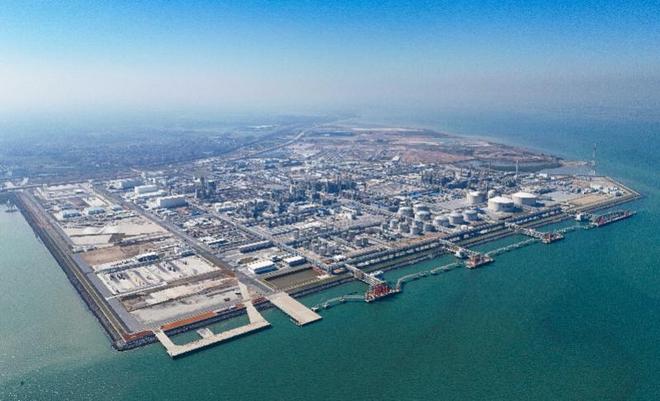
Core Viewpoint - BASF's integrated base in Guangdong, with an investment of approximately €8.7 billion, marks the company's largest single investment in China and signifies its long-term commitment to the Chinese market [1][5][16]. Investment and Development - The BASF (Guangdong) integrated base officially commenced operations on March 26, 2026, and is the company's seventh integrated production facility globally, covering an area of about 4 square kilometers and employing over 2,000 staff [5][10]. - The project aims to produce a diverse range of products, including basic chemicals, intermediates, and specialty chemicals, which will help reduce China's reliance on high-end product imports [5][10]. Strategic Location and Support - Guangdong was chosen for the project due to its status as a strong economic province and a leader in reform and opening-up, with significant demand from industries such as automotive and electronics [7][10]. - The location in Zhanjiang benefits from excellent transportation infrastructure, facilitating efficient import of raw materials and distribution of products [7][10]. Environmental and Technological Innovations - The integrated base is designed to significantly lower carbon emissions, with a potential reduction of up to 50% compared to traditional petrochemical facilities [8][10]. - The facility features the world's first ethylene unit powered entirely by renewable energy, with an annual capacity of 1 million tons, producing high-quality, low-carbon products [8][10]. Market Outlook and Future Plans - BASF's investment reflects confidence in China's chemical market, which is seen as a growth engine due to its transition towards high-quality development [7][13]. - The company aims to align its climate-neutral roadmap with China's dual carbon goals, targeting a 25% reduction in greenhouse gas emissions by 2030 compared to 2018 levels, and achieving net-zero emissions by 2050 [11][12]. Industry Context - The establishment of the BASF integrated base is viewed as a model for foreign enterprises to seize new opportunities in China's evolving market, highlighting the importance of the Chinese market for sustainable growth and technological innovation [17].

下周!西湖大学/江南大学/微构工场/利夫生物/三黍生物等专家齐聚杭州【生物基化学品与材料专场】,免费报名参会!
synbio新材料· 2026-03-27 02:46
Core Viewpoint - The article emphasizes the importance of bio-based chemicals and materials as a key pillar of the bio-manufacturing industry, highlighting their potential to replace traditional petroleum-based products in various sectors such as packaging, textiles, and automotive, driven by global green transformation and carbon neutrality goals [2]. Event Details - The "5th China Synthetic Biology and Bio-Manufacturing Conference" will be held in Hangzhou from March 31 to April 1, 2026, with a focus on bio-based chemicals and materials [3]. - The conference is expected to attract around 1,000 participants and is organized by synbio深波, in collaboration with Jiangnan University [3]. Forum Agenda - The forum will feature a dedicated session on bio-based chemicals and materials, with notable speakers including: - Zhang Kechun, Professor at West Lake University, discussing "Synthetic Biology Empowering New Materials" [6]. - Chen Xiulai, Professor at Jiangnan University, presenting on "Key Technologies and Applications for Microbial Cell Factory Construction" [11]. - Lan Yuxuan, Co-founder of Beijing Microstructure Biotechnology Co., discussing "Next-Generation Industrial Biotechnology for Low-Cost Production of High-Performance PHA" [13]. - Zhou Wenzhi, CEO of Jiangsu Sanmu Biotechnology Co., focusing on "Industrialization Innovation and Implementation of Starch-Based Bio-Manufacturing Driven by Synthetic Biology" [19]. Industry Impact - The conference aims to gather insights from academia, industry, and research to promote high-quality development in the bio-based chemicals and materials sector, which is seen as crucial for the global green transition [2].

巴斯夫(广东)一体化基地全面投产,不只是上个大项目
Nan Fang Du Shi Bao· 2026-03-26 08:36
Core Viewpoint - The BASF (Guangdong) integrated base has officially commenced operations, marking a significant milestone as China's first wholly foreign-owned large-scale petrochemical project with an investment of approximately €8.7 billion, the largest single investment by BASF and any German company in China [1][2]. Group 1: Project Significance - The project is a testament to China's improving business environment and its commitment to attracting global quality resources through legal, international, and convenient business practices [1]. - The successful completion of the project amidst global challenges such as the pandemic and supply chain disruptions highlights the resilience of foreign investment in China [1][3]. Group 2: Economic Impact - The BASF (Guangdong) integrated base is expected to serve as a key engine for Guangdong's development of a world-class green petrochemical industry cluster, utilizing advanced production processes and environmental technologies [2][3]. - The project will create a "chain effect," attracting numerous upstream and downstream enterprises to gather in Zhanjiang, thus forming a complete industrial ecosystem from basic chemicals to high-end new materials [3]. Group 3: Environmental Commitment - The base plans to use 100% renewable energy and aims to minimize carbon emissions during production, promoting a green transformation in the petrochemical industry [3]. - The production of green low-carbon products will support strategic emerging industries in Guangdong, such as new energy vehicles and offshore wind power [3]. Group 4: Bilateral Relations - The investment signifies a new height in the deep integration of the Sino-German industrial chain, reinforcing supply security in the Chinese market and providing predictable capacity support for the global chemical industry [3]. - The project exemplifies the ongoing economic cooperation between China and Germany, serving as a counter-narrative to calls for "decoupling" in certain countries [3][4].
新天绿色能源(00956) - 海外监管公告-2025年年度报告摘要、年度报告及审计报告
2026-03-25 12:19
承董事會命 新天綠色能源股份有限公司 譚建鑫 (於中華人民共和國註冊成立的股份有限公司) (股份代號:00956) 海外監管公告 本公告乃由新天綠色能源股份有限公司(「本公司」)根據《香港聯合交易所有限公司證券上市規則》第 13.10B條作出。 茲載列本公司於上海證券交易所網站刊發之《新天綠色能源股份有限公司2025年年度報告摘要》《新 天綠色能源股份有限公司2025年年度報告》及《新天綠色能源股份有限公司2025年度已審財務報 表》,僅供參閱。 執行董事及總裁 香港交易及結算所有限公司及香港聯合交易所有限公司對本公告的內容概不負責,對其準確性或完 整性亦不發表任何聲明,並明確表示,概不對因本公告全部或任何部分內容而產生或因倚賴該等內 容而引致的任何損失承擔任何責任。 公司代码:600956 公司简称:新天绿能 新天绿色能源股份有限公司 2025 年年度报告摘要 新天绿色能源股份有限公司2025 年年度报告摘要 第一节 重要提示 1、 本年度报告摘要来自年度报告全文,为全面了解本公司的经营成果、财务状况及未来发展规 中國河北省石家莊市,2026年3月25日 於本公告日期,本公司非執行董事為曹欣博士、李連平博士 ...
国际油价巨震!100元收入,航油“吃掉”30多元!航司打响“成本平衡保卫战”
证券时报· 2026-03-25 09:15
Core Viewpoint - The ongoing geopolitical tensions in the Middle East have led to significant fluctuations in global oil prices, disrupting the operational stability of airlines and prompting a "cost balance defense battle" among them [3][4]. Group 1: Impact of Oil Prices on Airlines - Airlines are experiencing a substantial increase in operational costs, with fuel costs consuming approximately 34%-35% of total expenses for major Chinese airlines [6]. - A 5% increase or decrease in average fuel prices can lead to a cost variation of about 1.216 billion yuan for China National Airlines, highlighting the sensitivity of airlines to oil price changes [6]. - The recent surge in international oil prices, exceeding 50%, could result in cost impacts in the range of 10 billion yuan for airlines [6]. Group 2: Airlines' Response Strategies - Airlines have collectively initiated price hikes, with many increasing fuel surcharges on international routes, some even doubling these fees [10]. - Domestic airlines are expected to adjust fuel surcharges in response to rising oil prices, with the next adjustment window anticipated in early April [11]. - The ability to pass on costs to consumers is limited, as excessive pricing may deter travel, leading airlines to potentially lower base ticket prices while increasing surcharges [11]. Group 3: Long-term Industry Outlook - The International Air Transport Association (IATA) forecasts that global air passenger demand will double by 2050, with a compound annual growth rate (CAGR) of 3.1% from 2024 to 2050 [12]. - Airlines are exploring financial instruments for hedging against fuel price volatility, with some companies already securing a significant portion of their fuel needs through hedging strategies [12]. - The transition to sustainable aviation fuel (SAF) is seen as a long-term strategy to reduce dependency on imported fuels and reshape cost structures within the industry [13]. Group 4: Challenges and Industry Dynamics - Despite a recovery in the aviation sector, rising oil prices pose a significant threat to profitability, with airlines facing potential losses if high prices coincide with weak demand [14]. - Airlines are employing a combination of strategies, including fuel surcharges, hedging, capacity adjustments, and green transitions, to navigate the challenges posed by high oil prices [14]. - The current environment necessitates a careful balance between cost management and maintaining market share, as airlines face the risk of losing customers due to increased prices [15].