银河A7 70km版本

Search documents
插混车纯电续航不足100公里,将无法免税
第一财经· 2025-10-10 10:54
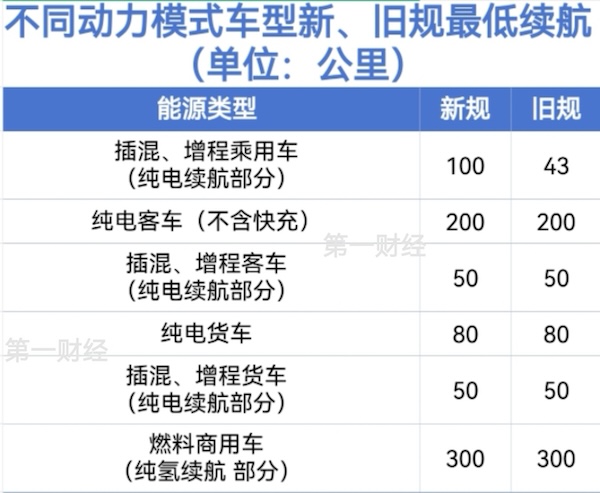
Core Viewpoint - The article discusses the adjustments to the technical requirements for energy-saving new energy vehicles (NEVs) in China, particularly regarding the exemption from vehicle and vessel tax, which will take effect on January 1, 2026. The new regulations impose stricter standards for plug-in hybrid vehicles and maintain existing standards for pure electric vehicles [3][8]. Summary by Sections New Regulations Overview - The Ministry of Industry and Information Technology, the Ministry of Finance, and the State Taxation Administration have released new technical requirements for NEVs, which will be implemented starting January 1, 2026 [3]. - The new regulations increase the minimum electric range for plug-in hybrid vehicles from 43 kilometers to 100 kilometers [3][4]. Specific Vehicle Requirements - For pure electric buses, the minimum range remains at 200 kilometers, while plug-in hybrid buses must have a minimum electric range of 50 kilometers. Pure electric trucks must achieve a minimum range of 80 kilometers [4][5]. - The new regulations also set fuel consumption limits for energy-saving vehicles based on their weight, with specific thresholds for different seating configurations [6][7]. Historical Context and Policy Changes - Previous policies from 2012 and 2015 established tax incentives for energy-saving and new energy vehicles. The latest announcement replaces the 2024 regulations and introduces new standards for vehicle eligibility for tax exemptions [8]. - Vehicles that meet the new criteria will be automatically included in the updated directory for tax exemptions, while those that do not comply will need to be re-evaluated and re-registered [8].

插混车纯电续航不足100公里,将无法免税
Di Yi Cai Jing· 2025-10-10 10:49
Core Points - The Ministry of Industry and Information Technology, Ministry of Finance, and State Taxation Administration have announced adjustments to the technical requirements for energy-saving new energy vehicles (NEVs) eligible for vehicle and vessel tax exemptions, effective January 1, 2026 [1][6] - The new regulations increase the minimum pure electric range for plug-in hybrid (including range-extended) passenger vehicles from 43 kilometers to 100 kilometers [1][3] - Current popular models such as BYD Qin PLUS DM-i (55km version) and Galaxy A7 (70km version) will need to reapply to be included in the tax exemption list under the new rules [1][6] Summary by Category Technical Requirements Adjustments - The new regulations set the minimum pure electric range for plug-in hybrid passenger vehicles at 100 kilometers, while the requirements for pure electric buses and trucks remain unchanged [2][3] - The minimum pure electric range for pure electric buses (excluding fast-charging types) is set at 200 kilometers, and for pure electric trucks, it is 80 kilometers [2][3] Fuel Consumption Standards - New fuel consumption limits for energy-saving vehicles have been established, with specific thresholds based on vehicle weight and seating capacity [3][5] - For energy-saving passenger vehicles weighing less than 1,090 kg, the fuel consumption limit is set at 5.06 liters per 100 kilometers for two-row models and 5.41 liters for three-row models [3][5] - For vehicles weighing more than 1,580 kg, the limits are 6.28 liters for two-row models and 6.63 liters for three-row models [3][5] Policy Implementation - The new vehicle and vessel tax exemption policy will replace the previous regulations from 2024, and vehicles that meet the new criteria will be automatically included in the updated directory [6] - Non-compliant vehicles will need to rectify and reapply to be listed under the new tax exemption directory [6]