锂空气电池

Search documents
研判2025!中国金属空气电池行业产业链、市场规模及重点企业分析:技术突破赋能性能跃升,金属空气电池拓展多领域应用[图]
Chan Ye Xin Xi Wang· 2025-11-03 01:27
Core Insights - The metal-air battery technology has made significant breakthroughs in recent years, particularly in electrode materials, electrolytes, and battery structures, enhancing performance and stability, which drives applications in electric vehicles, energy storage systems, and backup power sources [1][6] - The market size of China's metal-air battery industry is projected to reach approximately 28.63 billion yuan in 2024, representing a year-on-year growth of 2.87% [6] Industry Overview - Metal-air batteries utilize metals (such as zinc, aluminum, magnesium, and lithium) as anodes and oxygen from the air as cathode active materials, offering high theoretical energy densities (zinc-air batteries up to 1360 Wh/kg, aluminum-air batteries over 1000 Wh/kg), low cost, and environmental benefits [2][4] - The industry faces challenges such as self-discharge, limited cycle life, and electrolyte management [2] Market Size - The advancements in metal-air battery technology have led to increased market demand and growth, with the market size expected to reach approximately 28.63 billion yuan in 2024, a 2.87% increase from the previous year [6] Key Companies - Major players in the metal-air battery industry include Xiongtao Co., Ltd. and Penghui Energy, focusing on cost optimization and application expansion for zinc-air batteries, while CATL is exploring future applications of aluminum-air batteries through cross-industry collaborations [7] - Xiongtao Co., Ltd. has achieved a zinc-air battery energy density of 1360 Wh/kg, with applications in hearing aids, electric bicycles, and 5G base station energy storage, reporting a revenue of 1.606 billion yuan in the first half of 2025, a 1.44% increase year-on-year [7][8] - Penghui Energy reported a revenue of 4.301 billion yuan in the first half of 2025, a 13.99% increase year-on-year, despite a net profit decline [9] Industry Development Trends 1. Continuous technological innovation is expected to drive breakthroughs in energy density and battery life, focusing on optimizing battery structure, developing efficient catalysts, and improving the stability of metal anodes and electrolytes [10] 2. The application scenarios for metal-air batteries are diversifying, with zinc/aluminum air batteries becoming key players in energy storage for 5G base stations and data centers, while aluminum-air batteries are highlighted for their energy density advantages in logistics and drones [10] 3. Policies are expected to support the metal-air battery industry, promoting a complete supply chain from raw material supply to battery recycling, with leading companies collaborating on technology advancements and resource utilization [11]





瑞泰新材:LiTFSI是锂空气电池电解液重要可行锂盐选择
Xin Lang Cai Jing· 2025-10-30 08:51
Core Viewpoint - The company emphasizes the potential application of its lithium salt product, LiTFSI, in lithium-air batteries, highlighting its advantages in addressing key challenges in this emerging technology [1] Group 1: Product Application - LiTFSI is identified as an important lithium salt product with wide-ranging applications [1] - The product is noted for its high ionic conductivity and good electrochemical stability, making it a viable choice for lithium-air battery electrolytes [1] - LiTFSI aims to tackle critical challenges faced by lithium-air batteries, such as suppressing side reactions, enhancing cycle life, and improving rate performance [1] Group 2: Industry Context - Lithium-air batteries are recognized as a cutting-edge technology with a focus on future applications, although the path to commercialization remains lengthy [1]
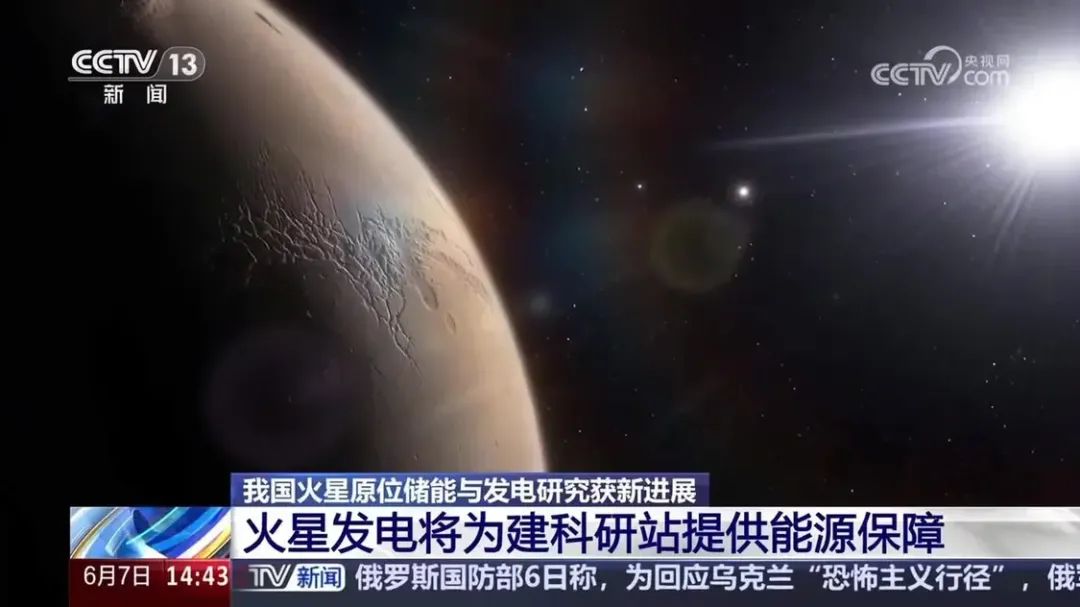
谁能想到,火星“空气”也能发电?
3 6 Ke· 2025-06-09 00:12
Core Insights - The research team from the University of Science and Technology of China has developed a method to generate and store energy using the Martian atmosphere, which could significantly reduce transportation costs for future Mars missions [1][3][12] Group 1: Mars Exploration and Energy Generation - China's Mars exploration efforts are accelerating, with plans to launch the Tianwen-3 mission around 2028 and return Martian samples by 2031 [3] - The team proposes using Martian atmospheric resources, particularly carbon dioxide, as a working medium for energy generation, which is more efficient than previously considered helium-xenon gas [9][12] - The Martian atmosphere's characteristics, including its high carbon dioxide content, allow for a 20% increase in energy generation efficiency and a 14% increase in power output compared to other methods [12][13] Group 2: Mars Battery Concept - The concept of a "Mars battery" has been introduced, utilizing active components from the Martian atmosphere to release electrical energy for powering rovers and research stations [13][16] - Tests simulating Martian conditions indicate that the battery can operate stably even at low temperatures, enhancing the independence and sustainability of Mars exploration missions [15] - The potential applications of Martian gases extend beyond energy generation to include heating, oxygen production, and fuel synthesis, forming a comprehensive energy system for future missions [15][16] Group 3: Broader Implications - The advancements in energy generation on Mars could parallel breakthroughs in energy technology on Earth, such as controlled nuclear fusion, which has recently achieved a reaction temperature of 160 million degrees Celsius [17][19] - The implications of cheap electricity could revolutionize various sectors, including agriculture and water scarcity solutions, by enabling large-scale water desalination and food production without reliance on traditional farming [21][24] - The ongoing developments in energy technologies, both on Mars and Earth, suggest a transformative potential for future energy systems and societal structures [24]