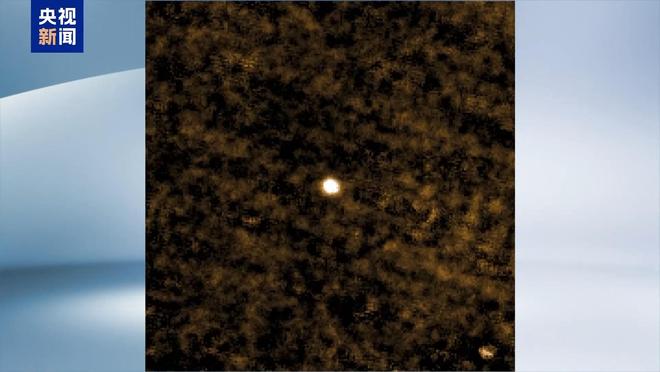
阿特拉斯彗星

Search documents
星空有约|星尾作笔,甲子飞白
Xin Hua She· 2025-12-31 02:47
Core Insights - The article highlights the significance of comets in China's astronomical history, particularly focusing on the discovery of the first comet by Chinese scientists 60 years ago and the upcoming appearance of a new comet named C/2025 A3 (Tsuchinshan) [1][4] Group 1: Historical Context - The first comet discovered by China, 62P/Tsuchinshan, was observed in 1965 using a telescope purchased from Germany, marking a milestone in Chinese astronomy [1] - The second comet, 60P/Tsuchinshan, was discovered shortly after, further establishing the importance of the Zijinshan Observatory in the field [1] Group 2: Upcoming Astronomical Events - The brightest comet of 2025, C/2025 A6 (Lemmon), is expected to be a major attraction for sky watchers in the Northern Hemisphere, showcasing a long and bright tail [2][3] - The orbital period of the Lemmon comet exceeds 1000 years, making its appearance a rare event [3] Group 3: Scientific Exploration - The article discusses the global interest in the interstellar visitor comet ATLAS (3I/ATLAS), which has captured the attention of astronomers worldwide, including observations from advanced telescopes like Hubble and James Webb [3][4] - Comets are described as carriers of material from other star systems, providing insights into the formation and evolution of celestial bodies [4]
美航空航天局公布最新图像 “星际访客”系古老彗星
Huan Qiu Wang Zi Xun· 2025-11-22 03:17
Core Viewpoint - NASA has confirmed that the recently observed interstellar object, ATLAS, is a comet and not an alien spacecraft, with its origins likely predating the solar system [5][6]. Group 1: Identification and Characteristics - ATLAS is the third recorded interstellar visitor in human observation history, characterized by its unique high-speed motion and unusual shape, which has led to speculation about it being an "alien mothership" on social media [3]. - The name "ATLAS" signifies its discoverer, the ATLAS research team, with "I" indicating its interstellar nature and "3" denoting it as the third confirmed interstellar object, following 'Oumuamua' in 2017 and the Borisov comet in 2019 [6]. Group 2: Discovery and Observation - The ATLAS comet was first detected on July 1 by a telescope funded by NASA in Chile, and since then, 12 NASA detection devices have captured images of it [7]. - Recent images from NASA show that ATLAS has a slightly blurred appearance but displays clear cometary features such as a coma and tail structure [7]. Group 3: Origin and Trajectory - Researchers believe that ATLAS originated from an external stellar system, having been ejected into interstellar space, where it has drifted for millions to billions of years before recently entering the solar system [8]. - The comet is expected to make its closest approach to Earth around December 19, at a distance of approximately 270 million kilometers, which is about twice the distance from the Earth to the Sun [8].