陪读蛙(Read Frog)

Search documents
美团AI浏览器陷“抄袭”争议,与开源项目方联合声明:系误会
Guan Cha Zhe Wang· 2026-03-03 11:04
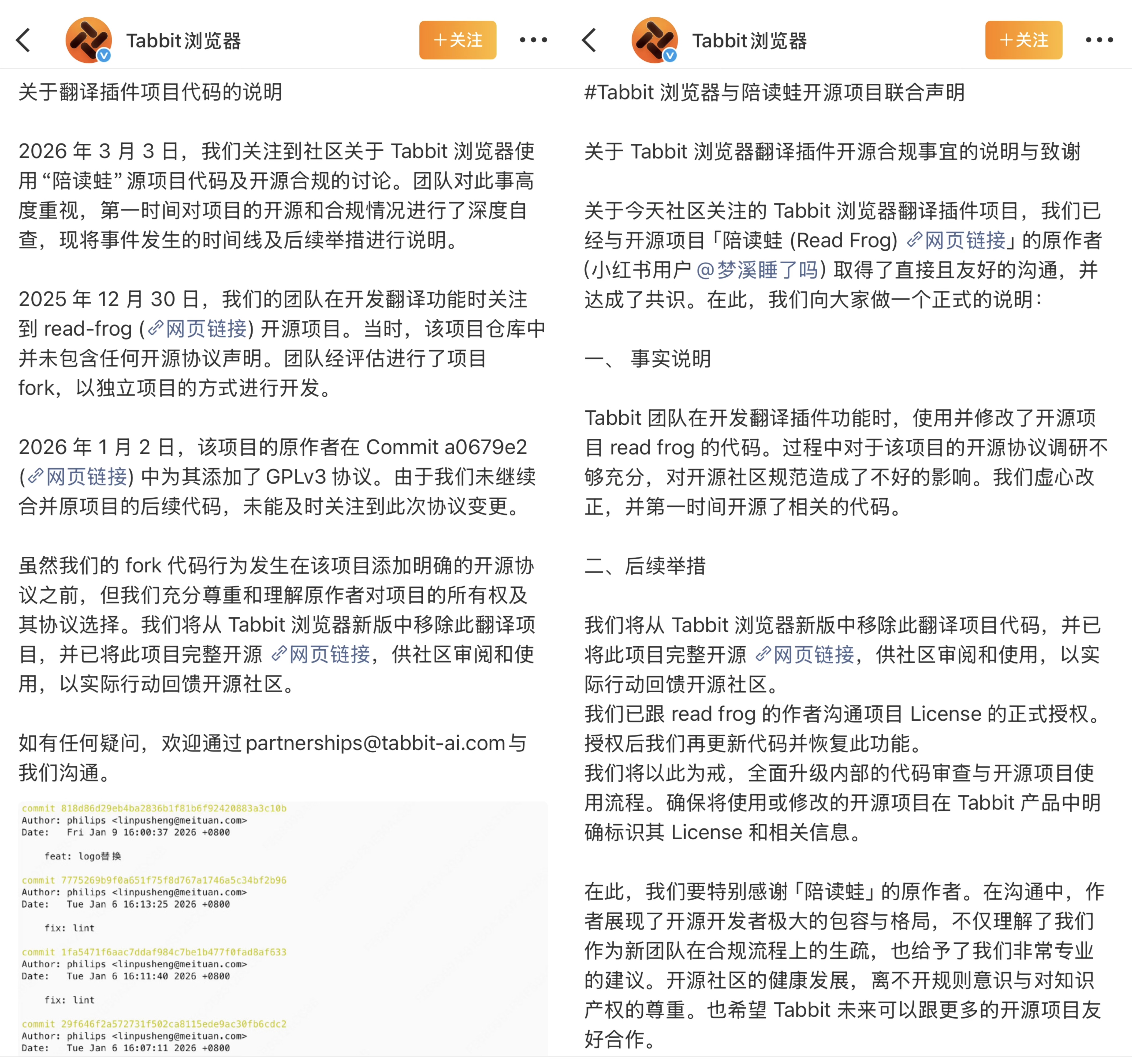
Core Viewpoint - The launch of Meituan's AI browser Tabbit has sparked controversy over alleged code plagiarism from an open-source project, leading to a rapid resolution through communication and acknowledgment of misunderstandings regarding open-source licensing [1][2][9]. Group 1: Product Launch and Features - Meituan's AI team "光年之外" (GN06) launched its first AI browser product, Tabbit, on March 2, focusing on immersive translation and intelligent task execution [1]. - Tabbit supports both macOS and Windows platforms and adopts a free and open strategy, aiming to automate complex web operations and information extraction [2]. Group 2: Allegations and Community Response - On March 3, a developer accused Tabbit of copying code from their open-source project "陪读蛙" (Read Frog), highlighting significant similarities in core translation features [2]. - The developer provided comparative images showing similarities in dropdown menu logic, preset shortcuts, and interface design, which ignited discussions in the open-source community [2]. Group 3: Legal and Compliance Issues - The "陪读蛙" project is licensed under the GPL-3.0 open-source license, which requires any derivative software to also be open-sourced under the same license [2][3]. - If Tabbit indeed utilized the GPL-licensed code, it would be in violation of the open-source agreement by launching as a closed-source commercial product [3]. Group 4: Company Responses and Remedial Actions - In response to the allegations, the Tabbit team stated that they had forked the project before the GPL license was added and committed to removing the disputed code from future versions of Tabbit [7]. - The team issued a joint statement with the original developer, acknowledging insufficient research into the open-source license and outlining corrective measures, including code removal, full open-sourcing of the modified project, and seeking formal licensing [7][9]. Group 5: Industry Implications - The incident highlights the importance of compliance with open-source licensing, especially for large tech companies in a competitive environment [10]. - Both parties emphasized the need for greater awareness of licensing terms and compliance boundaries to foster a healthy open-source ecosystem and promote innovation [10].