
陶灶

Search documents
文博日历丨6000多年前的陶灶怎么用?
Yang Shi Xin Wen· 2026-02-10 01:38
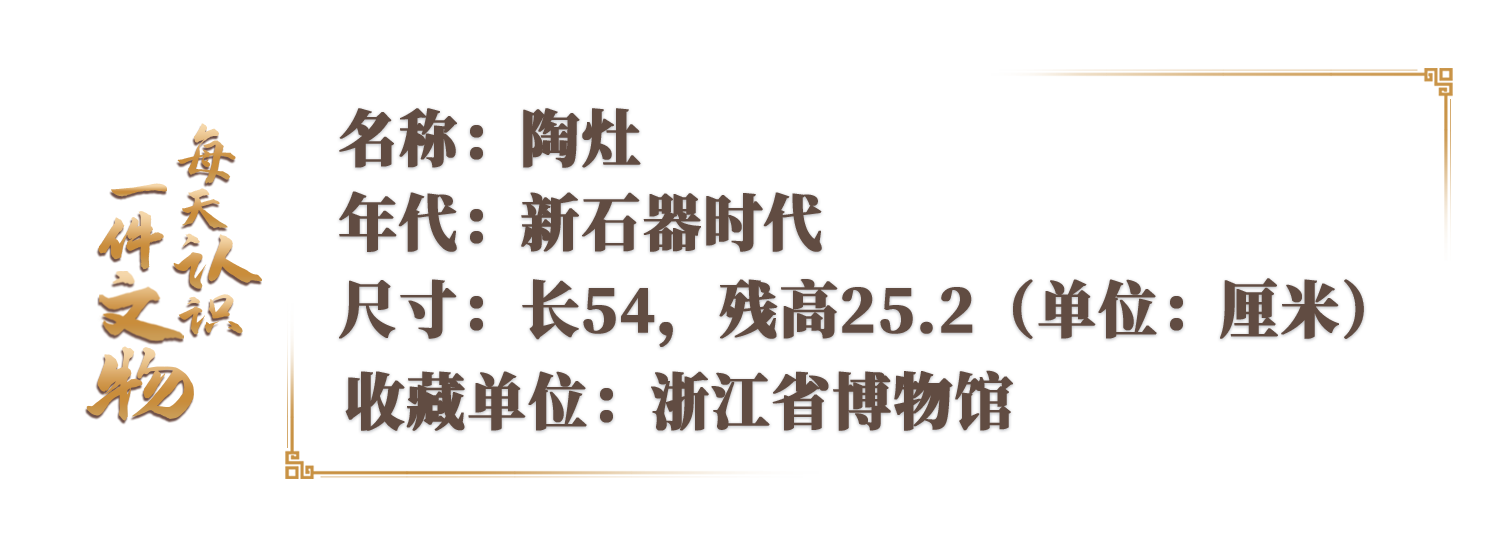
农历腊月二十三 是北方小年 也是民间祭灶的日子 一起来看古人的陶灶 01 这件陶灶 6000多岁了 在遥远的新石器时代 先民们已经用上灶了 4 n a 201 10 l w t . . the are ng Qs All 2: 20 . i - a fig rough d in the 20 i of and the d 3 n for t 2 r Portuge 18:35 t - Street and the st S RE 1 12 84 the states -1 11 1 1 the the prog , Page of 22 800 th the 1 155 ry of w p - 1 - 18 P 27 7 这件陶灶 出土于河姆渡遗址 距今6000多年 灶身呈簸箕形 看起来像个倒置的头盔 陶灶的火门开口很大 略微上翘 外壁两侧各有一个环形耳 便于提携搬动 an 46 A 1 - 1 e and of the compare - 1 Ta and Ma the state ar t are and r and and the lates The State d the state r 2000 - ...

“沧海桑田”的河姆渡文化:访河姆渡遗址
Jing Ji Guan Cha Bao· 2025-09-30 00:14
Core Insights - The article focuses on the archaeological significance of the Hemudu site, highlighting its discoveries that reshape the understanding of Neolithic culture in the Yangtze River Delta region [9][10][16]. Archaeological Discoveries - The Hemudu site, located in Yuyao, Zhejiang Province, covers an area of 40,000 square meters, with significant findings from two major excavations conducted in 1973 and 1977, revealing a cultural layer approximately 4 meters thick [2][9]. - Notable artifacts include over 150 tons of carbonized rice, which, along with 170 bone farming tools, provides evidence of the earliest rice cultivation in the world [2][9]. - The site features well-preserved stilt houses, showcasing advanced construction techniques, including a 23-meter long house with ventilation and moisture-proofing features [3][14]. Cultural Artifacts - Various pottery types were discovered, including cooking vessels, storage jars, and decorative items, with intricate designs that indicate advanced artistic skills and the domestication of animals [5][6][13]. - The site yielded the earliest jade artifacts in the Yangtze River Delta, characterized by fine craftsmanship and smooth surfaces [6][9]. - Evidence of textile production was found, including wooden and ceramic spinning wheels, indicating a developed textile technology [7][9]. Social Structure - The burial practices at the site suggest social stratification, with some graves containing numerous ceremonial items, while others had minimal offerings, indicating a complex societal structure [8][9]. - The presence of various functional areas within the settlement, such as residential and storage zones, points to an organized community with distinct roles [8][9]. Historical Context - The Hemudu culture dates back approximately 7,000 to 5,000 years, contributing significantly to the understanding of Neolithic civilization in southern China [9][10][20]. - The cultural lineage of Hemudu is believed to be linked to earlier cultures in the region, with recent findings from the Jingtou Mountain site providing insights into its origins [18][19]. Environmental Adaptation - The inhabitants of Hemudu adapted to their coastal environment, utilizing marshlands for rice cultivation and fishing, which led to the development of a prosperous agricultural society [19][20]. - The transition of the Hemudu culture to the Liangzhu culture around 5,000 years ago indicates environmental changes and cultural exchanges in the region [20].