
露点传感器

Search documents
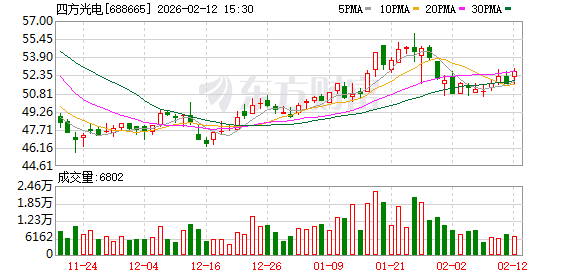
四方光电:红外气体传感器产品已实现批量供货
Zheng Quan Ri Bao· 2026-02-12 13:41
Group 1 - The company has made significant progress in the semiconductor field with its self-developed infrared gas sensors and trace oxygen analyzers for chamber gas monitoring solutions [2] - The infrared gas sensor products have achieved mass supply and are contributing continuously to the business, receiving orders from major domestic semiconductor equipment manufacturers [2] - The product is currently undergoing verification with several leading industry equipment companies, and customer onboarding is steadily advancing [2] Group 2 - In the lithium battery sector, the company has launched dew point sensors and NMP sensors [2] - The NMP sensor, based on NDIR technology, demonstrates strong competitiveness due to its maintenance-free and long lifespan advantages [2] - The localization of the NMP sensor helps reduce customer costs and ensures supply chain stability, with mass applications already realized in leading domestic battery cell manufacturers and coating machine suppliers [2]


四方光电:公司重点围绕锂电池等关键领域推出了具有竞争力的新产品
Zheng Quan Ri Bao Wang· 2026-01-26 14:13
Core Viewpoint - The company is focusing on developing competitive new products in key areas such as lithium batteries, agriculture, and food industry, alongside its existing industrial and safety business segment [1] Group 1: Product Development - In the lithium battery sector, the company has launched dew point sensors and NMP sensors, with the NMP sensor utilizing NDIR technology, offering advantages such as maintenance-free operation and long lifespan [1] - The domestic production of the NMP sensor helps reduce customer costs and ensures supply chain stability, with mass production already being implemented in leading domestic battery cell manufacturers and coating machine suppliers [1] Group 2: Agricultural and Food Industry Solutions - The company has introduced a high-humidity CO transmitter for agriculture and food industries, designed to operate reliably in harsh conditions of high temperature, high humidity, and chemical corrosion [1] - This product provides a durable and economical monitoring solution for gas concentration under complex working conditions, balancing safety and economic benefits for customers [1]
研判2025!中国露点传感器行业分类、市场规模及发展趋势分析:在工业自动化与新能源产业双轮驱动下,行业正加速向智能化、微型化及国产化方向突破[图]
Chan Ye Xin Xi Wang· 2025-12-14 02:12
Core Insights - The Chinese dew point sensor industry is experiencing significant structural opportunities and market expansion driven by the deepening industrial automation process, stricter environmental policies, and rapid growth in the new energy sector. The market size is projected to reach approximately 1.259 billion yuan in 2024, representing a year-on-year growth of 7.70% [1][5]. Industry Overview - Dew point sensors are instruments that directly measure dew point temperature, which indicates the absolute humidity level. They are categorized into various types based on their working principles, including cold mirror, capacitive, resistive, semiconductor, and others [2][4]. Industry Value Chain - The upstream of the dew point sensor industry includes materials such as aluminum oxide, silicon oxide, and integrated circuits. The midstream involves the manufacturing of dew point sensors, while the downstream applications span industrial environment monitoring, meteorology, food and pharmaceutical processing, aerospace, and more [4]. Market Size - The market for dew point sensors in China is expected to grow to approximately 1.259 billion yuan in 2024, with a growth rate of 7.70%. This growth is primarily driven by advancements in high-end manufacturing processes, rigid demand for environmental monitoring systems, and enhanced humidity control standards in lithium battery and photovoltaic sectors [5][6]. Key Companies - The industry features a diverse competitive landscape, with notable companies such as Aosong Electronics and Guangdong Dajia Sensor Technology. Aosong's ACM483T-A precision dew point meter utilizes optical cold mirror technology, while Dajia's sensors are designed for high precision and rapid response times [6][7][8]. Industry Development Trends 1. **Technological Integration**: The industry is expected to integrate MEMS technology, AI algorithms, and IoT, leading to advancements in high precision and smart features. This includes real-time data correction and fault warning capabilities [9]. 2. **Emerging Sector Demand**: New energy vehicles, semiconductor manufacturing, and biomedicine are anticipated to drive demand for dew point sensors, with applications in battery thermal management and cleanroom humidity control [10]. 3. **Self-sufficient Supply Chain**: The industry faces challenges related to reliance on imported high-end materials and algorithms. Future policies and collaborations are expected to promote domestic production and reduce dependency on imports [11].

