非遗体验产品

Search documents
从舌尖到心间 中国文化如何借旅游走向世界
Zhong Guo Xin Wen Wang· 2026-01-23 11:56
Core Insights - The article discusses how Chinese culture is gaining global recognition through tourism, with a shift from sightseeing to immersive cultural experiences [1] - The rise of cultural tourism is reflected in increasing demand for experiences such as museum visits, intangible cultural heritage workshops, and traditional performances [1][6] Group 1: Cultural Tourism Trends - The inbound tourism market is transitioning towards cultural depth experiences, with young travelers favoring activities like visiting ancient architecture and participating in traditional crafts [1] - Ctrip reports that by 2025, the number of cultural products such as museums and intangible heritage experiences is expected to grow by 13%, with order volume increasing by over 10% and ticket sales rising by 14% [1] Group 2: Culinary Experiences - The "Taste of CHINA" immersive dining experience in Shanghai caters to international tourists, with over 90% of guests coming from 21 countries across five continents [2] - The restaurant adapts its menu to suit international tastes while incorporating Chinese culinary elements, enhancing the cultural experience through food [2] Group 3: Events and Performances - International events and performances are becoming key avenues for overseas tourists to experience contemporary Chinese culture [3] - The Shanghai Marathon, a candidate for the World Marathon Major, attracted over 4,300 international participants from 91 countries in 2025, with foreign runner participation increasing to 13.3% [5] Group 4: Cultural Heritage and Education - There is a significant shift in overseas tourists' travel preferences towards deep cultural experiences, with Ctrip reporting a 63% increase in multilingual cultural product resources [6] - By 2025, orders for cultural museum tourism products are projected to grow by 220%, with ticket sales increasing by 198% [6] - The demand for intangible cultural heritage experiences is also rising, with ticket sales for such products increasing by 126% and GMV by 70% [6]


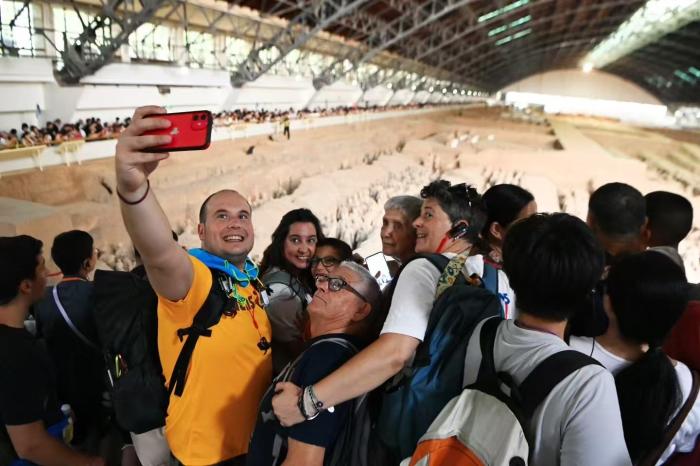
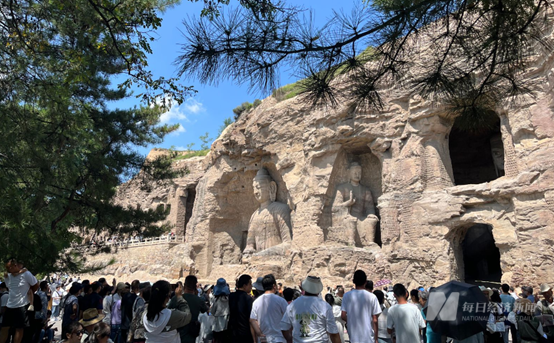
三星堆、云冈石窟被研学团“攻占” 为何大量文物古迹捧着“金饭碗”却赚不到文旅钱?
Mei Ri Jing Ji Xin Wen· 2025-09-03 10:04
Core Insights - The summer tourism market has seen strong demand, with a notable increase in travel orders for flights, hotels, and car rentals, reflecting a 9.9% year-on-year rise in average order value [1] - The trend of quality travel is evident, with an increase in family and student travelers, leading to a surge in cultural and entertainment experiences during trips [1] - The popularity of archaeological sites, such as Sanxingdui and Mogao Caves, has significantly boosted educational travel, attracting a large number of family and senior tourists [1][2] Group 1: Market Trends - The demand for educational travel products has risen sharply, with a 120% year-on-year increase in searches for nature exploration products [2] - Sanxingdui Museum received over 1.3 million visitors during the summer of 2025, highlighting its status as a major tourist attraction [2] - Deyang City, home to Sanxingdui, saw over 22 million visitors across its 25 A-level tourist attractions in 2024, with nearly 30% of those visiting Sanxingdui [2] Group 2: Cultural and Educational Tourism - Archaeological sites are becoming popular destinations for educational travel, with numerous institutions focusing on Sanxingdui within a 5-kilometer radius [3] - The interaction between archaeological discoveries and cultural tourism is seen as a new driving force for local consumption [3] - The unique value of archaeological findings lies in their ability to attract public curiosity and cultural recognition, which is essential for developing tourism products [5][11] Group 3: Challenges and Opportunities - Despite the success of Sanxingdui, many regions struggle to effectively convert archaeological discoveries into tourism products due to a lack of differentiated experiences [7] - The process of transforming archaeological findings into tourism resources involves multiple stages, including public attention, resource investment, and eventual industry conversion [7] - The scarcity of archaeological resources can lead to significant economic benefits for local areas, as seen in historical examples like Anyang [11][12]