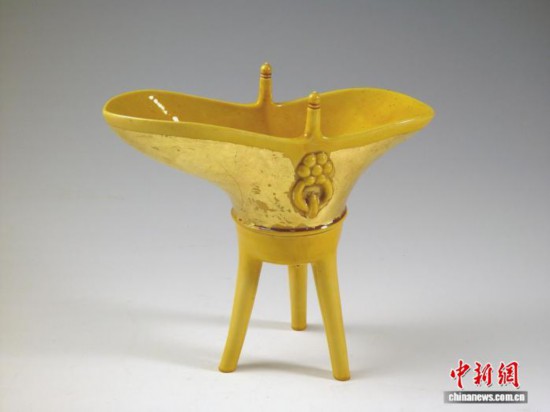
颜色釉瓷器

Search documents
百余件沈阳故宫院藏颜色釉瓷器珍品再现中式美学
Zhong Guo Xin Wen Wang· 2025-09-30 01:17
Core Viewpoint - The "One Color, Thousand Autumns - Shenyang Palace Museum Color Glaze Porcelain Exhibition" showcases over a hundred pieces of color glaze porcelain, highlighting the aesthetic and cultural significance of these artifacts in Chinese history [1][3]. Group 1: Exhibition Overview - The exhibition features a diverse range of ancient Chinese color glaze porcelain categorized by glaze color, including blue, yellow, red, and purple glazes, reflecting the pursuit of color aesthetics by the Chinese people [3][4]. - Notable pieces include Ming Dynasty treasures from Jingdezhen such as the Yongle Sweet White and Xuande Red Glaze, as well as Qing Dynasty masterpieces like Langyao Red and Tianlan Glaze [3][4]. Group 2: Cultural Significance - The exhibition interprets the cultural implications of color glaze porcelain, including its connection to sacrificial practices and social hierarchies during the Ming and Qing Dynasties [3][4]. - The Ming Jiajing period established specific colors for sacrificial vessels, with blue, yellow, red, and white designated for different altars, illustrating the ceremonial importance of these artifacts [4]. Group 3: Historical Context - The Ming and Qing periods marked a peak in Chinese porcelain production, with pure color glaze porcelain becoming essential for royal sacrificial ceremonies [4]. - The development of blue glaze porcelain, which began in the Yuan Dynasty, laid the foundation for various blue glaze types created during the Ming and Qing Dynasties, showcasing advancements in glazing techniques [4].