马尼拉麻浆

Search documents
行业聚焦:全球马尼拉麻浆市场规模、竞争格局及2032年预测
QYResearch· 2026-02-06 08:36
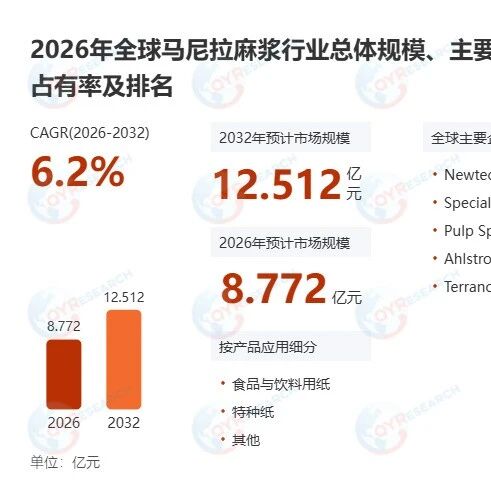
Core Insights - Manila hemp pulp is a specialty non-wood pulp derived from banana fiber, characterized by long fiber length, high tensile strength, and excellent wet strength, distinguishing it from traditional wood pulp [2] - The global Manila hemp pulp market is projected to reach USD 184 million by 2032, with a compound annual growth rate (CAGR) of 6.2% from 2026 to 2032 [2][15] Market Overview - The top three manufacturers of Manila hemp pulp are Newtech Pulp, Specialty Pulp Manufacturing, and Pulp Specialties Philippines, which together hold approximately 70.86% of the market share as of 2025 [6] - The supply chain for Manila hemp pulp relies on Manila hemp fiber and sodium hydroxide, with the fiber sourced from smallholder farmers, leading to variability in fiber quality and supply stability [6] Industry Dynamics - The midstream segment of the Manila hemp pulp industry focuses on supply reliability, product consistency, and performance adaptability for specific applications, with a strong emphasis on quality control and batch management [7] - Downstream applications include food-grade filter paper, industrial filtration materials, and high-end specialty paper, with key customers being companies that require high-performance stability [8] Growth Drivers - The global push to reduce carbon emissions is driving the paper industry to adopt alternative natural fibers, with Manila hemp pulp aligning with sustainability regulations and consumer preferences [9] - As paper and packaging companies seek to decouple growth from deforestation risks, Manila hemp pulp is transitioning from a niche material to a strategically significant alternative raw material [9] Challenges - Manila hemp is highly susceptible to various viral diseases, which can significantly impact fiber quality and yield, posing a long-term biological constraint on the industry [10] - Extreme weather events, such as typhoons and heavy rainfall, can disrupt banana fiber cultivation, leading to supply interruptions and increased market volatility [10] Industry Trends - The market is shifting from a focus on quantity expansion to ensuring stable supplies of high-grade pulp, which is critical for applications like food filtration and electrical insulation [11] - There is an increasing emphasis on batch stability and quality predictability among international customers, driving demand for standardized natural pulps and stricter quality management practices [11]