马氏花丝镶嵌作品

Search documents
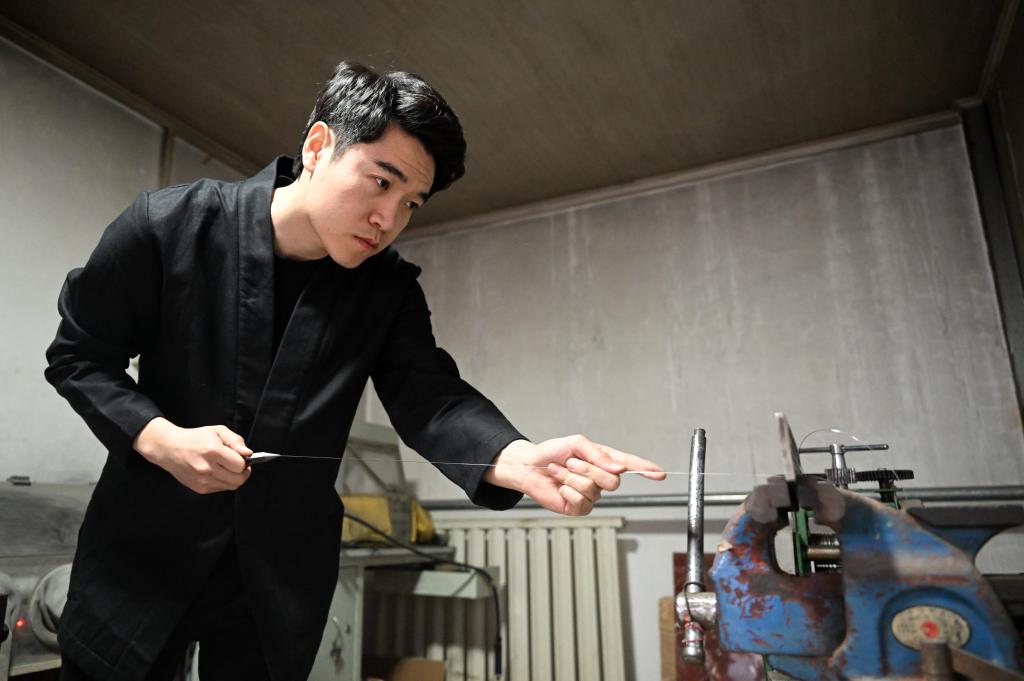
0.16毫米细的金属丝能做什么?这位“90”后给出答案
Xin Hua Wang· 2025-12-03 23:40
Core Viewpoint - The article highlights the revival and innovation of traditional Chinese craftsmanship, specifically the Ma family flower wire inlay technique, through the efforts of its fourth-generation inheritor, Ma Sai, who has successfully adapted the craft to modern market demands and cultural trends [1][5]. Group 1: Craftsmanship and Techniques - The Ma family flower wire inlay technique has a historical lineage tracing back to the late Qing Dynasty and early Republic of China, originally taught by royal court artisans [2]. - The process involves intricate techniques such as stacking, layering, weaving, and welding, using metal wires that are approximately 0.16 millimeters thick, slightly thicker than a human hair [4]. Group 2: Market Adaptation and Success - Ma Sai initially faced challenges with his online store on Taobao, prompting him to pivot towards creating traditional headpieces in response to the rising popularity of Hanfu culture [4][5]. - The surge in interest for Hanfu has led to increased demand for traditional accessories, allowing Ma Sai to establish connections with Hanfu enthusiasts and industry professionals, resulting in successful collaborations with television and film productions [5]. Group 3: Future of the Craft - The growing societal emphasis on traditional culture and intangible cultural heritage has provided a favorable environment for Ma Sai's work, leading to the establishment of a new studio and the involvement of younger artisans [5]. - Ma Sai envisions a future where the traditional craft continues to thrive and evolve, encouraging more young people to participate in the art of flower wire inlay [5].