鸡首壶

Search documents
“2025东亚陶瓷史研究国际研讨会”会议纪要
Xin Lang Cai Jing· 2025-12-20 04:41
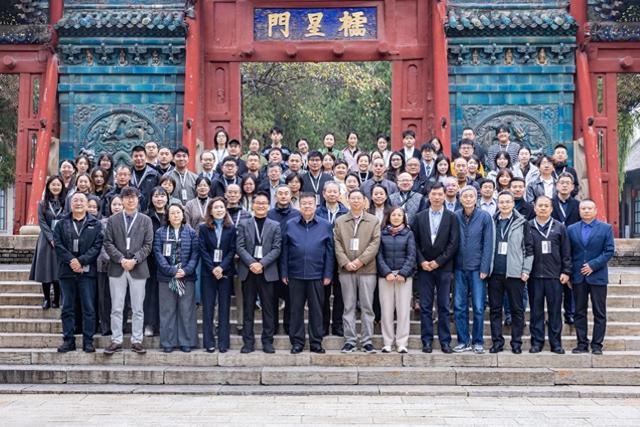
Core Viewpoint - The "2025 East Asian Ceramic History Research International Symposium" was successfully held, showcasing recent achievements in East Asian ceramic studies and emphasizing the cultural flow of ceramics in Northern China across various regions and countries [2][5][8]. Group 1: Symposium Overview - The symposium was hosted by Fudan University and the Shanxi Provincial Archaeological Research Institute, with participation from nearly 50 scholars and over 20 graduate students from various institutions [2]. - The opening ceremony was presided over by the director of the Shanxi Provincial Archaeological Research Institute, with welcoming speeches from officials [3][5]. Group 2: Key Presentations - The first session focused on "New Advances in Northern Chinese Ceramic Archaeology," featuring reports on the Ding kiln's periodization and the significance of the Hohhot kiln in the context of Northern ceramics [10][12][14]. - Huang Xin's report on Ding kiln periodization highlighted its historical importance and recent archaeological findings, categorizing its production from the Sui to Ming dynasties into nine phases [12]. - Liu Yan's presentation on the Hohhot kiln emphasized its unique position in the production of fine white porcelain during the Song and Yuan dynasties, clarifying its relationship with Ding kiln products [14][15]. Group 3: Cultural Exchange and Influence - The second session addressed the circulation of Chinese celadon in East Asia, with a focus on the chicken-headed pot's cultural significance and its emergence in Northeast Asia [19][21][22]. - The third session explored the influence of Northern Chinese ceramics in Japan, particularly the distribution of products from the Cizhou kiln system [27][29][30]. - The fourth session discussed the cultural exchanges of East Asian ceramics, including the acceptance of Northern oil-drop ceramics in Japan and their evolving cultural value [37][39][40]. Group 4: Future Directions - The roundtable discussion emphasized the need for continued exploration of frontier topics in Northern ceramic research, encouraging collaboration among international scholars [45]. - Scholars shared insights from recent archaeological findings, highlighting the interconnectedness of ceramic studies with urban archaeology and trade networks [46][49].