鼓小仙

Search documents
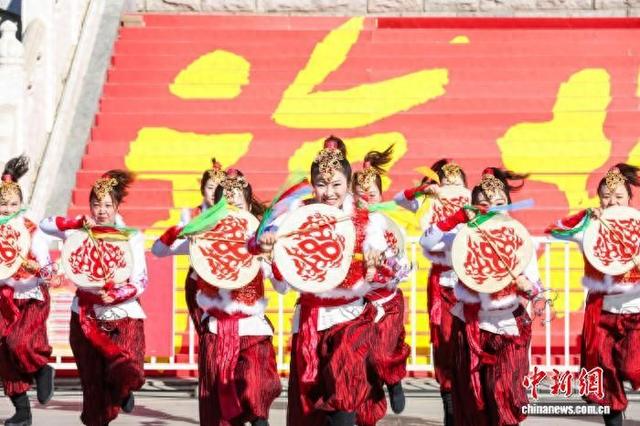
(寻味中华|风俗)京西鼓振贺新春 太平声动祈丰年
Zhong Guo Xin Wen Wang· 2026-02-26 02:08
Core Viewpoint - The article highlights the cultural significance and revival efforts of the Jingxi Taiping Drum, a traditional Chinese folk art, particularly during the Spring Festival, emphasizing its role in community bonding and cultural identity [1][3]. Group 1: Cultural Significance - The Jingxi Taiping Drum, also known as the "Welcoming Year Drum," is traditionally performed during the lunar new year to celebrate and pray for a prosperous year ahead [1]. - The drum has historical roots dating back to the Tang Dynasty and became popular in Beijing during the Ming and Qing Dynasties, symbolizing peace and prosperity [1]. - It serves as a living record of local customs and emotions, acting as a cultural link among community members and enhancing cultural confidence [3]. Group 2: Preservation and Innovation - High Hongwei, a representative inheritor of the Jingxi Taiping Drum, emphasizes the importance of integrating dance and drumming, with various styles for different performers [2]. - The Beijing Mentougou District Public Cultural Center is exploring ways to preserve and revitalize this art form, including the use of motion capture technology for accurate documentation of dance techniques [3]. - The center has developed an AI digital entity named "Gu Xiaoxian," which combines traditional aesthetics with modern technology to make the art more accessible and appealing to younger audiences [5]. Group 3: Future Plans - Future initiatives include the introduction of AR and XR technologies in local tourist attractions, allowing visitors to interact with "Gu Xiaoxian" for demonstrations and historical storytelling [5]. - There are plans to create cultural products appealing to younger generations, aiming for cross-dimensional dissemination of the Jingxi Taiping Drum [5].