10类普耗

Search documents
最新!10类耗材中选结果公布
Xin Lang Cai Jing· 2026-02-26 10:21
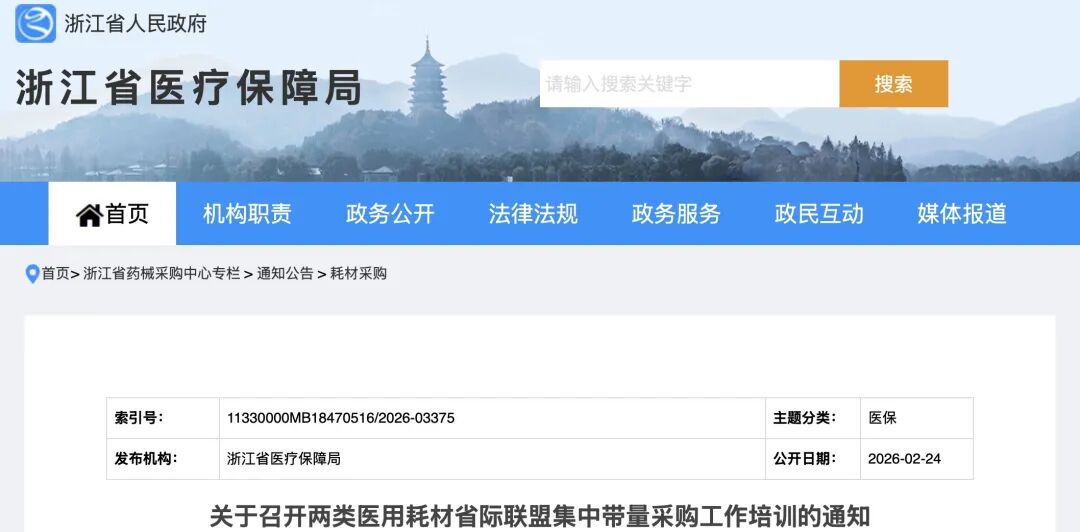
Core Insights - The procurement process for medical supplies in Jiuquan City covers all public hospitals, including grassroots medical institutions and military medical facilities, with a procurement cycle of two years [1][11] - The results of the procurement have been announced, and price reductions are expected to be implemented soon, with no further appeals accepted after the announcement [1][11] - Two major provincial alliances for high-value medical supplies have been initiated, focusing on cardiac pacing and peripheral vascular interventional microcatheters, with training scheduled for March 2, 2026 [1][15] Group 1: Procurement Details - The procurement includes two categories of high-value medical supplies: cardiac pacing and peripheral vascular interventional microcatheters, with procurement documents recently issued [3][15] - The peripheral vascular interventional microcatheter procurement involves a coalition of 29 provinces and municipalities, with annual demand for 290,845 and 129,043 units respectively [3][15] - The cardiac pacing procurement involves 27 provinces and municipalities, with an annual total demand exceeding 260,000 units [20][21] Group 2: Pricing and Cost Structure - The procurement process requires companies to report the average cost of their products, including manufacturing costs, overhead, taxes, and associated services, to mitigate supply risks [9][23] - The pricing structure has been designed to ensure reasonable pricing, with mechanisms in place to correct prices if necessary [9][23] - The maximum effective bid prices for various products have been specified, such as 15,000 yuan for a single-chamber pacemaker and 100,000 yuan for a leadless pacemaker [21][23] Group 3: Future Outlook - The current procurement initiatives are just the beginning of an expanded medical supply procurement mechanism set for 2026, with additional rounds and alliances planned [10][23] - Upcoming initiatives include the fifth round of national procurement and various regional alliances, indicating a shift towards more competitive procurement processes [10][23] - The era of easy gains is ending, and companies will face stricter regulations and higher entry barriers, emphasizing the need for sustainable profit margins [10][23]