
401(k) retirement account

Search documents
Here's how to use your 401(k) as an ATM, and why you probably shouldn't
Yahoo Finance· 2026-03-12 09:01
Group 1 - The core point of the articles highlights a significant increase in hardship withdrawals from 401(k) accounts, indicating financial fragility among some retirement savers [1][2][4] - In 2022, 6% of Vanguard retirement savers made hardship withdrawals, a notable rise from 1.7% in 2020, reflecting a growing trend in accessing retirement funds prematurely [1][2] - The median hardship withdrawal amount in 2025 was reported to be $1,900, with common reasons including preventing foreclosure or eviction [3] Group 2 - The trend of hardship withdrawals is partly attributed to more permissive federal laws, allowing withdrawals for urgent expenses, with a limit of up to $1,000 per year starting in 2024 [4] - While auto-enrollment in 401(k) plans has increased from 54% to 61% since 2020, the rise in hardship withdrawals suggests that many individuals are still living paycheck to paycheck and lack sufficient savings outside retirement accounts [2] - Financial experts caution that accessing 401(k) funds should be a last resort, as it undermines the long-term growth potential of retirement savings due to lost compounding returns [5][7]
How Student Loans Are Hurting Your Retirement—And What They Could Cost You
Investopedia· 2026-02-18 01:03
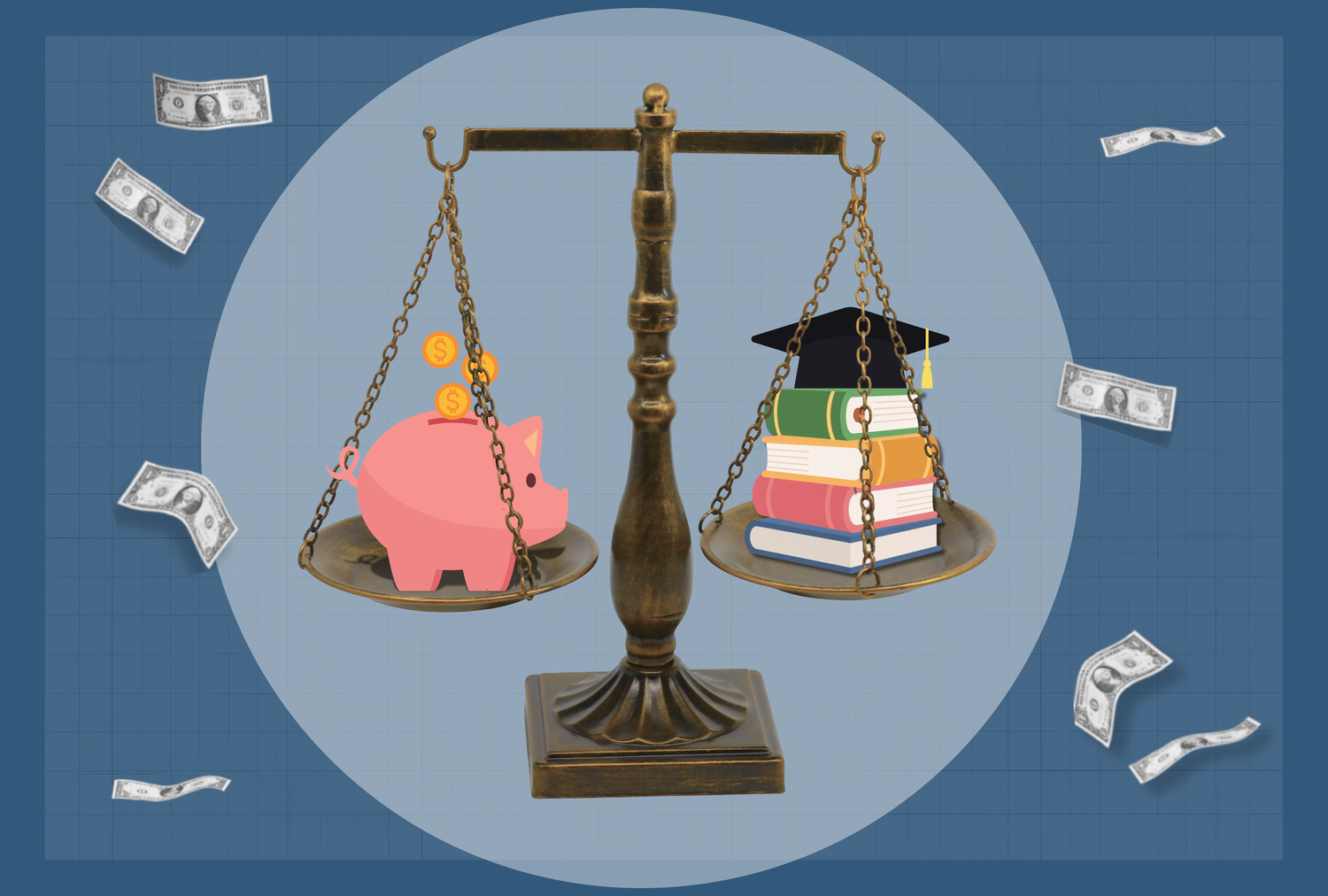
Core Insights - Student loans are significantly impacting borrowers' ability to save for retirement, with many facing difficult choices between debt repayment and retirement savings [1] Group 1: Impact on Retirement Savings - Workers closer to retirement should prioritize paying off debt over building retirement accounts, while younger workers should focus on retirement savings first [1] - The average worker's 401(k) balance is $144,400, while student loan borrowers have saved between $29,000 and $43,000 less for retirement [1] - Student loan borrowers typically pay about $6,000 annually towards their loans, which is approximately 7% of the 2024 median household income of $83,730 [1] Group 2: Age-Related Strategies - Employees aged 18 to 49 with student debt have retirement savings that are 20% lower, or about $29,000 less than their debt-free peers [1] - Workers over 50 with student debt have retirement balances that are 30% lower, or about $43,000 less than those without student debt [1] - The average student loan balance for borrowers aged 50 to 61 is $48,203, making it challenging for them to save for retirement while managing other financial responsibilities [1] Group 3: Financial Planning Recommendations - Younger workers should take advantage of employer matching contributions, which average up to 4.7% of an employee's income [1] - For older workers, it may be more beneficial to pay off high-interest student loans rather than contributing to retirement accounts, as they have less time for their investments to grow [1] - Working longer to pay off student loans can significantly impact a successful retirement [1]

One Trump proposal meant to prevent 'nation of renters' may make homeownership harder, experts say
Fortune· 2026-01-21 17:13
Core Viewpoint - President Trump's housing policy proposals, including preventing institutional investors from buying single-family homes and allowing Americans to use 401(k) savings for down payments, may not effectively address the root causes of high housing costs and could make homeownership less accessible for many Americans [1][4]. Group 1: Housing Policy Proposals - Trump announced a ban on institutional investors purchasing single-family homes, claiming it is unfair to the public [3]. - The administration plans to direct Fannie Mae and Freddie Mac to purchase $200 billion in mortgage-backed securities to lower mortgage rates [2]. - Trump has proposed capping credit card interest rates at 10% to help Americans save for home purchases [3]. Group 2: 401(k) Withdrawal Proposal - The proposal to allow Americans to use 401(k) funds for down payments could require congressional approval due to potential tax code changes [4]. - Currently, Americans can withdraw up to $10,000 from IRAs for home purchases without penalties, but this does not apply to 401(k)s unless a penalty is paid [6]. - The median home price in the U.S. is approximately $428,000, meaning a typical down payment could be around $81,000 [3]. Group 3: Benefits and Drawbacks of the Proposal - The number of first-time homebuyers has decreased significantly, with many relying on borrowed money or gifts for down payments [5]. - While accessing 401(k) funds could provide liquidity for down payments, it risks concentrating investments into a single asset, which could be detrimental if housing prices decline [10][12]. - Experts argue that the proposal does not address the supply side of the housing market, potentially exacerbating affordability issues by increasing competition for homes [11][12]. Group 4: Retirement Savings Concerns - The median retirement savings for Americans aged 45 to 55 is $115,000, which may not be sufficient for a comfortable retirement [13]. - Experts suggest that making it easier to access retirement savings for non-retirement purposes could worsen financial security for many individuals [14].

401(k) for a home? Trump administration’s new proposal could change how Americans buy
The Economic Times· 2026-01-17 20:35
Core Viewpoint - President Trump is planning a new rule allowing Americans to use funds from their 401(k) retirement accounts for home down payments, aimed at addressing housing affordability issues in a challenging market [1][2][18]. Group 1: 401(k) Withdrawal Plan - The proposed plan would permit individuals to withdraw money from their 401(k) accounts for home down payments, which is currently restricted and incurs penalties for most [2][18]. - Under existing regulations, early withdrawals from a 401(k) before age 59½ incur a 10% tax penalty in addition to regular income taxes [2][18]. - Hassett provided an example where a buyer could use 10% of their 401(k) for a down payment and then count 10% of the home's equity as an asset within the 401(k), allowing for potential growth of the retirement account [3][4][18]. Group 2: Housing Affordability Initiatives - The administration is exploring various strategies to enhance housing affordability, with the 401(k) proposal being one of several recent initiatives [9][18]. - Trump has expressed intentions to ban large investors from purchasing single-family homes, arguing that such practices disadvantage regular buyers [9][10][18]. - A significant mortgage bond-buying plan worth $200 billion has been ordered, aimed at lowering mortgage rates and making homeownership more affordable [12][18]. Group 3: Market Reactions and Future Plans - Following the bond-buying announcement, mortgage rates briefly fell below 6%, marking a significant decrease not seen in years, which led to a 40% increase in mortgage refinance demand the following week [12][18]. - The White House has not yet clarified whether there will be a cap on withdrawals from 401(k) accounts or when the new plan will take effect [7][18]. - The final details of the 401(k) home down payment proposal are still under discussion and will be closely monitored by potential homebuyers and savers [14][18].

Why your 401(k) is safe from a 40% crash in stocks—but not a 10% to 15% correction, top analyst says
Yahoo Finance· 2025-11-24 17:08
Core Viewpoint - The current euphoria surrounding the artificial intelligence boom has led to significant concentration in the U.S. stock market, raising concerns about a potential crash similar to past financial crises [1] Group 1: Market Sentiment and Predictions - There is a prevailing sentiment among some analysts that a major selloff is inevitable, but the risk to diversified retirement accounts is considered more contained [2] - Michael Cembalest from J.P. Morgan expressed skepticism about a catastrophic 40% market drop, despite acknowledging extraordinary market valuations [2] - Cembalest highlighted that warnings from market bears often emerge when assets decline, but a correction does not always lead to a significant crash [3] Group 2: Differing Perspectives on Valuation - Aswath Damodaran warned that the market is overvalued and suggested that a 40% drop in the "Magnificent 10" stocks could trigger widespread panic [4] - Cembalest contrasted the views of finance professors with those of actual market participants, suggesting that academic perspectives may not reflect real market dynamics [5] Group 3: Financing and Market Resilience - Cembalest noted that the current AI capital spending is primarily financed through internally generated cash flow rather than debt, which differentiates it from previous bubbles that were debt-driven [6] - This internal financing structure is seen as a factor that reduces the systemic risk associated with the current AI build-out compared to past capital spending booms [6]
8 smart money moves to make with $1,000 in savings
Yahoo Finance· 2024-09-20 17:52
Core Insights - The article emphasizes the importance of saving money, suggesting that even a small amount like $1,000 can significantly improve financial well-being and encourages the establishment of an emergency fund and other savings goals [2][22]. Group 1: Emergency Fund - Financial experts recommend starting an emergency fund with a goal of at least $1,000 as an initial step towards saving [3]. - Participating in a $1,000 savings challenge can help individuals build momentum in saving, especially when on a tight budget [4]. Group 2: High-Yield Savings Options - Opening a high-yield savings account (HYSA) is advised to maximize interest earnings on savings compared to traditional accounts [5][6]. - Certificates of deposit (CDs) are another option for saving, particularly beneficial when interest rates are declining, offering fixed rates until maturity [7][8]. Group 3: Financial Incentives - Some banks offer bonuses for opening new accounts, which can provide additional funds if the account is maintained according to the bank's requirements [10][11]. - It is crucial to understand the terms of any bank account bonus to ensure eligibility and avoid fees [12][13]. Group 4: Investment Opportunities - Investing in an index fund, such as one tracking the S&P 500, is suggested as a way to utilize $1,000, with historical average returns around 10% [14]. - Paying down credit card debt with the $1,000 can positively impact credit scores and financial health, especially given the average credit card balance of $6,699 in 2024 [15][16]. Group 5: Retirement and Education Savings - Contributing to a retirement account, particularly to take advantage of employer matching, is recommended as a smart use of extra savings [17]. - Parents are encouraged to consider a 529 plan for saving for their child's college education, which offers tax advantages and potential growth [19][21].