AIPC(人工智能个人电脑)

Search documents
被产业链“寄予厚望”,AIPC现在如何了?
Jing Ji Guan Cha Wang· 2025-11-08 05:26
Core Insights - The article discusses the rise of AIPC (Artificial Intelligence Personal Computer) as a new category in the tech industry, highlighting Lenovo's launch of the "Lenovo Savior AI Edition" laptops equipped with AI capabilities through the integration of NPU (Neural Processing Unit) alongside traditional CPU and GPU [2][3] - The demand for AIPC has surged since the introduction of ChatGPT, prompting major tech companies to accelerate their AIPC strategies and product offerings [3][4] - Despite the growing market interest, challenges remain regarding the software ecosystem and practical applications of AIPC, with many users reporting underwhelming AI experiences [5][6] Industry Trends - AIPC sales have been increasing, with Lenovo's AIPC series seeing a production priority shift due to rising demand [3] - Intel reported a revenue increase of 2.8% in Q3 2025, attributed to AIPC, and anticipates supplying processors for over 100 million AIPC units by the end of 2025 [3][8] - Other companies, such as iFlytek, are also entering the AIPC market, aiming to create a comprehensive ecosystem with domestic CPUs and operating systems [4][10] Market Dynamics - The AIPC market is characterized by a fragmented software ecosystem and insufficient practical applications, leading to consumer dissatisfaction despite hardware advancements [5][6] - The hardware foundation of AIPC relies on a heterogeneous computing architecture (CPU+GPU+NPU), with various chip manufacturers, including Intel, AMD, and Qualcomm, competing in this space [6][8] - The operating system landscape is dominated by Microsoft, which has set standards for AIPC, while domestic players like iFlytek are adapting their systems to local needs [9][10] Supply Chain and Manufacturing - ODM manufacturers like Huaqin Technology are experiencing significant growth in AIPC-related revenues, with expectations of over 30% revenue growth in 2025 [11] - The demand for AIPC is driving up the prices of components, such as heat dissipation structures, which are expected to increase by around 30% due to higher cooling requirements [12] - The transition to AIPC is creating a complete supply chain that includes high-value products and improved profit margins for manufacturers [14] Consumer Experience and Challenges - Despite the hardware advancements, many consumers report that the AI functionalities of AIPC are not meeting expectations, often describing them as inadequate or frustrating [16][18] - The current AIPC offerings are seen as traditional computers with AI features rather than fully realized AI systems, indicating a gap between consumer expectations and actual performance [18][19] - Industry experts suggest that the true potential of AIPC will not be realized until the software ecosystem matures and AI applications become more robust and user-friendly [19]




AIPC学会“自己干活”:“小盒子”解锁终端智能新体验
Guang Zhou Ri Bao· 2025-07-28 16:37
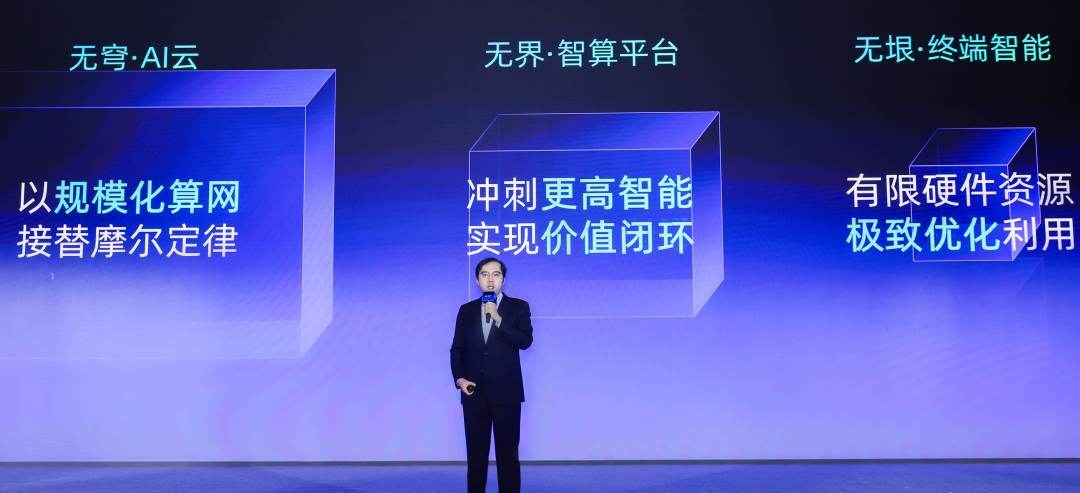
Core Insights - The future of "smart terminals" is being reimagined with the introduction of AIPC (Artificial Intelligence Personal Computer), which can perform tasks while in sleep mode and support complex reasoning locally without relying on cloud computing [1][2][5] Group 1: AIPC and Its Innovations - AIPC is evolving from a simple office tool to a "mobile productivity center," addressing two main pain points: reliance on cloud computing and limited local hardware resources [2] - The "small box" solution, termed "limitless terminal intelligence," aims to maximize the potential of limited terminal resources through software and hardware collaboration [2][5] - The AIPC can release over 1,000 hours of productivity annually by executing background tasks during idle CPU periods, thanks to the Infini-Megrez2.0 model, which achieves cloud-level intelligence with significantly reduced memory and computational requirements [5][7] Group 2: Technological Advancements - The Infini-Megrez2.0 model enables "unperceived operation," transforming AIPC from a mere tool to an intelligent assistant that can autonomously handle tasks during sleep periods [7] - The Infini-Mizar 2.0 inference engine enhances the speed and efficiency of large model operations, increasing the local model size limit from 7B to 30B, while improving intelligence levels by 18% and doubling inference performance [8] - The combination of Mizar2.0 and Megrez2.0 allows for significant advancements in terminal intelligence applications, pushing the boundaries of what is possible in edge AI [8] Group 3: Partnerships and Future Goals - The company is collaborating with Lenovo, H3C, and other partners to turn innovations into accessible products, including an integrated large model machine and FPGA-based inference systems [9][11] - The ultimate goal is to create next-generation smart terminals that serve a wide range of applications, making AGI accessible to everyone [11]