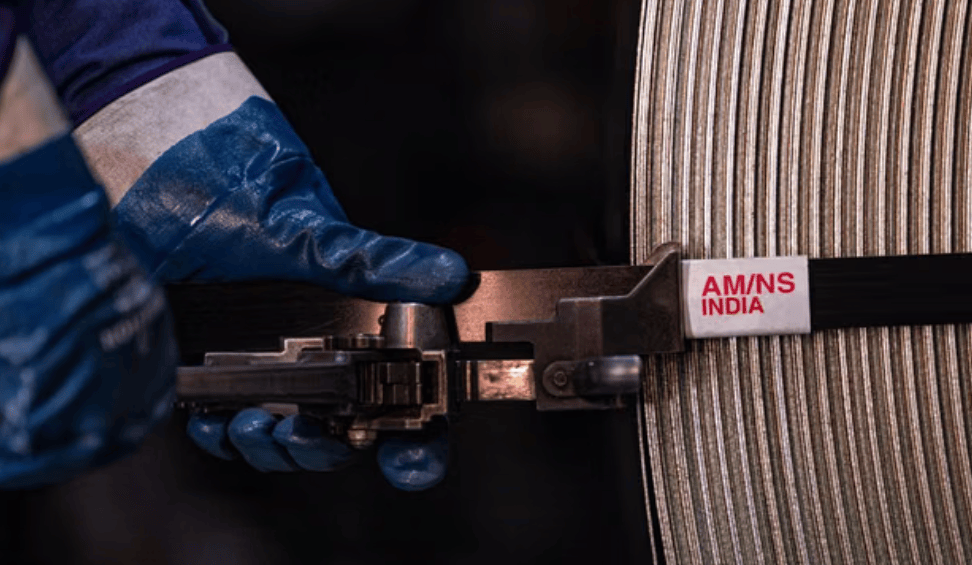
AM/NS Vibrance

Search documents
【国际动态】安赛乐米塔尔尼普敦钢铁公司推出两款高端品牌钢材产品
Sou Hu Cai Jing· 2026-02-25 12:49
Core Insights - AM/NS India has launched two high-end steel products, AM/NS Vibrance and AM/NS Optima, as part of its strategy to achieve a 75% revenue share from high-value steel products [1] - The company aims to strengthen its market position in high-profit downstream sectors, particularly in coated steel for appliances and industrial applications [1] Product Focus - AM/NS Vibrance is designed for appliance manufacturers, targeting the production needs of refrigerators, washing machines, and microwaves [2] - AM/NS Optima is a zero-zinc galvanized steel suitable for air conditioning systems, industrial panels, and cleanroom facilities [2] - The introduction of these products aims to reduce OEMs' reliance on imported coated steel, promoting domestic substitution and enhancing supply chain resilience [2] Market Growth Potential - The current annual consumption of coated steel in India is approximately 11.1 million tons, with an expected annual growth rate of 8%-10% [3] - The demand for coated steel in the appliance sector is projected to grow at around 10% annually, driven by urbanization, changing consumer preferences, and government incentives like the Production Linked Incentive (PLI) scheme [3] - In the industrial application sector, coated steel demand is expected to grow at a rate of 8%-12% annually until 2030, aligning with ongoing infrastructure development and manufacturing growth in India [3] Product Matrix Expansion - The new products complement AM/NS India's existing coated steel product matrix, which includes Optigal, Magnelis, Optiga Prime, and Optiga Pinnacle [4] - The durable consumer goods market in India is projected to rank fourth globally by the fiscal year 2026-2027, providing strong support for the company's transition to high-profit, high-value steel products [4] - This growth trend will further solidify AM/NS India's long-term expansion strategy in the domestic market [4]


AM/NS India targets import substitution with new value-added steel for appliances
MINT· 2026-02-16 15:18
Core Insights - ArcelorMittal Nippon Steel India (AM/NS India) is expanding its value-added steel portfolio with two new products targeting the consumer appliance sector to reduce imports [1][5] Company Strategy - The company aims to increase its value-added steel portfolio contribution from 60-65% to over 70-75% in the next two to three years through new product launches [3] - AM/NS India's strategy focuses on downstream steel, which includes higher-value products for industries such as automobiles, appliances, and construction [2] Product Launch - The two new products are AM/NS Vibrance, a premium colour-coated steel for appliances, and AM/NS Optima, a non-colour-coated galvanized steel for outdoor units and panels [5] - These products are designed to meet the design-led needs of original equipment manufacturers (OEMs) in the appliance and industrial manufacturing sectors [7] Market Context - India imports approximately 100,000 tonnes of steel for appliances annually, and AM/NS India plans to substitute these imports at a lower cost [3][5] - The Indian consumer durables market is projected to become the world's fourth largest by FY27, with a demand for coated steel expected to grow at 8-10% annually [6] - Coated steel demand in the appliance segment is growing at roughly 10% per year, driven by consumer aspirations, urbanization, and government initiatives like the Production-Linked Incentive (PLI) scheme [6]