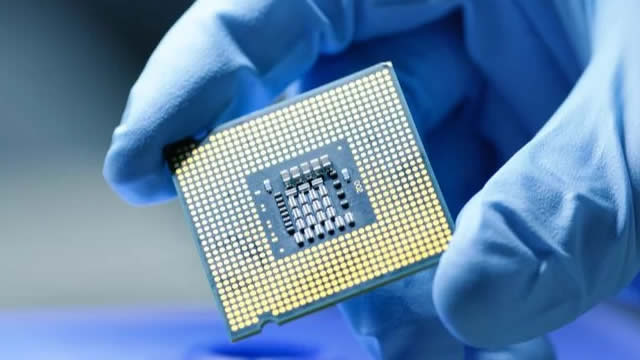
Advanced 3nm and 5nm chips

Search documents
TSM Soars 69% in a Year: Should Investors Still Buy the Stock?
ZACKS· 2026-02-09 14:16
Core Insights - Taiwan Semiconductor Manufacturing Company (TSMC) has achieved a 67.8% stock gain over the past year, driven by the AI boom and demand for advanced chips from major clients like NVIDIA, Broadcom, and Marvell Technology [2][4][10] - TSMC's performance has outpaced the Zacks Computer and Technology sector, which gained 27.9% in the same period, highlighting investor confidence in TSMC's long-term prospects [3][4] Financial Performance - TSMC's revenues for 2025 increased by 35.9% year over year to $122.42 billion, with earnings per share (EPS) rising 51.3% to $10.65, primarily due to strong demand for 3nm and 5nm chips [10][11] - The company anticipates approximately 30% revenue growth in 2026, with a Zacks Consensus Estimate of $158.2 billion, reflecting a year-over-year growth of 29.2% [11] Market Position and Strategy - TSMC is the leader in the global chip foundry market, benefiting from its scale and technology, which positions it as the preferred choice for companies involved in the AI boom [7][8] - The company plans to invest between $52 billion and $56 billion in capital expenditures in 2026 to meet the growing demand for AI chips, focusing on advanced manufacturing processes [9][10] Valuation - Despite its strong performance, TSMC's stock is considered reasonably priced, trading at a forward 12-month price-to-earnings (P/E) multiple of 24.1, lower than the sector average of 25.93 [12][15] - Compared to other semiconductor companies, TSMC has a lower P/E ratio than Broadcom and NVIDIA, but a higher valuation than Marvell Technology [15] Investment Recommendation - Given TSMC's strong fundamentals, exposure to AI demand, and attractive valuation, it is recommended to buy TSM stock at this time [16]



TSM Hits 52-Week High: Should You Hold the Stock or Book Profits?
ZACKS· 2026-01-07 13:36
Core Insights - Taiwan Semiconductor Manufacturing Company (TSMC) shares reached a 52-week high of $333.08, closing at $327.43, with a 57.9% increase over the past year, outperforming the Zacks Computer and Technology sector's 25.3% gain [1][6] Financial Performance - In Q3 2025, TSMC's revenues increased by 41% year-over-year to $33.1 billion, and earnings per share (EPS) rose by 39% to $2.92, driven by demand for advanced 3nm and 5nm nodes, which now represent 60% of total wafer sales [11] - TSMC raised its revenue growth guidance for full-year 2025 to a mid-30% range, up from the previous estimate of around 30%, with analysts projecting a 20.8% revenue increase and a 20% EPS increase for 2026 [12] Market Position and Demand - TSMC is benefiting from the AI boom, manufacturing advanced chips for major clients like NVIDIA, Broadcom, and Marvell, with AI-related chip sales expected to contribute approximately 30% of total revenues by 2025, up from mid-teens in 2024 [2][8] - The company is the leading player in the global chip foundry market, with significant demand for its advanced manufacturing processes [7] Investment and Growth Strategy - TSMC plans to invest between $40 billion and $42 billion in capital expenditures in 2025, focusing 70% of this spending on advanced manufacturing processes to maintain its competitive edge [9][10] Competitive Landscape - TSMC's stock performance has outpaced peers like Broadcom and NVIDIA, which saw increases of 50.3% and 34% respectively, while Marvell Technology's stock declined by 25.3% [3] Valuation and Market Sentiment - TSMC's stock trades at a forward P/E ratio of 26.74, higher than the sector average of 23.19, but lower than Broadcom, NVIDIA, and Marvell [16][20] - Investor confidence in TSMC's long-term prospects remains strong despite market volatility and geopolitical risks [6] Risks and Challenges - Near-term risks include softness in PC and smartphone markets, which may limit growth despite rising AI demand [13] - The company's global expansion strategy, including new fabs in the U.S., Japan, and Germany, may lead to higher costs and lower gross margins in the short term [14] - Geopolitical tensions, particularly U.S.-China relations, pose strategic risks due to TSMC's revenue exposure to China [15]

AI Drives 60% of TSM's Q2 Revenues: Will the Growth Momentum Last?
ZACKS· 2025-07-25 13:36
Core Insights - Taiwan Semiconductor Manufacturing Company (TSM) has reported significant financial growth driven by the demand for artificial intelligence (AI) technologies, with High-Performance Computing (HPC) revenues increasing 14% sequentially and accounting for 60% of total sales in Q2 2025 [1][8] - Year-over-year, TSM's revenues and earnings per share (EPS) surged 44% and 67%, respectively, primarily due to the strong adoption of advanced 3nm and 5nm chips used in AI applications [2][8] - The company anticipates continued growth in the AI sector, projecting a full-year revenue increase of approximately 30% year over year [2] Financial Performance - TSM's Q2 2025 revenues reached $118.18 billion, reflecting a 31.1% increase from 2024, with the Zacks Consensus Estimate indicating strong future earnings growth of 37.5% and 13.1% for 2025 and 2026, respectively [4][11] - The company's share price has increased by about 22.9% year to date, outperforming the Zacks Computer and Technology sector's gain of 10.2% [7] Market Position and Strategy - TSM's leadership in process technology and its expanding manufacturing presence across the U.S., Europe, and Asia enhance its competitive position in the market [4] - The company is investing aggressively in advanced nodes like N2 and A16 to capture the growing demand for leading-edge chips driven by rising AI workloads and on-device computing [3][4] - TSM's close relationships with cloud and chip companies further position it to benefit from the ongoing AI boom [3] Competitive Landscape - Competitors like Intel and GlobalFoundries are also increasing their focus on AI chip manufacturing, with Intel investing in its foundry business and developing advanced 1.8nm chips [5] - GlobalFoundries is targeting mature nodes while expanding capacity in the U.S. and Europe to meet AI-related demand, particularly in edge computing [6]