Agoda.com

Search documents
Agoda Launches Agoda Impact Lab at ASEAN Tourism Forum
BusinessLine· 2026-01-29 09:12
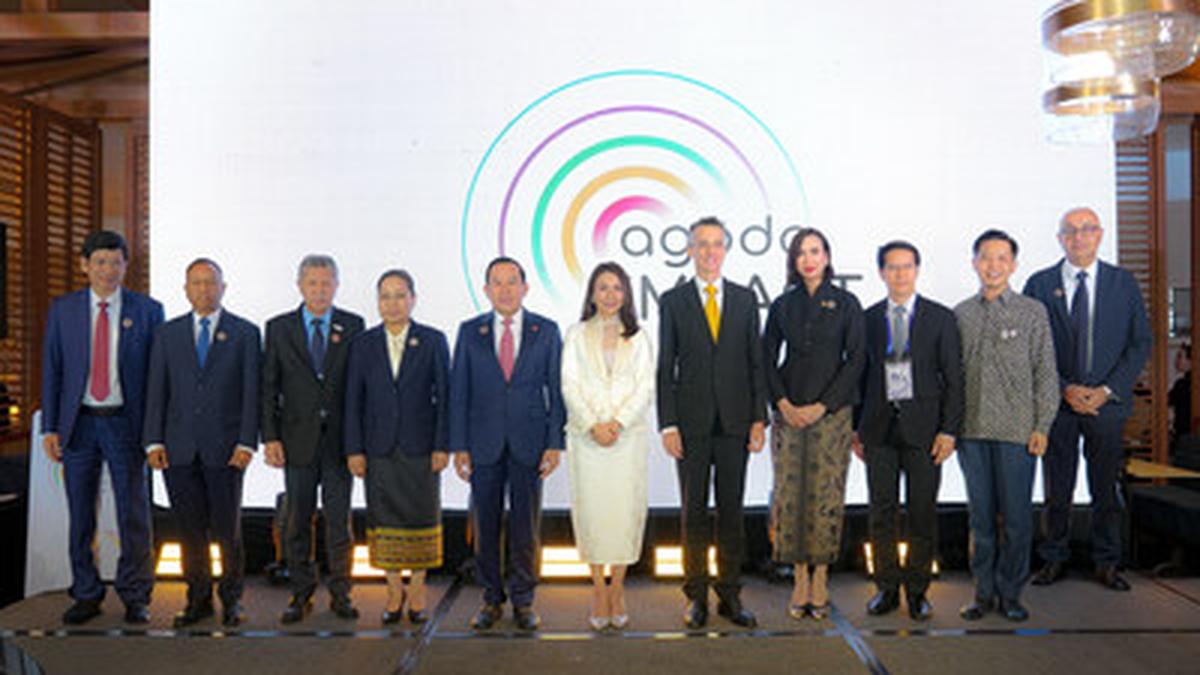
Core Insights - Agoda has launched the Agoda Impact Lab, a new initiative aimed at fostering innovation and resilience in the travel and technology sectors across Asia [1][4] Group 1: Initiative Overview - The Agoda Impact Lab is designed as a collaborative platform for both public and private sectors to create, test, and implement practical solutions [2] - The Lab focuses on storytelling, industry upskilling, and capacity building, leveraging Agoda's expertise in eCommerce, technology, marketing, and analytics [2][3] Group 2: Training and Collaboration - Agoda will provide hands-on e-commerce training programs for accommodation providers in ASEAN and conduct Executive Masterclasses on emerging innovations like AI [3] - A joint working group will be established with ASEAN and WWF-Singapore to discuss the ecological and economic sustainability of emerging travel destinations [3] Group 3: Sustainable Tourism - The Impact Lab will promote the Sustainable Tourism Academy, offering free, self-paced sustainability training aligned with the Global Sustainable Tourism Council (GSTC) Standard [3] - Data-driven reports will be published to guide industry decisions regarding traveler demand, technology adoption, and localization [3] Group 4: Company Background - Agoda operates a digital travel platform with over 6 million holiday properties, 130,000 flight routes, and 300,000 activities available for booking [4][6] - The company is headquartered in Singapore and is part of Booking Holdings, employing over 7,000 staff across 27 markets [6]


New Agoda report reveals the forces shaping the next phase of AI maturity in Southeast Asia and India
BusinessLine· 2025-11-14 11:21
Core Insights - AI is becoming essential in developer workflows across Southeast Asia and India, with governance being the key factor for the next phase of AI maturity in the region [1][7] Adoption and Usage - 95% of developers use AI weekly, primarily for code generation (94%), while adoption for other tasks like documentation (72%), code review (67%), testing (57%), planning (56%), and deployment (36%) is lower, indicating uneven integration [2] - Most developers report that AI-generated code functions correctly less than half the time without significant revisions, highlighting a gap between adoption and reliability [6] Governance and Guidelines - Only 25% of teams operate under official AI guidelines, and 60% lack a formal AI policy, leading to a reliance on team culture for governance [3] - Leading organizations are implementing structured governance frameworks to balance developer autonomy with organizational oversight, as seen with Agoda's GenAI Proxy [4] Peer Review and Accountability - Developers are incorporating bottom-up accountability, with 57% reporting changes to code review processes, and 67% always reviewing AI-generated code before merging [5] - The evolution of peer review practices is crucial for establishing measurable processes that can be scaled across teams [6] Future Directions - The next competitive edge will be establishing a clear framework for consistent and productive AI usage, focusing on trust, quality, and governance [7] - The Agoda AI Developer Report 2025 provides insights from over 600 developers across seven key markets, reflecting the current state of AI adoption and integration in the region [10]