Autistic Barbie doll

Search documents
The business behind an autistic Barbie doll
Jamaica· 2026-01-25 05:11
Core Perspective - Mattel Inc has introduced an autistic Barbie to celebrate diversity and inclusivity within its product line, which already features dolls representing various disabilities and backgrounds [1][6]. Development Process - The autistic Barbie was developed over 18 months in collaboration with the Autistic Self Advocacy Network to accurately reflect the experiences of autistic individuals [2]. - The development team faced challenges due to the wide range of autism behaviors and traits, which are not always visible [3]. Design Features - The doll's design includes features such as slightly shifted eyes to represent avoidance of direct eye contact and articulated elbows and wrists to acknowledge stimming behaviors [3]. - The chosen outfit is an A-line dress with short sleeves and a flowy skirt to minimize skin contact, along with flat shoes for stability [5]. - Each doll is equipped with a pink finger clip fidget spinner, noise-cancelling headphones, and a pink tablet for communication [5]. Representation and Inclusivity - The autistic Barbie also features facial characteristics inspired by Mattel employees in India, aiming to represent underrepresented segments of the autistic community [6]. - The Barbie Fashionistas line includes dolls with various disabilities and body types, promoting a broader representation of diversity [7]. Market Availability - The autistic Barbie is set to be available online and at Target stores for a suggested retail price of US$11.87, with Walmart expected to carry it starting in March [8]. Autism Prevalence - According to the CDC, the estimated prevalence of autism among eight-year-old children in the U.S. is 1 in 31, with higher rates among certain racial and ethnic groups and a prevalence more than three times higher in boys than girls [9].


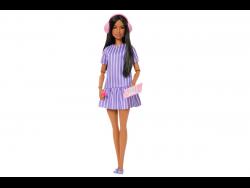
Barbie® Introduces the First Autistic Barbie Doll, Championing Representation for Children through Play
Businesswire· 2026-01-12 05:00
Core Insights - Mattel, Inc. has introduced its first-ever autistic Barbie doll, developed with input from the autistic community to better represent their experiences and communication styles [1] Group 1: Product Development - The autistic Barbie doll was developed over a period of more than 18 months [1] - The creation involved collaboration with ASAN, a non-profit organization that advocates for autistic individuals [1] Group 2: Representation and Inclusion - This new doll aims to provide representation for more children, allowing them to see themselves reflected in the Barbie brand [1]