CAIE Registered Artificial Intelligence Engineer Certification

Search documents
2025运维人咋突围?3个转型技能+1个实用认证,告别背锅涨工资
Sou Hu Cai Jing· 2025-10-12 22:35
Core Insights - The demand for traditional operations and maintenance (O&M) positions has decreased by 18% in 2024, while salaries for O&M roles with cross-domain skills have increased by 25% [1] - By 2025, O&M roles that only involve basic tasks like inspection and log checking are likely to be replaced by automation tools, emphasizing the importance of skill selection over mere activity [1][3] Industry Trends - The nature of O&M has evolved from merely monitoring servers to managing cloud-native architectures, requiring a shift from physical machine management to container and microservices management [3] - The automation rate for basic monitoring and troubleshooting tasks has exceeded 70%, leading to a decline in the value of O&M roles that only perform execution tasks [3] Skills Development - Three essential skills for O&M professionals to thrive in 2025 include: 1. **Cloud Native and Container Orchestration**: Over 90% of enterprises are expected to host their business on the cloud, making knowledge of Docker image management highly sought after across various industries [6] 2. **Data Operations and Analysis**: O&M professionals must learn to predict issues by analyzing system logs and business data, which can help in resource optimization and decision-making [7] 3. **AI Operations Practice**: Proficiency in AI tools can enhance efficiency, allowing O&M professionals to automatically identify anomalies and reduce troubleshooting time by over 60% [7] Transformation Steps - The transformation process for O&M professionals involves three steps: 1. **Self-Assessment**: Identifying skill gaps and defining career transition goals [11] 2. **Phased Learning**: Prioritizing the learning of cloud-native and data operations before moving on to AI operations, applying new skills in real work scenarios [11] 3. **Gaining Cross-Industry Experience**: Seeking opportunities to participate in cross-industry projects or engaging with case studies through CAIE certification communities to enhance resumes [11]


2025年,不做“濒危”市场人!聚焦三大自我提升路径,抢占跨行业先机
Sou Hu Cai Jing· 2025-10-10 07:50
Core Insights - The market roles are undergoing unprecedented transformation pressures due to deep changes in market environment, technological advancements, and consumer behavior, with over 60% of market professionals feeling the shift in job requirements [1] - Nearly 40% of market professionals are actively seeking cross-industry transition opportunities, indicating a significant trend towards skill enhancement and adaptability [1] Group 1: Challenges Faced by Market Professionals - Accelerated skill iteration has become the new norm, with a 150% increase in the demand for data analysis and AI tool usage in job descriptions over the past three years [1] - The blurring of industry boundaries is creating a demand for hybrid talent, as companies from different sectors require diverse skill sets and insights [1] Group 2: Essential Skills for Cross-Industry Transition - Data thinking and analytical skills are now fundamental for market professionals, with a focus on deriving business insights from data to guide marketing decisions [3] - Proficiency in AI applications and human-machine collaboration is crucial, as generative AI tools are reshaping marketing workflows and enhancing content production efficiency by approximately 70% [9] - Cross-industry cognition and understanding are vital for successful transitions, requiring strong learning and cognitive flexibility to grasp different industry dynamics [10] Group 3: Sustainable Self-Improvement Pathways - Developing a systematic learning plan tailored to individual career stages and industry demands is essential, with many professionals opting for structured courses like CAIE certification [11] - Creating a feedback loop between knowledge acquisition and practical application can significantly enhance self-improvement outcomes [12] - Expanding cross-industry networks and information channels is necessary for accessing opportunities, with data indicating that referrals lead to higher success rates in transitions compared to unsolicited applications [13] Group 4: Future Outlook and Recommendations - The trend of market role transformation is expected to accelerate, with ongoing technological evolution and changing consumer behaviors [14] - Market professionals are advised to adopt a "small steps, fast pace" strategy for cross-industry transitions, starting with project collaborations or consulting roles before committing to full transitions [14] - Emphasizing the importance of understanding human nature and creating value remains central to marketing, even amidst technological advancements [14]
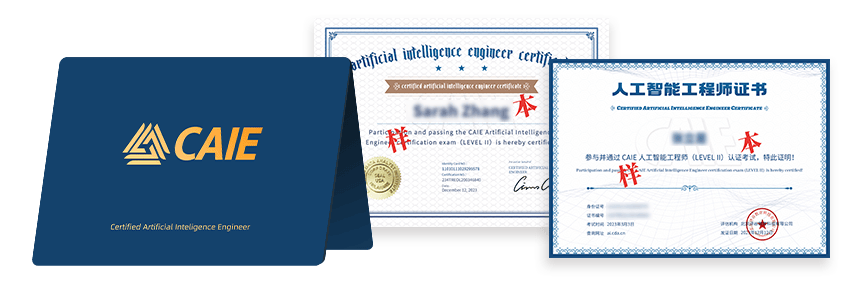
2025年运营人惊醒:不懂这3个技能,跨行业转型寸步难行!
Sou Hu Cai Jing· 2025-10-08 15:14
Core Insights - The operational roles in companies are facing unprecedented challenges and opportunities due to the digital transformation, with over 50% of operational professionals actively seeking skill upgrades or cross-industry transitions to adapt to automation and AI impacts [1][3] - The urgency for role transformation and self-improvement is particularly pronounced in the operational field, as traditional operational models lose competitiveness and the demand for multi-skilled operational talent continues to grow [3][4] Current Status and Urgency of Transformation - Traditional operational roles are increasingly being replaced by automation tools, leading to a decline in the demand for basic operational tasks, which has dropped to single-digit growth rates over the past three years [3] - A significant skills gap exists, with only about 30% of employees in a leading internet company able to independently use AI tools to optimize workflows, highlighting the need for proactive skill upgrade planning [3][4] Core Skill Enhancement Directions - The demand for operational skills is evolving from single-specialty capabilities to multi-dimensional competencies, with three key areas identified for self-improvement: 1. Data analysis and AI application skills, requiring knowledge of statistics and tools like Python and SQL [6][8] 2. Cross-department collaboration and project management skills, which can increase project success rates by approximately 40% when certified [14] 3. Industry insight and business thinking, essential for understanding industry dynamics and profitability [14][15] Practical Paths and Strategies for Cross-Industry Transition - Successful role transitions require systematic planning, including skills mapping and gap identification, which can reduce the time to adapt to new roles by about 50% [15][16] - A gradual learning approach is recommended, focusing 70% on practical projects, 20% on feedback, and 10% on theoretical learning, to effectively build credible capabilities [16][19] Future Outlook and Continuous Growth Recommendations - By the end of 2025, it is predicted that over 60% of operational roles will involve the use or management of AI tools, necessitating a deeper understanding of the underlying technology and ethical considerations [20][22] - Continuous learning and regular skill matrix evaluations are advised, with data indicating that those who update their knowledge structure regularly can achieve salary growth approximately 25% higher than their peers [20][22]