Chrysler Pacifica PHEV

Search documents
Stellantis Pivots From PHEVs to Hybrids and EREVs in North America
ZACKS· 2026-01-12 20:05
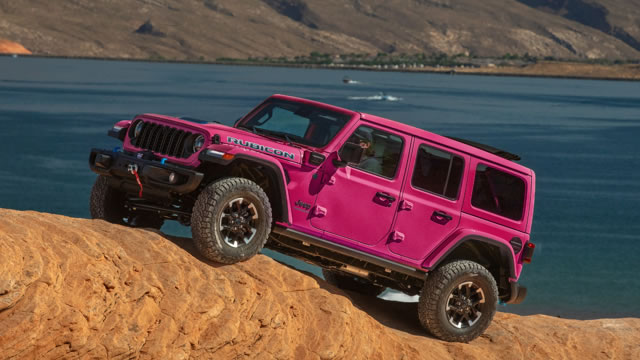
Core Insights - Stellantis has officially ended sales and production of its plug-in hybrid (PHEV) models in the United States, marking a significant shift in its strategy [1][10] - The company will focus on more competitive electrified solutions, including conventional hybrids and extended-range electric vehicles (EREVs), starting with the 2026 model year [2][10] Group 1: Strategic Shift - Stellantis is discontinuing its PHEV programs in North America due to reduced demand for plug-in hybrids and changing consumer preferences [2][5] - The decision comes despite the previous success of models like the Jeep Wrangler 4xe, which was the best-selling plug-in hybrid for three consecutive years [3][4] - The company is reshaping its North American portfolio, discontinuing models such as the Jeep Grand Cherokee 4xe and Chrysler Pacifica PHEV [4][10] Group 2: Market Dynamics - The shift reflects a broader acceptance of traditional hybrids among U.S. buyers, as they do not require external charging [5] - Recent adjustments to U.S. federal incentives have diminished the financial appeal of PHEVs, further influencing Stellantis's decision [5] - The discontinuation follows a series of recalls affecting PHEV models, particularly concerning battery failures and fire reports, which have added pressure to the PHEV segment [6][10] Group 3: Future Direction - Stellantis announced the discontinuation of the development of Ram's all-electric pickup, the Ram 1500 REV, as part of its strategic repositioning [7] - The company aims to offer electric driving with longer range and reduced dependence on charging infrastructure through its focus on conventional hybrids and EREVs [7][10]


Stellantis scraps Jeep, Chrysler plug-in hybrid vehicles amid EV slowdown, recall
CNBC· 2026-01-09 17:46
Core Viewpoint - Stellantis is discontinuing its plug-in hybrid electric Jeep SUVs and Chrysler minivan due to declining EV sales, quality issues, and changes in federal fuel economy standards [1][2]. Group 1: Production Decision - The decision to end production of the plug-in hybrid Jeep Wrangler, Jeep Grand Cherokee, and Chrysler Pacifica is driven by decreasing customer demand and a strategic shift towards more competitive electrified solutions [2]. - Stellantis plans to phase out plug-in hybrid programs in North America starting with the 2026 model year [2]. Group 2: Market Context - This move marks a significant change for Stellantis, which previously highlighted its leadership in U.S. PHEV sales, aiming to sell 160,000 to 170,000 PHEVs in 2024, representing 41% of U.S. PHEV sales [3]. - The company has utilized PHEVs to balance its production of traditional gas-powered vehicles to comply with federal fuel economy standards, which have become less stringent under the current administration [5]. Group 3: Product Features and Challenges - PHEVs combine traditional internal combustion engines with an all-electric range, but are considered costly due to their dual propulsion systems [6]. - The cancellation of these models coincides with a recall of Jeep SUVs due to fire risks, highlighting ongoing quality concerns [7]. Group 4: Future Strategy - Jeep is reassessing its electrification strategy following the expiration of federal incentives for EVs and PHEVs [8]. - The brand will continue to offer all-electric SUVs, such as the Wagoneer S and Recon, which were revealed recently [9].