CostVantage

Search documents
CVS Health (NYSE:CVS) 2026 Conference Transcript
2026-03-09 13:42
Summary of CVS Health Conference Call Company Overview - **Company**: CVS Health - **Industry**: Healthcare and Pharmacy Services Key Points and Arguments Leadership and Strategic Focus - Prem Shah has expanded responsibilities as Group President, overseeing pharmacy businesses and healthcare delivery, focusing on transforming consumer experiences across CVS's ecosystem [2][3] - The integration of various CVS assets, including 9,000 local community pharmacies and Caremark, aims to enhance consumer access and connection within stores [2][3] Cost Management and Affordability - CVS has launched a biosimilar for Humira at an 80% lower list price, resulting in over $1.5 billion in savings for clients over the past few years [4] - The company emphasizes its unique position in the supply chain to create competition and drive affordability for consumers [3][4] Legislative Impact and TrueCost Model - Recent PBM legislation provides clarity for CVS, allowing for a transition to a hyper-transparent pricing model called TrueCost, which is expected to launch in late 2028 or early 2029 [11][12] - CVS anticipates maintaining durable margins despite industry competition, with expectations of mid-teens CAGR through 2028 [12][13] Recontracting and Rebate Pressures - CVS is addressing approximately $500 million in rebate guarantee pressure, with half expected in 2024 and the remainder in 2025 and 2026 [20] - The company is working with clients to ensure value and adjust pricing models accordingly [21] Aetna and Medicaid Business - Aetna's margin recovery is progressing well, with a disciplined approach to pricing and cautious outlook on trends [26][28] - Medicaid represents a mid-teens revenue portion for Aetna, with expected downward performance trends factored into financial planning [34] Competitive Landscape and Market Position - CVS has gained market share in the pharmacy consumer wellness business, overcoming previous reimbursement pressures [36][38] - The competitive landscape has evolved, with CVS focusing on enhancing clinical services and consumer engagement through technology [39][40] Future of Pharmacy - The vision for the "pharmacy of the future" includes providing more clinical care and integrating consumer experiences [42][43] - CVS aims to standardize care across its 9,000 pharmacies while enhancing digital capabilities [40][41] Health100 Initiative - CVS is excited about the Health100 platform, which aims to integrate consumer engagement across its services and improve healthcare experiences [51][54] - The platform will leverage partnerships, including with Google, to enhance consumer interactions and healthcare delivery [52][57] Measurement of Success - Success will be gauged by user engagement in the Health100 application, partnerships across the ecosystem, and improvements in consumer outcomes [59] Additional Important Content - CVS's CostVantage model has normalized reimbursement processes, providing predictability and transparency in operations [45][48] - The company is focused on expanding the role of pharmacists and enhancing their capacity to provide care [8][41] This summary encapsulates the key insights and strategic directions discussed during the CVS Health conference call, highlighting the company's focus on consumer experience, affordability, and integration of services within the healthcare ecosystem.

Can CVS Sustain Pharmacy & Consumer Wellness Gains Through Year-End?
ZACKS· 2025-07-04 13:45
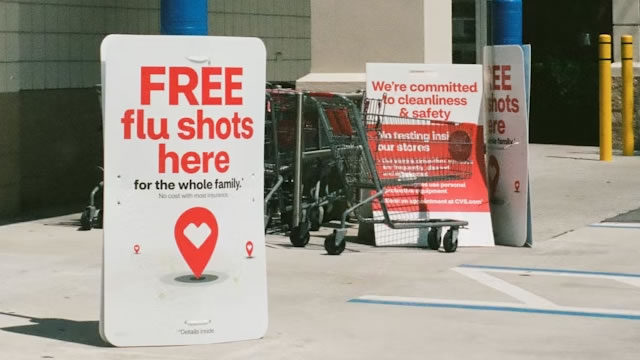
Core Insights - CVS Health's Pharmacy and Consumer Wellness segment has experienced an 11.1% year-over-year revenue growth in Q1 2025, driven by high vaccine demand and an extended flu season, raising questions about sustaining this momentum throughout fiscal 2025 [1][9] Group 1: Business Performance - The favorable pharmacy drug mix, particularly the rising demand for high-cost branded GLP-1 medications, is expected to benefit CVS [2] - CVS Pharmacy's inclusion in Novo Nordisk's NovoCare pharmacy network allows for expanded access to Wegovy at over 9,000 community health locations [2] - The implementation of the CostVantage pharmacy reimbursement model is anticipated to enhance future results by reducing market cross-subsidization [2] Group 2: Sales and Market Trends - Rising same-store sales and prescription volumes are projected to boost adjusted operating income for CVS Health's PCW business [3] - Retail pharmacy remains crucial, supported by demographic trends and increasing prescription drug usage [3] Group 3: Strategic Developments - CVS completed a three-year plan to close 900 stores, achieving a retail pharmacy script share of 27.6% in Q1 2025, an increase of nearly 70 basis points year over year [4] - The company's consistent execution and commitment to pharmacy access are expected to maintain its market position despite a smaller footprint [4] Group 4: Competitive Landscape - Walmart reported strong health and wellness sales growth in fiscal 2026, with a 91% year-over-year increase in deliveries under three hours [6] - Walgreens Boots Alliance achieved 7.8% year-over-year sales growth in its U.S. Retail Pharmacy segment, focusing on a retail-pharmacy-led turnaround strategy [7] Group 5: Financial Metrics - CVS shares have increased by 18.9% over the past year, outperforming the industry's 14.6% decline [8] - The stock is trading at a forward 12-month earnings multiple of 10.18X, lower than the industry average of 14.07X, and carries a Value Score of A [10]

CVS Soars 53% in Q1: Time to Buy the Stock Ahead of Earnings Release?
ZACKS· 2025-04-22 20:00
Core Insights - CVS Health Corporation is set to report its first-quarter 2025 results on May 1, with adjusted earnings expected to show significant year-over-year growth [1][2][19] - The company has seen a positive trend in earnings estimates, with the consensus estimate for first-quarter earnings rising from $1.44 to $1.65 per share over the past three months [3][4] Financial Performance - The Zacks Consensus Estimate for first-quarter revenues is $92.95 billion, indicating a 5.1% year-over-year growth [2] - The consensus estimate for first-quarter earnings is $1.65 per share, reflecting a 25.9% improvement compared to the previous year [2] Segment Performance - CVS Health's Healthcare Benefits segment is anticipated to report revenues of $33.66 billion for the first quarter, benefiting from strategic actions taken to improve performance [7][6] - The Health Services arm's revenues are estimated at $43.36 billion, supported by the effectiveness of CVS's pharmacy benefit manager (PBM) in managing drug costs [9][8] - The Pharmacy & Consumer Wellness segment is projected to generate $31.19 billion in revenues, driven by increased prescription volume despite ongoing reimbursement pressures [11][10] Market Position and Stock Performance - CVS Health's shares outperformed the S&P 500, rising 52.8% in the first quarter of 2025, while peers like Herbalife and Walgreens Boots Alliance saw lower stock price increases [12] - The company's forward 12-month price-to-earnings (P/E) ratio is 10.56X, which is significantly higher than its peers, indicating a premium valuation [15] Strategic Initiatives - CVS is focusing on a turnaround at Aetna, with expectations of margin recovery starting in 2025 due to benefit redesigns and improved rate negotiations [5] - The company is implementing strategic changes across its business lines, including benefit design changes in Medicare and pricing adjustments in the individual exchange market, to enhance profitability [6][19]