DAMO PANDA(胰腺癌早筛AI模型)

Search documents
外媒:阿里巴巴旗下AI模型有效助力胰腺癌早筛
Ge Long Hui A P P· 2026-01-06 09:41
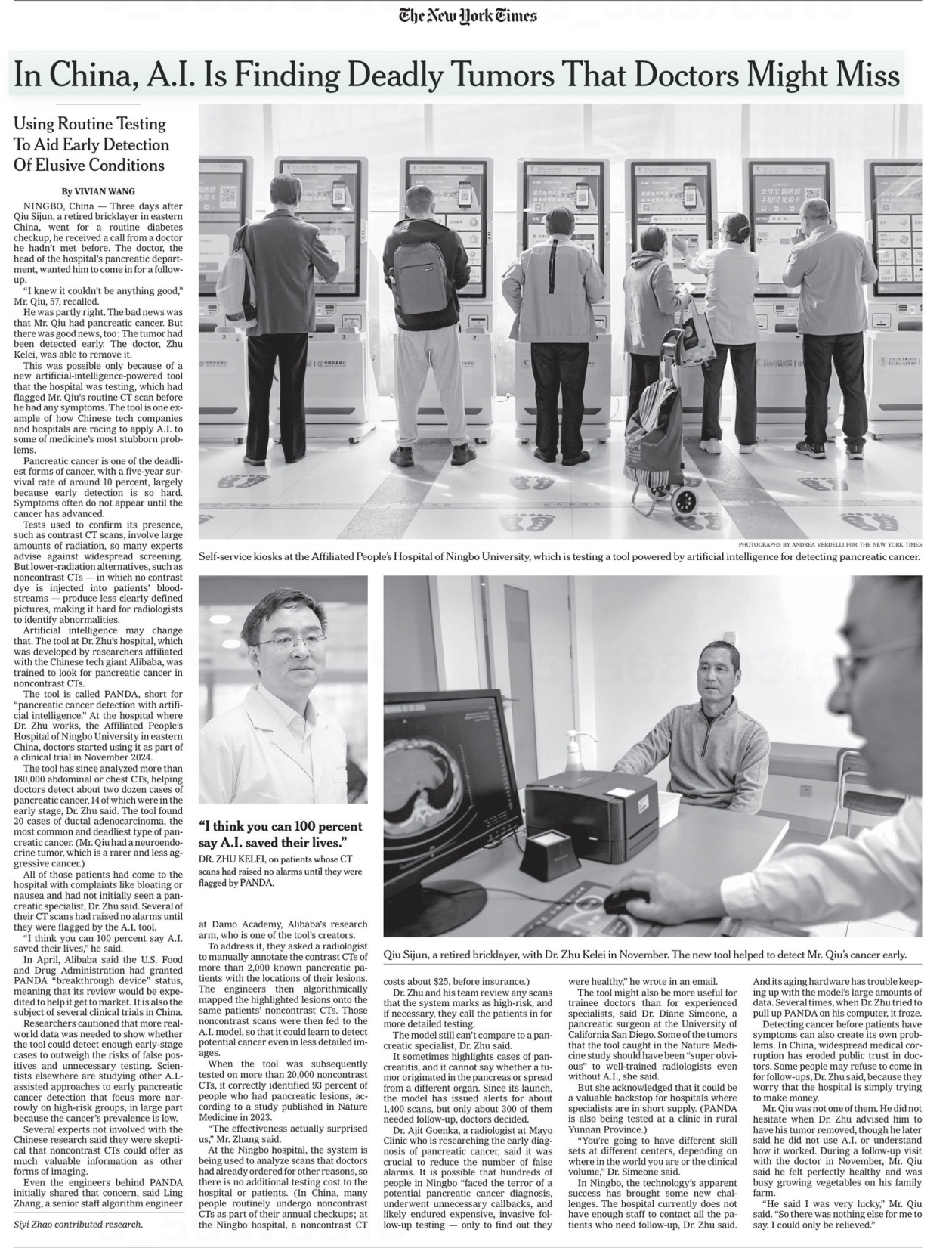
Core Viewpoint - Alibaba's DAMO PANDA AI model for early detection of pancreatic cancer has shown significant potential in identifying tumors that may be missed by traditional methods [1] Group 1: AI Model Development - The DAMO PANDA AI model was developed by Alibaba's DAMO Academy and has been operational since November 2014 [1] - The AI model has analyzed over 180,000 CT scans at a hospital in Ningbo [1] Group 2: Clinical Impact - The AI model has assisted doctors in identifying 24 cases of pancreatic cancer, with 14 of these being early-stage cancers [1] - The collaboration with multiple medical institutions for research pilot projects indicates a commitment to advancing cancer detection technology [1]

《纽约时报》中国报道引发讨论:中美已走上不同的AI道路!
Huan Qiu Wang· 2026-01-06 08:06
Core Viewpoint - The article highlights the successful application of an AI model developed by Alibaba for early detection of pancreatic cancer, which has significantly improved patient outcomes by identifying tumors that might have been missed by traditional methods [1][4][6]. Group 1: AI Model and Its Impact - The AI tool, named PANDA, was developed by researchers at Alibaba's DAMO Academy and has been in clinical trials since November 2024, analyzing over 180,000 CT scans [4][13]. - The tool has helped detect approximately 24 cases of pancreatic cancer, with 14 of these being in the early stages, which is crucial given the low five-year survival rate of around 10% for this type of cancer [5][13]. - Dr. Zhu Kelei, who oversees the clinical trial, stated that the AI tool has saved lives by identifying tumors in patients who initially showed no alarming symptoms [6][12]. Group 2: Technical Aspects of the AI Tool - The AI model was trained using data from over 2,000 known pancreatic cancer patients, allowing it to detect potential cancer in non-contrast CT scans, which typically provide less detailed images [9][13]. - In tests, the AI tool correctly identified 93% of individuals with pancreatic lesions, demonstrating its effectiveness in early detection [9][13]. - The model is still being refined, as it sometimes misidentifies conditions like pancreatitis and cannot differentiate whether a tumor originated in the pancreas or spread from another organ [10][11]. Group 3: Public and Professional Reception - The article has sparked significant discussion among American readers, with many expressing hope for the potential of this AI technology in improving early cancer diagnosis [18][19]. - Prominent figures, including medical professionals, have praised the research for its validation and potential impact on patient care [23]. - The collaboration between Alibaba and various medical institutions in China indicates a broader effort to integrate AI into healthcare, aiming to address critical medical challenges [23].