DDR5 RCD接口芯片

Search documents
半导体IP市场,变了
3 6 Ke· 2026-01-30 03:02
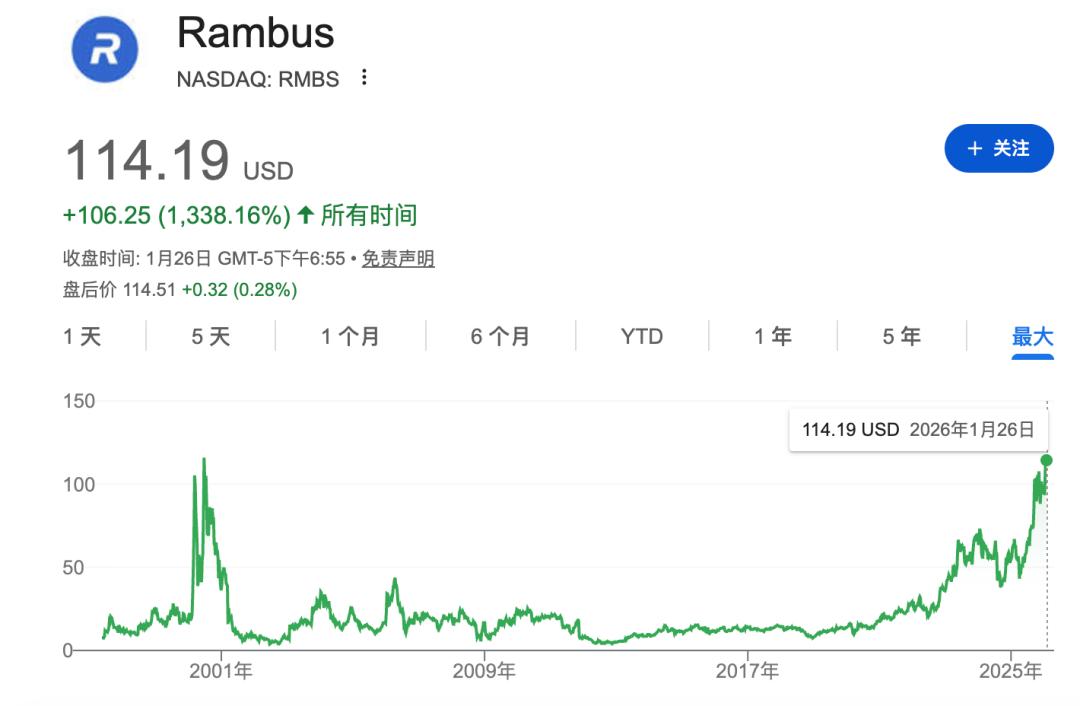
Core Insights - The semiconductor IP market is undergoing significant transformations driven by the rise of generative AI, with companies like Rambus, Synopsys, and Alphawave Semi experiencing drastic changes in their business models and market positions [1] Rambus' Transformation - Rambus has seen its stock price nearly double, reaching approximately $115–125, with a peak of $135, reflecting a nearly 100% increase over the past year due to heightened demand for its technology in the AI era [2][5] - Analysts have raised Rambus' target price to around $120–130, indicating a shift from a reliance on patent licensing to a more central role in AI and data center infrastructure [5] - Rambus has strategically adjusted its product line, selling some assets to focus on high-performance memory subsystems and security IP, which has contributed to its growth [5][6] Market Dynamics and Demand - The current challenge in AI computing is not the speed of GPUs but the data transfer capabilities, with Rambus' DDR5 RCD interface chips being essential for ensuring efficient data flow [6] - Rambus holds over 40% market share in the DDR5 RCD chip segment, which is critical as AI servers transition to DDR5 standards [6] - The company anticipates significant growth in the MRDIMM market, projecting to capture over 40% of this $600-700 million segment [7] Synopsys' Strategic Shift - Synopsys' decision to sell its ARC processor business reflects a shift towards AI-enhanced EDA tools and a focus on high-margin software solutions [8][9] - The sale allows Synopsys to concentrate on AI infrastructure, moving away from the competitive landscape of general-purpose CPU architectures [9][10] - The acquisition of Ansys strengthens Synopsys' capabilities in system-level simulation, positioning it to better serve clients like NVIDIA and Google [9] Alphawave Semi's Acquisition - Alphawave Semi, initially focused on IP supply, transitioned to a full SoC design capability and was acquired by Qualcomm, marking the end of its independent status [11][12] - The acquisition is strategic for Qualcomm as it seeks to enhance its position in high-performance computing and AI infrastructure, leveraging Alphawave's expertise in high-speed interconnect technology [12][13] - The disappearance of Alphawave as an independent entity highlights the increasing difficulty for mid-sized IP companies to survive in the competitive landscape dominated by larger players [13] Industry Trends - The semiconductor industry is witnessing a shift from a focus on CPU performance to the importance of data pathways and interconnect technologies, as AI systems require efficient data flow for optimal performance [14][15] - The market share of processor IP is declining, while interface IP is expected to grow significantly, potentially reaching over 25% of the IP market by 2026 [15][16] - The competitive focus is shifting towards interconnect and system-level capabilities, indicating a structural reorganization within the semiconductor IP market [16]

半导体IP市场,变了!
半导体行业观察· 2026-01-30 02:43
Core Insights - The semiconductor IP market has undergone significant changes due to the rise of generative AI, leading to a re-evaluation of companies within the industry [2] - Rambus has seen its stock price nearly double, becoming a crucial player in the AI server supply chain, while Synopsys divested its ARC processor business, and Alphawave Semi was acquired by Qualcomm [2][4][12] Group 1: Rambus' Transformation - Rambus has shifted from a "patent troll" reputation to a key player in high-speed interface technology, with its stock price reaching approximately $115–125, and peaking at $135, reflecting nearly 100% growth over the past year [4][6] - Analysts have raised Rambus' target price to around $120–130, recognizing its transition from a patent-dependent model to a core player in AI and data center infrastructure [6] - Key products driving Rambus' growth include DDR5 RCD interface chips, HBM4 controller IP, and MRDIMM, with the company holding over 40% market share in these segments [6][7] Group 2: Synopsys' Strategic Shift - Synopsys sold its ARC processor business to GlobalFoundries, marking a shift from general-purpose computing to focusing on AI-enhanced EDA tools and system-level simulation capabilities [8][10] - The decline in demand for traditional CPU IP, like ARC, is attributed to the rise of RISC-V architecture, which allows for customizable instruction sets without high licensing fees [9][10] - Synopsys aims to capitalize on AI infrastructure by investing in AI-enhanced EDA and merging with Ansys to strengthen its simulation capabilities [9][10] Group 3: Alphawave Semi's Acquisition - Alphawave Semi, initially focused on IP supply, transitioned to a full SoC design capability and was acquired by Qualcomm, ending its independent status [12][13] - The acquisition is strategic for Qualcomm as it seeks to enter the high-performance computing and AI data center markets, leveraging Alphawave's expertise in UCIe and high-speed interfaces [12][13] - The acquisition highlights the increasing difficulty for mid-sized IP companies to survive independently in the competitive landscape dominated by larger players [13] Group 4: Market Dynamics and Trends - The semiconductor IP market is experiencing a structural shift, with value moving from core processors to surrounding technologies such as interfaces and connectivity solutions [16][17] - The market share of processor IP has declined from 57.6% in 2017 to below 45% by 2025, while interface IP is expected to grow to over 25% of the market by 2026 [17] - The focus of competition is shifting towards interface, interconnect, and system-level capabilities, with interface IP segments growing at a compound annual growth rate (CAGR) exceeding 20% [17]