
Disability Insurance

Search documents
Unum Group (NYSE:UNM) Quarterly Earnings Preview
Financial Modeling Prep· 2026-02-05 15:00
Core Viewpoint - Unum Group (NYSE:UNM) is set to release its quarterly earnings on February 5, 2026, with analysts closely monitoring its financial performance, particularly in light of projected earnings growth despite challenges in investment income [1][2]. Financial Performance Estimates - Analysts estimate that UNM will report earnings per share (EPS) of $2.11, reflecting a 3.9% increase from the previous year [2][6]. - Revenue for the quarter is projected to be approximately $3.29 billion, marking a 1.4% rise compared to the same period last year, supported by a 1.7% increase in premium income due to favorable persistency and improved sales trends [2]. Consensus and Market Reactions - There has been a slight downward revision of 0.4% in the consensus EPS estimate over the past month, which may influence investor reactions and impact short-term stock price performance [3]. Valuation Metrics - UNM's price-to-earnings (P/E) ratio is approximately 14.35, indicating the market's valuation of its earnings [4][6]. - The price-to-sales ratio stands at about 0.99, suggesting that investors are paying less than one dollar for every dollar of sales [4]. - The enterprise value to sales ratio is around 1.26, reflecting the company's total valuation relative to its sales [4]. Cash Flow and Debt Metrics - The enterprise value to operating cash flow ratio is approximately 19.98, providing insight into how the market values UNM's cash-generating ability [5]. - The earnings yield is about 6.97%, indicating the return on investment for shareholders [5]. - UNM maintains a relatively low debt-to-equity ratio of approximately 0.34, and the current ratio is around 2.33, indicating that the company has more than twice the current assets needed to cover its current liabilities [5].


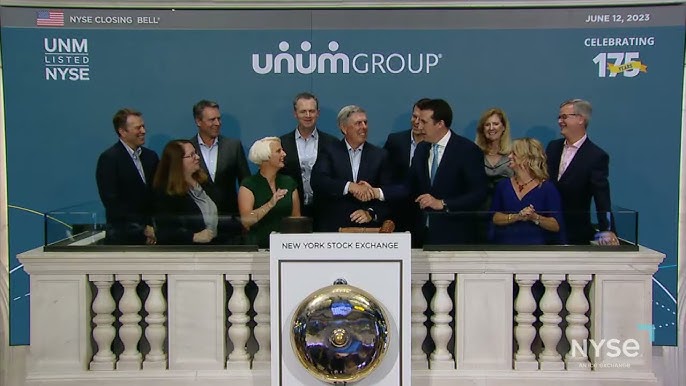
Unum Group Gears Up to Report Q4 Earnings: Here's What to Expect
ZACKS· 2026-02-03 18:10
Key Takeaways UNM is expected to post higher Q4 revenues and earnings, with sales expected to rise 1.4% year over year.Premium income is projected to grow 1.7%, supported by favorable persistency and better sales trends.Stronger results at Unum U.S., Colonial Life and International may offset lower net investment income.Unum Group (UNM) is expected to register an improvement in its top and bottom lines when it reports fourth-quarter 2025 results on Feb. 5, after the closing bell.The Zacks Consensus Estimate ...

Journal of Political Economy 2025年精选文章目录与摘要|保险学术前沿
13个精算师· 2025-12-07 02:05
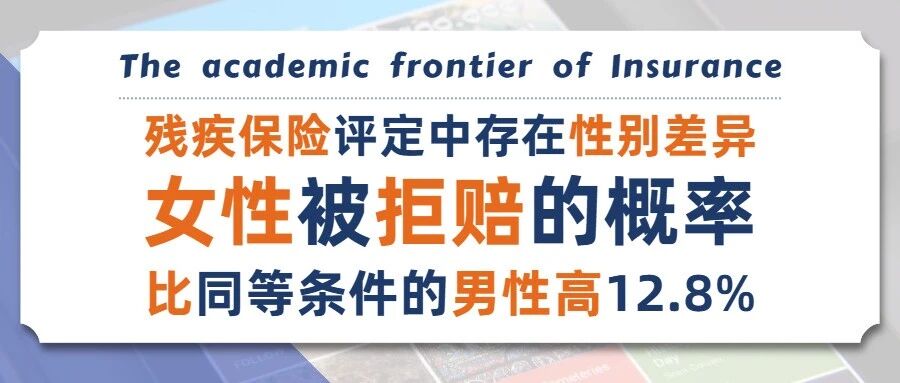
Core Insights - The article discusses various studies published in the Journal of Political Economy, focusing on the implications of unemployment insurance, disability insurance, dynamic pricing in insurance markets, and long-term health insurance in Germany. Group 1: Unemployment Insurance - Entities with a pessimistic view on disasters are more likely to leverage risky asset purchases and prefer longer-term debt contracts, as these contracts provide implicit disaster insurance that increases with maturity [6][7]. - A study on Missouri's unemployment insurance policies found that a reduction in benefit duration led to a 12% increase in job-finding rates, driven by increased job vacancies and enhanced search efforts from unemployed workers [8]. Group 2: Disability Insurance - Research indicates that women with work disabilities are 12.8 percentage points more likely to be denied disability insurance compared to men, attributed to a higher assessment of their remaining work capacity [10][11]. Group 3: Dynamic Pricing in Insurance Markets - Stricter dynamic pricing regulations have limited effects on consumer welfare while reducing insurer profits and increasing market concentration [12][13]. Group 4: Long-Term Health Insurance - The German long-term health insurance market is the largest globally, with contract designs closely aligning with optimal dynamic contracts for individuals with stable lifetime income profiles, achieving welfare levels only 4% lower than optimal contracts [14][15]. - The availability of informal care reduces the demand for long-term care insurance by 7 percentage points and suppresses Medicaid spending, suggesting that cash benefits for informal caregivers could enhance insurance demand and family welfare [17][18].
Savings Multiplier: 9 Hidden Benefits of a High Savings Rate
Yahoo Finance· 2025-11-19 15:22
Core Insights - A higher savings rate accelerates wealth accumulation through increased investment and compound returns [1][2] Group 1: Benefits of High Savings Rate - High savings lead to additional financial advantages, reinforcing the idea that savings generate more savings [2] - Sufficient savings allow individuals to avoid private mortgage insurance (PMI) by making a 20% down payment, thus saving on unnecessary costs [3] - A larger down payment also results in lower mortgage rates, further reducing monthly payments [3] Group 2: Debt Management and Financial Health - Maintaining savings helps avoid interest on debts, breaking the cycle of credit card debt and other loans [4][5] - A strong savings position contributes to a higher credit score, which in turn leads to lower interest rates on loans [6] - With adequate savings, individuals may not need life and disability insurance, allowing them to invest the saved premiums for wealth growth [7] Group 3: Insurance and Emergency Preparedness - Individuals with substantial savings can opt for high-deductible insurance plans, as they can cover deductibles in emergencies [8]
Principal Financial Group (PFG) 2025 Conference Transcript
2025-09-04 20:07
Summary of Principal Financial Group (PFG) 2025 Conference Call Company Overview - **Company**: Principal Financial Group (PFG) - **Focus**: Benefits and protection businesses, particularly in the small to midsize business (SMB) sector Key Points Unique Business Model - PFG's Group Benefits business is notably focused on small to midsize businesses (SMBs), defined as companies with 2 to 500 employees, with a sweet spot under 100 employees [3][4] - The company has a comprehensive product portfolio that integrates technology solutions to assist brokers and employers [5] - PFG has a higher concentration of knowledge workers (55%) compared to the industry average (40-45%), which differentiates its business model [6][10] SMB Market Sentiment - Recent well-being index results indicate that SMBs are resilient, with 51% of surveyed businesses adding staff in the last three months [12][14] - Business owners are reluctant to reduce benefits, indicating a strong focus on employee retention and hiring [13] Disability Insurance Insights - The company has seen improvements in disability loss ratios post-pandemic, attributed to better incidents, recoveries, and severity management [17][19] - Incidents are expected to return to pre-COVID levels, while improvements in severity and recoveries are likely to be sustained due to the nature of the knowledge worker block [23][24] - PFG has been adjusting pricing based on favorable performance, with new sale rates becoming more competitive [32] Dental Insurance Challenges - The dental segment is experiencing inflationary pressures, with claims rising due to increased utilization and severity [41][42] - PFG has a strategy to bundle dental with other products, which helps maintain persistency and manage renewal rates [45] - The company anticipates a slowdown in new sales but remains confident in long-term growth [46] Life Insurance Strategy - PFG has shifted focus to the business market, moving away from the highly commoditized retail life insurance sector [57] - The business market is characterized by fewer competitors (4-5) compared to the retail market (38), allowing for a more consultative sales approach [61] - Premium growth in the business market is strong (10-12%), while legacy blocks are running off [59] Technology Investments - PFG is investing in technology to enhance claims processing and improve efficiency, particularly in the small market segment [69][70] - The company is utilizing AI and predictive analytics to better manage claims and improve outcomes [70][71] Long-term Growth Outlook - PFG projects long-term premium and fee growth in specialty benefits at 6-9%, although this year may be lower due to current market conditions [54] - The company is focused on maintaining strong relationships with brokers and advisers, which is crucial for expanding its business market presence [66] Additional Insights - The company is actively managing fraud detection across its products, utilizing advanced technology to identify atypical behaviors [39] - PFG's approach to disability and individual disability insurance is complementary, allowing for a more comprehensive coverage strategy [68] This summary encapsulates the key insights and strategic directions discussed during the Principal Financial Group conference call, highlighting the company's focus on SMBs, technology integration, and market resilience.

Unum(UNM) - 2025 Q2 - Earnings Call Transcript
2025-07-30 13:02
Financial Data and Key Metrics Changes - The second quarter adjusted after-tax operating income per share was $2.07, down from $2.16 in the same period last year, reflecting earnings pressure [21] - Core operations premium growth was 4.6% in the quarter, keeping the company on track to achieve its full-year premium growth outlook of 3% to 6% [21][36] - The company now expects full-year EPS to be approximately $8.5, a notable shift compared to earlier expectations [17][36] Business Line Data and Key Metrics Changes - Unum U.S. segment produced adjusted operating income of $318.2 million in 2025 compared to $357.5 million in 2024 [22] - Group Disability adjusted operating earnings were $124.8 million in 2025, reflecting a benefit ratio of 62.2%, up from 59.1% in the previous year [23] - Colonial Life segment adjusted operating income increased to $117.4 million, driven by premium growth of 3.6% [30] Market Data and Key Metrics Changes - International premiums showed strong growth, with Unum UK generating premium growth of 10% year-over-year in the second quarter [29] - The benefit ratio for Unum UK was 75%, up from 69.5% a year ago, primarily due to inflation differences [29] - Group persistency was reported at 89.7%, increasing sequentially from the first quarter but decreasing from 94% in the same period last year [28] Company Strategy and Development Direction - The company is focused on reducing its long-term care (LTC) exposure while enhancing its core business operations [15][17] - Recent acquisitions include a small block of group business in the UK and a technology solution to enhance the digital platform [19][20] - The company aims to maintain a robust capital position, ending the quarter with $2 billion in holding company cash and a 485% risk-based capital ratio [18][34] Management's Comments on Operating Environment and Future Outlook - Management acknowledged that results fell short of expectations, particularly in GAAP earnings, but core fundamentals remain solid [8][10] - The company expects sales growth to improve in the second half of the year, despite a slower start [10][36] - Management remains cautiously optimistic about the rest of 2025, citing strong capital generation and premium growth [40] Other Important Information - The company announced a 10% increase in its annual common stock dividend and repurchased $300 million in shares during the second quarter [20] - The LTC net premium ratio was 94.9%, higher than the reported 93.7% in the same year-ago period [31] - The company is actively looking for further opportunities to reduce the size of its LTC footprint [82] Q&A Session Summary Question: Can you unpack the underlying drivers of the elevated claims in group disability? - Management noted that recoveries have been below expectations, with a stable experience in the first two quarters, and higher than expected claim sizes in the second quarter [45][46] Question: Is the lower claimant mortality in LTC a one-off or a normal volatility? - Management views the current quarter's results as an anomaly, with expectations that the volatility will not persist into the back half of the year [55][56] Question: How should we think about the upcoming annual actuarial assumption review? - Management indicated that the GAAP assumption review will be completed in the third quarter, taking into account recent experience [61] Question: Given the excess capital position, why not more buybacks? - Management emphasized a sustainable approach to capital deployment, with plans to return capital to shareholders through dividends and share repurchases [66][68] Question: What are the dynamics behind plans staying with existing carriers? - Management noted that the competitive environment favors incumbent carriers, with companies wanting to protect their blocks due to favorable conditions [87][90]
Unum(UNM) - 2025 Q2 - Earnings Call Transcript
2025-07-30 13:00
Financial Data and Key Metrics Changes - The second quarter adjusted after-tax operating income per share was $2.07, down from $2.16 in the same period last year, reflecting earnings pressure [20] - Full year EPS is now expected to be approximately $8.5, a notable shift compared to earlier expectations [14][39] - Core operations premium growth was 4.6% in the quarter, keeping the company on track to achieve a full year premium growth outlook of 3% to 6% [20] Business Line Data and Key Metrics Changes - Unum U.S. segment produced adjusted operating income of $318.2 million in 2025 compared to $357.5 million in 2024 [20] - Group Disability adjusted operating earnings were $124.8 million in 2025, reflecting a benefit ratio of 62.2%, up from 59.1% in the previous year [21] - Colonial Life segment adjusted operating income increased to $117.4 million, driven by premium growth of 3.6% [28] Market Data and Key Metrics Changes - International premiums showed strong growth, with Unum UK generating a 10% premium growth year-over-year in the second quarter [27] - Persistency in Unum UK was 91.6%, higher than both the first quarter and the same period last year [27] - The overall persistency for Unum U.S. was 89.7%, which increased sequentially from the first quarter but decreased from 94% in the same period last year [26] Company Strategy and Development Direction - The company is focused on reducing its exposure to legacy long-term care (LTC) while positioning itself as a leading employee benefits provider [13][14] - Recent acquisitions in the UK and the U.S. are aimed at enhancing digital capabilities and scaling the business [15][16] - The company plans to continue investing in areas that support growth and improve capital efficiency [17] Management's Comments on Operating Environment and Future Outlook - Management acknowledged that results fell short of expectations, particularly in GAAP earnings, but core fundamentals remain solid [5] - The company expects sales growth to improve in the second half of the year, despite a slower start in 2025 [7] - Management remains cautiously optimistic about the rest of 2025, citing strong capital generation and a robust capital position [39] Other Important Information - The company announced a 10% increase in its annual common stock dividend and repurchased $300 million in shares during the second quarter [18] - The alternative investment portfolio yielded 7% this quarter, slightly below the long-term target of 8% to 10% [12][30] - The company is actively looking for further opportunities to reduce the size of its LTC footprint [80] Q&A Session Summary Question: What are the underlying drivers of elevated claims in group disability? - Management noted that recoveries have been slightly below expectations, with a stable experience in the first two quarters, and they expect a benefit ratio of around 62% for the year [46][48] Question: Is the lower claimant mortality a one-off or a normal volatility? - Management views the current quarter's results as an anomaly and does not expect continued pressure in the back half of the year [54] Question: How should we think about sustainable free cash flow conversion? - Management emphasized strong capital generation and plans to return capital to shareholders through dividends and share repurchases, maintaining a focus on sustainable capital deployment [62][66]