
通货膨胀

Search documents
金融期货早评-20260401
Nan Hua Qi Huo· 2026-04-01 03:29
Report Industry Investment Rating No relevant information provided. Core Viewpoints of the Report - China's economic recovery in Q1 is evident, with the March PMI returning to the expansion range, but there are still structural contradictions and risks from geopolitical conflicts [2]. - The RMB exchange rate is expected to be relatively strong in the short - term due to the weakening of the US dollar and China's economic resilience [3]. - The stock index is expected to be slightly stronger in the short - term but remains volatile due to uncertainties in the Middle East situation [5]. - The bond market is expected to remain volatile in the short - term [6]. - The container shipping market for European routes is expected to be weak and volatile in the short - term [9]. - The prices of various commodities are affected by multiple factors, including geopolitical conflicts, supply - demand relationships, and macro - economic policies, and their trends vary [11][12][16][22][26][30][36][40][55][59][65] Summary by Directory Financial Futures - **Market Information**: In January - February, the operating income of state - owned enterprises increased by 0.2% year - on - year, and the total profit decreased by 2.0%. The situation in the Middle East is tense, with the US and Iran having complex interactions. The central bank's monetary policy committee held its Q1 meeting, and Japan warned about the yen's decline. In March, China's manufacturing, non - manufacturing, and comprehensive PMI all returned to the expansion range [1]. - **South China's Viewpoint**: China's economic recovery is certain, but there are structural problems and risks from geopolitical conflicts. The RMB exchange rate is expected to be strong due to the weakening of the US dollar and China's economic resilience. The stock index is expected to be slightly stronger in the short - term but volatile. The bond market is expected to remain volatile [2][3][5][6]. - **Strategy Suggestion**: Export enterprises can lock in forward exchange settlement at around 6.93, and import enterprises can adopt a rolling foreign exchange purchase strategy at around 6.85 [4]. Commodities New Energy - **Carbonate Lithium**: The price of the main contract decreased by 8.40% day - on - day. The downstream enterprises maintain a strategy of replenishing inventory at low prices. In the short - term, price fluctuations are large due to macro - level factors, but the long - term demand growth logic remains unchanged [11]. - **Industrial Silicon and Polysilicon**: The silicon - based industrial chain is under pressure. Industrial silicon fluctuates widely between 8200 - 8800 yuan/ton, and polysilicon is still in a downward channel but with a narrowing decline [12][13]. Non - ferrous Metals - **Aluminum Industry Chain**: The domestic and foreign aluminum markets show a pattern of "strong aluminum and weak alumina". The macro - environment and fundamentals are in a game, and the domestic price is expected to fluctuate within a range [16][17][18]. - **Copper**: The copper price rebounds due to the possible easing of the war situation. The market shows a pattern of "external strength and internal weakness", and the price is affected by multiple factors such as inventory and supply [18][19][20]. - **Zinc**: The zinc price is expected to be mainly volatile, and attention should be paid to the upper pressure level [22]. - **Nickel - Stainless Steel**: The prices of nickel and stainless steel are expected to be mainly volatile, and attention should be paid to the impact of geopolitical factors and supply - demand relationships [22][23][24]. - **Tin**: The tin price rebounds and then enters a wait - and - see state. The main contradiction lies in the macro - level, and the price is expected to be volatile in the short - term [24]. - **Lead**: The lead price is expected to be in a narrow - range oscillation [25]. Oils and Fats and Feeds - **Oilseeds**: The USDA planting intention report shows that the US soybean planting area is unexpectedly reduced, which supports the external market. The domestic soybean meal market is affected by factors such as supply and demand, and the spread between soybean meal and rapeseed meal is expected to be repaired [26][27]. - **Oils**: The Indonesian government's B50 policy is expected to be implemented, which boosts the palm oil market. The domestic palm oil and soybean oil inventories are sufficient but in a de - stocking trend, and the rapeseed oil inventory is at a low level [27][28]. Energy and Oil and Gas - **SC**: The crude oil price drops due to the news of a possible cease - fire. The market is affected by multiple factors, and there is still great uncertainty [30][31]. - **Fuel Oil**: The high - sulfur fuel oil market structure weakens, and the low - sulfur fuel oil spot premium drops significantly. The shortage of blending components still supports the price [31][32]. - **Asphalt**: The asphalt price is affected by geopolitical factors. The supply is reduced, and the demand is weak. The price is expected to be volatile, and attention should be paid to position control [32][33]. Precious Metals - **Platinum and Palladium**: The prices of platinum and palladium are oscillating strongly. The market is affected by factors such as geopolitical conflicts, Fed monetary policy, and supply - demand relationships. It is recommended to be bullish on precious metals in the medium - to - long - term [36][37]. - **Gold and Silver**: The prices of gold and silver rise strongly. The market is affected by factors such as the Middle East situation, Fed monetary policy, and economic data. It is recommended to be bullish on precious metals in the medium - to - long - term [37][38][39]. Chemicals - **Pulp - Offset Paper**: The pulp price is affected by geopolitical factors and inventory. The offset paper futures price is relatively stable. It is recommended to trade pulp futures in the short - term and try low - buying strategies for offset paper [40][41]. - **LPG**: The LPG price is supported by the expected geopolitical premium and the slowdown of inventory accumulation. It is expected to be in a short - term range - bound and strong trend [42][43]. - **PP and Propylene**: The prices of PP and propylene are affected by the Middle East situation and supply - demand relationships. The supply is expected to be reduced, and the demand is limited. The prices are expected to be supported [43][44][46]. - **Plastic**: The plastic price is expected to maintain a high - level oscillation. The supply is tightened, and the demand is mainly for rigid needs [47]. - **Rubber**: The prices of natural rubber and synthetic rubber are rising. The market is affected by geopolitical factors, supply - demand relationships, and cost factors. It is recommended to wait and see in the short - term and pay attention to geopolitical impacts [48][51][52]. Glass and Soda Ash - **Soda Ash**: The supply of soda ash is under pressure, and the demand is relatively stable. The inventory performance is better than expected. The price is expected to be affected by supply - demand relationships and macro - factors [55][56]. - **Glass**: The glass market is affected by factors such as cold - repair expectations, high inventory, and cost. The price is expected to be limited by supply and demand, and attention should be paid to macro - and emotional factors [58]. Black Metals - **Rebar and Hot - Rolled Coil**: The steel price is supported by the cost of furnace materials, but the high inventory and weak supply - demand limit the upward space. The price is expected to rebound in the short - term but with limited height [59][60]. - **Iron Ore**: The iron ore market is a mix of long and short factors. The price is supported by cost and spot tightness in the short - term but is suppressed by demand and supply increment expectations in the long - term [61]. - **Coking Coal**: The coking coal price drops due to weak market sentiment and over - valuation. The supply is abundant, and the inventory is accumulating. The price is expected to have limited downward space after risk release [62][63]. - **Silicon Iron and Silicon Manganese**: The prices of silicon iron and silicon manganese fall back. The cost support logic still exists, and silicon manganese may be stronger than silicon iron [63][64]. Agricultural and Soft Commodities - **Pigs**: The pig price continues to bottom out. It is recommended to sell call options on the main contract or be bearish on the far - month contracts [65][66]. - **Cotton**: The expected US cotton planting area is higher than expected. The new - season global supply is expected to decrease, but the inflation in the US and the high domestic - foreign cotton price spread may limit the price. The short - term price is expected to be in a narrow - range oscillation [66][67]. - **Sugar**: The sugar price is expected to be in a short - term oscillation pattern due to the tense Middle East situation and cautious market sentiment [67][69]. - **Eggs**: The egg price is expected to be stable and slightly strong before the festival, with limited upward space. It is recommended to sell call options on the main contract [69]. - **Apples**: The apple futures price is expected to be strongly oscillating, supported by the scarcity of delivery products in the 05 contract [78]. - **Peanuts**: The peanut price is expected to be in a high - level oscillation. The market is affected by factors such as inventory and oil mill demand [79][80][81]. - **Jujubes**: The jujube price is expected to be in a low - level oscillation and bottom - building pattern due to the loose supply - demand relationship [80][82]. - **Logs**: The log futures price falls due to the easing of geopolitical sentiment. The price is supported by factors such as inventory consumption and stable import costs, and it is recommended to trade in the range [82][83].
长江期货市场交易指引-20260401
Chang Jiang Qi Huo· 2026-04-01 01:24
1. Report Industry Investment Ratings - **Macro Finance**: Bullish on stock indices in the medium to long term, suggesting buying on dips; expecting government bonds to move in a sideways pattern [1][5] - **Black Building Materials**: Short - term trading for coking coal; range trading for rebar; shorting on rebounds for glass [1][8][10] - **Non - ferrous Metals**: Holding short positions moderately on rallies for copper; strengthening observation for aluminum; suggesting waiting and seeing for nickel; range trading for tin; expecting gold, silver and lithium carbonate to move in a sideways pattern [1][14][20][24] - **Energy Chemicals**: Bullish - biased sideways movement for PVC, caustic soda, styrene, polyolefin, and rubber; shorting on rallies for soda ash; range trading for urea and methanol [1][25][27][32] - **Cotton Textile Industry Chain**: Bullish - biased sideways movement for cotton and cotton yarn; expecting apples and jujubes to move in a sideways pattern [1][38][39] - **Agricultural and Livestock**: Rolling short positions at high levels for the 05 and 07 contracts of live pigs; shorting cautiously on weak rebounds of near - month contracts for eggs; hedging cautiously on weak rebounds of near - month contracts for corn; paying attention to the support performance at 2900 - 2950 for the 05 contract of soybean meal; bullish - biased sideways movement and rolling long strategy for oils and fats [1][43][45][47] 2. Core Views of the Report The report provides trading suggestions and market outlooks for various futures products based on comprehensive analysis of macro - economic factors, geopolitical situations, supply - demand relationships, and cost - profit conditions. It emphasizes the impact of factors such as the Middle East conflict on global markets, and suggests corresponding trading strategies according to the different characteristics of each product [1][5][15] 3. Summaries by Relevant Catalogs Macro Finance - **Stock Indices**: Expected to move in a bullish - biased sideways pattern. The willingness of the US and Iran to end the Middle East conflict has led to a sharp rise in US stocks, and stock indices may be bullish - biased [5] - **Government Bonds**: Expected to move in a sideways pattern. After the end of the quarter, the proportion of bonds in asset allocation may gradually increase [6] Black Building Materials - **Coking Coal and Coke**: Expected to move in a sideways pattern. The total inventory of coking coal has slightly increased, and the inventory transfer of coking coal and coke is smooth [8][9] - **Rebar**: Expected to move in a sideways pattern. The futures price is below the electric - furnace valley - electricity cost, and the demand is still recovering [10] - **Glass**: Expected to be weak. The hype of coal cost has weakened, and the demand in the peak season is not good [11] Non - ferrous Metals - **Copper**: High - level sideways movement. Affected by macro - factors, there is a downward risk, but domestic inventory reduction and the consumption peak season will provide support [14][15] - **Aluminum**: High - level sideways movement. Supply concerns may boost the price, and attention should be paid to the development of the situation [17] - **Nickel**: Sideways movement. The support at the ore end is strong, but the lack of demand and macro - disturbances limit the upward drive [18][19] - **Tin**: Sideways movement. The supply of tin ore is tight, and the downstream demand is in a state of rigid procurement [20] - **Silver and Gold**: Sideways movement. Affected by the Middle East situation and economic data, the medium - term price center has moved up [21][22][23] - **Lithium Carbonate**: Range - bound sideways movement. Supply and demand are both increasing, and attention should be paid to supply disturbances [24] Energy Chemicals - **PVC**: Bullish - biased sideways movement. Although the current supply - demand situation is weak, there are opportunities for short - term rebound and long - term industrial upgrading [25] - **Caustic Soda**: Bullish - biased sideways movement. Supported by spring maintenance and downstream replenishment, exports may increase [27] - **Styrene**: Bullish - biased sideways movement. Supported by cost and with low inventory pressure, it is expected to maintain de - stocking [28] - **Polyolefin**: Bullish - biased sideways movement. Supported by cost and with marginal improvement in supply - demand [29][30] - **Rubber**: Bullish - biased sideways movement. In the short term, it is in a game between synthetic rubber support and inventory pressure [31] - **Urea**: Bullish - biased sideways movement. Supply is at a high level, and demand is supported by agricultural and compound fertilizer needs, with smooth de - stocking [32][33] - **Methanol**: Bullish - biased sideways movement. The supply - demand situation is relatively stable, and inventory has decreased [34] - **Soda Ash**: Shorting on rallies. Supply is in excess, and the price may continue to be under pressure [35][36] Cotton Textile Industry Chain - **Cotton and Cotton Yarn**: Bullish - biased sideways movement. Global cotton supply is increasing, but domestic consumption is strong, and the price of chemical fiber has a positive impact [38] - **Apples**: Sideways movement. The market is polarized, with good - quality goods being in high demand [39] - **Jujubes**: Sideways movement. The raw material acquisition in the production area is based on quality, and the enthusiasm of merchants to restock is not high [41] Agricultural and Livestock - **Live Pigs**: Bottom - building sideways movement. In the short term, the supply exceeds the demand, and in the long term, the price may rise after the supply tightens [43] - **Eggs**: Bearish - biased sideways movement. In the short term, the price increase is weak, and in the long term, it is in a state of bottom - building [45] - **Corn**: Range - bound sideways movement. The supply - demand situation is relatively balanced, and the near - month contract can be hedged on weak rebounds [47] - **Soybean Meal**: High - level sideways movement. The 05 contract should pay attention to the support at around 2900 [47] - **Oils and Fats**: Bullish - biased sideways movement. Supported by palm oil de - stocking and the B50 plan in Indonesia, but the supply will be relatively loose in the second quarter [53]
What happened to the Commonwealth Bank (ASX:CBA) share price in March?
Rask Media· 2026-04-01 00:59
Core Viewpoint - The Commonwealth Bank of Australia (CBA) share price experienced a decline of 4% in March, outperforming the S&P/ASX 200 Index, which dropped by 7.8% during the same period due to geopolitical tensions in the Middle East [1]. Group 1: Market Performance - The CBA share price's decline was less severe compared to other businesses, such as BHP Group Ltd, which fell by 13.7%, contributing to the larger decline of the ASX 200 [2]. - The volatility in March was influenced by military actions involving Israel, the US, and Iran, leading to broader market instability [1]. Group 2: Interest Rate Implications - The increase in fuel costs due to the Iran conflict is expected to drive higher inflation, potentially prompting interest rate hikes by the Reserve Bank of Australia (RBA) [3]. - Higher interest rates generally pose challenges for most asset prices, as risk-free investments become more attractive, leading to declines in shares and property values [4]. Group 3: CBA's Financial Position - Despite the general market challenges, CBA may benefit from rising interest rates due to its significant client transaction deposit balances, allowing the bank to lend at higher rates and boost net profit [6]. - The stability of CBA as a 'blue-chip' investment is highlighted, as it has managed to provide a safe haven for investors amid market turbulence [7].



仍在做点“小额投资”!巴菲特卸任后首度发声,关于重启慈善午餐会、3500亿现金、苹果、美联储及爱泼斯坦……
聪明投资者· 2026-03-31 23:29
Core Viewpoint - The current market conditions are not yet attractive for significant investments, and the company is waiting for better opportunities to arise [5][6][62]. Group 1: Market Conditions - The market has not reached a point where valuations are particularly exciting or attractive [5][62]. - Despite a significant drop in the market, it is still not seen as an opportunity for investment, as the current price reductions are not substantial enough [62][65]. - The company holds over $350 billion in cash and U.S. Treasury bonds, indicating a strong liquidity position but also a cautious approach to investment [52][66]. Group 2: Investment Strategy - The company emphasizes that it is fundamentally buying businesses, whether in whole or in part, rather than merely trading stocks [6][65]. - Recent investments include $17 billion in U.S. Treasury bonds, highlighting a strategy focused on stable, low-risk assets [53][66]. - The company is open to re-investing in Apple if the price becomes attractive enough, despite having already made over $100 billion in profits from this investment [75][88]. Group 3: Leadership Transition - The transition of leadership to Greg Abel is noted, with the former CEO still participating in investment decisions but at a reduced capacity [39][45]. - The new CEO is described as highly capable, suggesting a smooth transition and continued operational effectiveness [42][44]. Group 4: Philanthropic Initiatives - The company is restarting its charity lunch auction, which had raised over $50 million in the past, indicating a commitment to social responsibility [13][14]. - The new auction will benefit both the Glide Foundation and the Curry Family Foundation, showcasing a collaborative approach to philanthropy [14][28].


通胀叙事下债市或进入调整期:债海观潮,大势研判
Guoxin Securities· 2026-03-31 11:27
Group 1 - The report indicates that the bond market is likely entering an adjustment phase due to the continuous improvement in economic conditions since the beginning of the year, reducing the necessity for significant monetary policy easing [4][176] - The report highlights that the yield on most bond varieties decreased in March, with credit spreads narrowing significantly for long-term varieties [4][10] - The report notes that the domestic GDP growth rate for January-February reached 5.2%, indicating sustained economic growth momentum, with expectations for a GDP growth rate of approximately 4.7% for the year [4][89] Group 2 - The report discusses the overseas economic fundamentals, noting negative job growth in the US and stable inflation, with the US CPI remaining at 2.4% year-on-year [34][39] - The report mentions that the European and Japanese economies are experiencing a slight decline in economic activity, with the Eurozone CPI rising slightly to 1.9% year-on-year [42] - The report emphasizes that the central bank will maintain a supportive monetary policy stance, balancing short-term and long-term needs while ensuring the health of the financial system [104][105] Group 3 - The report tracks the impact of price factors on asset prices, indicating that price changes will be a core focus for asset trends in 2026 [4][176] - The report highlights that the credit spread for long-term varieties has narrowed significantly, with 5-year AA- and AA credit spreads decreasing by 8 basis points [20] - The report notes a significant decrease in default amounts in March, with total default amounts dropping to 0.85 billion, down from 1.76 billion the previous month [28]

Fed hike could raise recession risk: David Rosenberg
Youtube· 2026-03-31 04:58
Core Viewpoint - The Federal Reserve, led by Jerome Powell, is taking a cautious approach to current economic challenges, including inflation and geopolitical tensions, focusing on the labor market rather than raising interest rates immediately [1][2]. Economic Conditions - The current economic environment is characterized by significant supply shocks, particularly from oil prices and geopolitical events, which complicate the decision-making process for interest rate adjustments [2][11]. - Unlike 2022, when fiscal stimulus supported consumer spending, the current situation lacks similar financial backing, leading to concerns about real income and consumer spending contraction [3][5]. Labor Market Dynamics - The labor market is not as robust as it was previously, with a notable decline in employment growth outside of specific sectors like health and education, which are not reflective of broader economic cycles [14]. - There is a lack of wage pressure from the current inflation shock, as the labor market does not exhibit the same bargaining power seen in previous decades [4][12]. Inflation and Interest Rates - The inflationary pressures from food and fuel are expected to impact real incomes and consumer spending negatively, suggesting that raising interest rates may not be the appropriate response [5][10]. - Historical context is provided, referencing the 2008 financial crisis, where premature interest rate hikes contributed to economic downturns, indicating that similar mistakes should be avoided in the current climate [6][7]. Future Expectations - There is speculation that the Federal Reserve may cut interest rates more than twice within the year, reflecting a shift in monetary policy in response to economic conditions [15][17]. - The potential for the administration to consider export controls on energy is also mentioned, highlighting ongoing concerns about energy prices and their impact on inflation [16].

利率迅速上升的影响波及全球金融市场
日经中文网· 2026-03-31 02:50
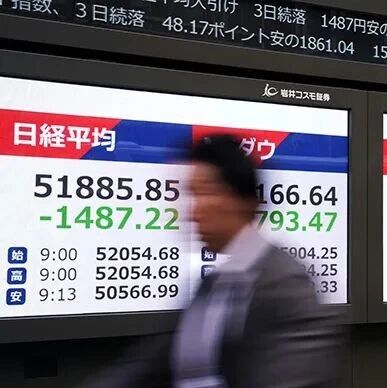
Group 1 - The core issue driving stock market declines is the instability of long-term interest rates, which have reached new highs in the UK, Germany, and Japan due to rising oil prices and inflation concerns [2][4]. - Japan's 10-year government bond yield rose to 2.39% on March 30, marking a 0.275% increase for March, the largest since April 2008 [4]. - The UK and Germany also saw significant increases in bond yields, with the UK's rising by 0.73% and Germany's by 0.44%, both reflecting heightened inflation fears linked to oil price increases [4]. Group 2 - South Korea's 10-year bond yield reached 3.9%, the highest since November 2023, prompting the government to announce a 5 trillion won bond repurchase to curb rising rates [6]. - The European Central Bank is expected to raise interest rates 2-3 times within the year, while the U.S. Federal Reserve's rate cut expectations have diminished significantly [6]. - Short-term interest rates are also rising, with the U.S. 2-year Treasury yield surpassing 4%, indicating a tightening monetary policy outlook [6]. Group 3 - There is growing concern over the risks of financial market turmoil, particularly regarding the trends in private credit from non-bank financial institutions [7]. - High-interest loans to lower-rated small and medium-sized enterprises may lead to increased bankruptcies, impacting financial institutions that provide funding [9]. - The rising interest rates are causing significant bond accounting losses, with estimates suggesting that local banks in Japan could see a 2 trillion yen increase in losses by February 2026 [9]. Group 4 - The Nikkei index fell over 2800 points on March 30, closing at 51,885 points, a 3% drop, as financial institutions began to sell profitable stocks to offset losses [9][10]. - Local banks in Japan are expected to gradually implement strategies to offset losses by selling profitable assets before the fiscal year-end [10].
Mark Gibbens: Bullish on NVDA, GOOGL, PLTR on Short War Expectations
Youtube· 2026-03-31 00:00
Market Overview - The market is experiencing a bounce back after five weeks of selling, with major averages down approximately 10% from their highs [1][5] - Oil prices are rising, which is positively impacting the stock market, contrary to previous trends where oil and stocks moved in opposite directions [3][4] Geopolitical Factors - Geopolitical events are influencing market sentiment, with ongoing discussions in the Middle East potentially affecting oil supply and market stability [2][4] - The geopolitical situation is viewed as a more significant concern than the upcoming jobs report [12][14] Investment Opportunities - There is a belief that current market conditions present a buying opportunity, particularly for long-term investors, despite the challenges posed by geopolitical tensions [6][7] - Companies like Palantir are highlighted as attractive investments due to their resilience in the face of market volatility and their involvement in AI technology [8][9] Technology Sector - The technology sector, including companies like Nvidia and Alphabet, is viewed positively, with many stocks having been sold off recently, creating potential buying opportunities [10][11][15] - Nvidia's valuation has decreased significantly, trading at 20 times forward earnings compared to 40 times a year or two ago, indicating a favorable long-term outlook [10] Financial Sector - The financial sector is also considered a strong area for investment, with expectations of robust economic growth and capital market activity [15][18] - Despite a challenging start to the year, the financial sector is believed to have favorable tailwinds moving forward [15]


Costco’s Amazing Success
Yahoo Finance· 2026-03-30 15:59
Core Viewpoint - Costco's shares have shown resilience against market downturns, with a 14% increase this year, outperforming the S&P 500 and Walmart, despite rising costs due to geopolitical tensions and inflation [2]. Group 1: Financial Performance - Revenue for the 24 months ending February 16 rose 8.6% to $136.9 billion, while membership fees revenue increased by 13.8% to $2.68 billion, and net income grew by 12.5% to $4.04 billion [6]. - Membership fees contribute significantly to Costco's profitability, accounting for 2% of total revenue and 73% of gross profit, with a renewal rate exceeding 90% [5]. Group 2: Competitive Advantages - Costco operates 924 warehouses, including 634 in the U.S. and Puerto Rico, allowing it to buy in bulk and maintain lower prices [3]. - The presence of gas stations at Costco locations helps keep gas prices below market rates, encouraging cross-shopping among members [3]. - The in-house brand, Kirkland, provides additional discounts to shoppers, enhancing customer loyalty and value [4]. Group 3: Market Outlook - Rising costs due to inflation and supply chain disruptions are anticipated, particularly in gasoline prices, but Costco is well-positioned to manage these challenges [6].

沪铜周报-20260330
Guan Tong Qi Huo· 2026-03-30 12:37
1. Report Industry Investment Rating - Not mentioned in the given content 2. Core Viewpoints of the Report - In the context of ongoing negotiations and conflicts in the Middle East, market news and tense expectations have pushed up energy commodity prices, leading to increasing inflation expectations. There are bets on the possibility of the Federal Reserve raising interest rates, which would depress the prices of precious metals and non - ferrous metals. - Fundamentally, the supply and demand of Shanghai copper were relatively loose in March, with high production and a recovering demand. However, production will decline after the second quarter due to smelter maintenance, while demand has entered the peak season, and the smooth reduction of inventory will support copper prices. In the long - term, the tight supply situation still supports copper prices. [3] 3. Summary by Directory 3.1 Market Analysis - **Macro aspect**: US President Trump is considering a high - risk military operation in Iran, which has pushed up oil prices and reignited inflation pressure. Some dovish officials have sent hawkish signals, suggesting that the Fed's interest - rate cut cycle that started in September 2024 may have ended. [3] - **Supply aspect**: Japan's Mitsubishi Materials will stop copper concentrate processing at its Onahama smelter by the end of March 2027, shrinking global copper smelting capacity. The weekly capacity utilization rate of recycled copper smelting copper anode sample enterprises is 32.76%, a 2.76% decrease from the previous period. The refined - scrap copper price difference has weakened, reducing the substitution advantage of scrap copper, and smelter profits have declined. In March, SMM's estimated output of electrolytic copper in China increased by 5.28 tons month - on - month (4.62% increase) and 6.51% year - on - year. Many copper smelters have maintenance plans in the second quarter, which will lead to a decline in output. Currently, overseas copper inventories are high, and after the import window opens, import volume may increase to offset the reduction in domestic smelter output. [3] - **Demand aspect**: As of February 2026, the apparent consumption of copper was 1.1739 million tons, a 9.07% decrease from the previous month. Since the "Golden March and Silver April" period, copper prices have been weak, and downstream purchase orders have increased. From January 1 to 22 in March, the retail sales of the national passenger car market were 920,000 units, a 16% year - on - year decrease; the retail sales of the new - energy market were 495,000 units, a 17% year - on - year decrease. In February, the installed capacity of new - energy vehicle power batteries decreased by 19.2% year - on - year, but the average battery capacity per vehicle increased by 29.2% year - on - year. [3] 3.2 Shanghai Copper Price Trend - This week, Shanghai copper fluctuated strongly. The weekly high was 96,590 yuan/ton, the low was 91,500 yuan/ton, the weekly change was +1.26%, and the range amplitude was 5.37%. [6] 3.3 Shanghai Copper Spot Market - As of March 27, the average spot premium in East China was - 85 yuan/ton, and the average premium in South China was 105 yuan/ton. With the continuous arrival of imported copper, domestic spot suppliers sold off, and the spot discount strengthened. However, it is expected that domestic supply will tighten this week, and with the approaching Tomb - Sweeping Festival, downstream enterprises have the intention to stock up, so the discount is expected to gradually narrow. [11] 3.4 LME Copper Spread Structure - As of March 27, LME copper fell 0.11% this week, closing at $12,115/ton, with a spot premium of - $69/ton. [16] 3.5 Copper Concentrate Supply - In February 2026, China imported 2.31 million tons of copper concentrate and its ores, a 6.0% year - on - year increase and a 12.0% month - on - month decrease. From January to February 2026, China imported 4.934 million tons of copper concentrate and its ores, a 4.9% year - on - year increase. Japan's Mitsubishi Materials will stop copper concentrate processing at its Onahama smelter by the end of March 2027, shrinking global copper smelting capacity. [20] 3.6 Scrap Copper Supply - The "Notice on Issues Concerning the Implementation of Policies on Regulating Investment Promotion Behaviors" (Document No. 770) has deepened the reform of the scrap copper industry, canceling measures such as tax rebates, land concessions, and financial subsidies in investment promotion by local governments. This has increased the production pressure on scrap - copper rod enterprises, and many enterprises in Jiangxi and Anhui have cut production or stopped production, resulting in a decrease in national scrap copper output. The weekly capacity utilization rate of recycled copper smelting copper anode sample enterprises is 32.76%, a 2.76% decrease from the previous period. This week, the refined - scrap copper price difference has weakened, reducing the substitution advantage of scrap copper, and smelter profits have declined, weakening enterprise production enthusiasm. [25] 3.7 Smelter Fees - As of March 27, China's spot rough smelting fee (TC) was - $69.2/ton, and the RC fee was - 7.00 cents/pound. Overseas mines continue to tighten, and spot smelting fees continue to weaken. It is expected that copper smelters will start maintenance plans in the second quarter, and domestic electrolytic copper output may decline. Currently, smelters mainly rely on by - products such as sulfuric acid to make up for losses, and it is difficult to see an improvement in smelter spot processing fees in the short term. [30] 3.8 Refined Copper Supply - In March, SMM's estimated output of electrolytic copper in China increased by 52,800 tons month - on - month (4.62% increase) and 6.51% year - on - year. The cumulative output from January to March increased by 10.11% year - on - year, an increase of 322,800 tons. Although the copper mine resources are currently tight and recycled copper is restricted by policy issues, the production of electrolytic copper has not been directly affected, and copper prices continue to be under pressure. The increase in March production is mainly due to the previous production cuts by smelters and the addition of new smelters. Many copper smelters have maintenance plans in the second quarter, which will lead to a decline in output. Currently, overseas copper inventories are high, and after the import window opens, import volume may increase to offset the reduction in domestic smelter output. In February, China imported 320,000 tons of unwrought copper and copper products, a 24.5% year - on - year decrease; from January to February, the cumulative import was 700,000 tons, a 16.1% year - on - year decrease. [35] 3.9 Apparent Demand - As of February 2026, the apparent consumption of copper was 1.1739 million tons, a 9.07% decrease from the previous month. [39] 3.10 Power Grid Project Data - As of the end of February, the cumulative installed power generation capacity in the country was 3.95 billion kilowatts, a 15.9% year - on - year increase. Among them, the installed capacity of solar power generation was 1.23 billion kilowatts, a 33.2% year - on - year increase; the installed capacity of wind power was 650 million kilowatts, a 22.8% year - on - year increase. From January to February, the cumulative average utilization of power generation equipment in the country was 466 hours, a 39 - hour decrease from the same period last year. [47] 3.11 Real Estate and Infrastructure Data - In February 2026, the month - on - month decline in the sales prices of commercial residential buildings in 70 large and medium - sized cities continued to narrow, and the year - on - year decline continued. The number of cities with month - on - month increases or flat prices of newly built commercial residential buildings increased compared with the previous month. From January to February, the national real estate sales area, investment, new construction area, and completion area were 92.93 million square meters, 961.2 billion yuan, 50.84 million square meters, and 63.2 million square meters respectively, with year - on - year growth rates of - 13.5%, - 11.1%, - 23.1%, and - 27.9% respectively. The growth rates were - 6.7%, +6.1%, - 2.7%, and - 9.8% respectively compared with the whole year of 2025. From January to February, the national real estate development investment was 961.2 billion yuan, a 11.1% year - on - year decrease, and the decline was 6.1 percentage points narrower than that of the whole year of the previous year; among them, residential investment was 728.2 billion yuan, a 10.7% decrease, and the decline was 5.6 percentage points narrower. [52] 3.12 Automobile/New - Energy Automobile Industry Data - From March 1 to 22, the retail sales of the national passenger car market were 920,000 units, a 16% year - on - year decrease; the retail sales of the new - energy market were 495,000 units, a 17% year - on - year decrease. In February, the installed capacity of new - energy vehicle power batteries decreased by 19.2% year - on - year, but the average battery capacity per vehicle increased by 29.2% year - on - year. From January to February, the production and sales of new - energy vehicles were 1.735 million and 1.71 million respectively, a year - on - year decrease of 8.8% and 6.9% respectively, and the sales of new - energy vehicles accounted for 41.2% of the total sales of new vehicles. [56] 3.13 Global Copper Inventories in Major Exchanges - As of March 27, LME copper inventory increased by 17,900 tons to 360,300 tons this week, a 44.3% week - on - week increase and 67.34% higher year - on - year; COMEX copper inventory was 588,900 tons, a 0.04% week - on - week increase and 528.66% higher year - on - year. At the beginning of the year, Trump said that he would not consider imposing tariffs on rare earths, lithium, and other key minerals for the time being, and copper was also included in the scope of the "temporary tariff suspension" discussion. As of last Friday, the COMEX - LME spread converged to - $154.47/ton, the copper siphon effect weakened, and the inventories of LME and COMEX increased simultaneously. [61] - As of March 27, the Shanghai Futures copper inventory was 237,100 tons, a 3.80% week - on - week decrease; the cathode copper inventory was 359,100 tons, a 12.64% week - on - week decrease. Since the "Golden March and Silver April" peak season, copper prices have continued to decline, stimulating an increase in downstream purchasing sentiment, and copper inventory has been rapidly reduced. It is expected that with the progress of the peak season and the maintenance of domestic smelters in the second quarter, copper inventory will continue to decline. On March 26, the cumulative spot inventory of copper in the bonded areas of Shanghai and Guangdong was 72,600 tons, and the bonded area inventory continued to decline. Part of the warehouse goods were continuously cleared and imported into the country this week, and the inventory decreased due to the low inflow. [66]