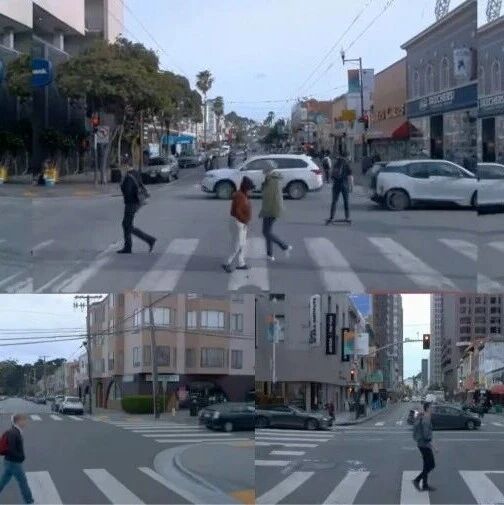
DriveStudio

Search documents
3DGS论文原理与论文源码学习,尽量无痛版
自动驾驶之心· 2025-12-06 03:04
Core Insights - The article discusses the development and application of 3D Gaussian Splatting (3DGS) technology, emphasizing its significance in the field of autonomous driving and 3D reconstruction [3][9]. Group 1: Course Overview - The course titled "3DGS Theory and Algorithm Practical Tutorial" aims to provide a comprehensive learning roadmap for 3DGS, covering both theoretical and practical aspects [3][6]. - The course is designed for individuals interested in entering the 3DGS field, focusing on essential concepts such as point cloud processing and deep learning [3][6]. Group 2: Course Structure - Chapter 1 introduces foundational knowledge in computer graphics, including implicit and explicit representations of 3D space, rendering pipelines, and tools like SuperSplat and COLMAP [6][7]. - Chapter 2 delves into the principles and algorithms of 3DGS, covering dynamic reconstruction and surface reconstruction, with practical applications using the NVIDIA open-source 3DGRUT framework [7][8]. - Chapter 3 focuses on the application of 3DGS in autonomous driving simulations, highlighting key works and tools like DriveStudio for practical learning [8][9]. - Chapter 4 discusses important research directions in 3DGS, including COLMAP extensions and depth estimation, along with insights on their industrial and academic relevance [9][10]. - Chapter 5 covers Feed-Forward 3DGS, detailing its development and algorithmic principles, including recent works like AnySplat and WorldSplat [10]. - Chapter 6 provides a platform for Q&A and discussions on industry demands and challenges related to 3DGS [11]. Group 3: Target Audience and Requirements - The course is aimed at individuals with a background in computer graphics, visual reconstruction, and familiarity with technologies like NeRF and 3DGS [15]. - Participants are expected to have a basic understanding of probability theory, linear algebra, and proficiency in Python and PyTorch [15].

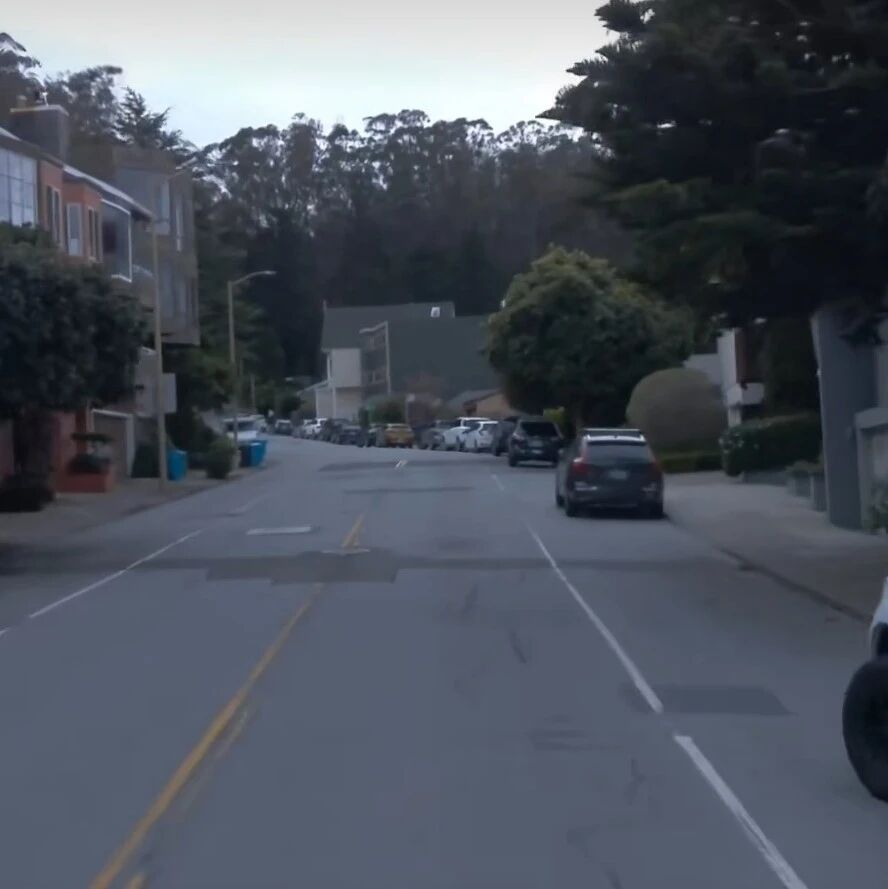
即将开课!做了一份3DGS的学习路线图,面向初学者......
自动驾驶之心· 2025-11-30 02:02
Core Insights - The article emphasizes the rapid technological iteration in 3DGS (3D Graphics Systems), highlighting the transition from static reconstruction (3DGS) to dynamic reconstruction (4DGS) and surface reconstruction (2DGS) [1] - A new course titled "3DGS Theory and Algorithm Practical Tutorial" has been developed to provide a structured learning roadmap for individuals interested in entering the field, covering essential theories and practical coding skills [1] Course Overview - The course is designed to help newcomers understand the foundational concepts of computer graphics, including implicit and explicit representations of 3D space, rendering pipelines, ray tracing, and radiation field rendering [5] - It introduces commonly used development tools such as SuperSplat and COLMAP, along with the mainstream algorithm framework Gsplat [5] Chapter Summaries - **Chapter 1: Background Knowledge** This chapter provides an overview of 3DGS, starting with basic computer graphics concepts and tools necessary for model training [5] - **Chapter 2: Principles and Algorithms** Focuses on the core principles and pseudocode of 3DGS, covering dynamic reconstruction, surface reconstruction, and ray tracing, utilizing the NVIDIA open-source 3DGRUT framework for practical learning [6] - **Chapter 3: Autonomous Driving 3DGS** Concentrates on key works in the field, such as Street Gaussian and OmniRe, and uses DriveStudio for practical applications [7] - **Chapter 4: Important Research Directions** Discusses significant research areas in 3DGS, including COLMAP extensions and depth estimation, and their relevance to both industry and academia [8] - **Chapter 5: Feed-Forward 3DGS** Explores the rise of feed-forward 3DGS, detailing its development and algorithmic principles, along with recent works like AnySplat and WorldSplat [9] - **Chapter 6: Q&A Discussion** Organizes online discussions for participants to address industry needs, pain points, and open questions, facilitating deeper engagement with instructors [10] Target Audience and Learning Outcomes - The course is aimed at individuals with a foundational understanding of computer graphics, visual reconstruction, and programming in Python and PyTorch, who are looking to enhance their knowledge and skills in 3DGS [14] - Participants will gain comprehensive theoretical knowledge and practical experience in 3DGS algorithm development and frameworks, preparing them for various career opportunities in the field [14]
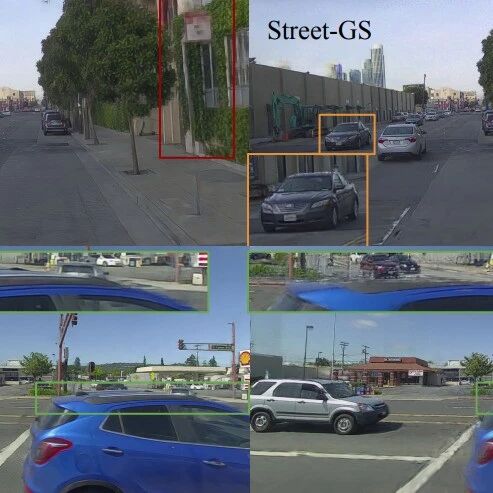
面向工业界的3DGS全栈学习路线图(前馈GS等)
自动驾驶之心· 2025-11-27 00:04
Core Insights - The rapid technological iteration in 3DGS (3D Graphics Systems) is highlighted, with advancements from static reconstruction to dynamic and surface reconstruction, culminating in feed-forward 3DGS [1] - A comprehensive learning roadmap for 3DGS has been developed to assist newcomers in mastering both theoretical and practical aspects of the technology [1] Course Overview - The course is structured into six chapters, starting with foundational knowledge in computer graphics and progressing through principles, algorithms, and applications in autonomous driving [5][6][7][8][9] - The course aims to provide a detailed understanding of 3DGS, including tools like SuperSplat and frameworks such as Gsplat and DriveStudio [5][6][7] Target Audience - The course is designed for individuals with a background in computer graphics, visual reconstruction, and programming, specifically those familiar with Python and PyTorch [14] Learning Outcomes - Participants will gain a solid grasp of 3DGS theory, algorithm development, and industry applications, enabling them to engage in discussions about job demands and industry challenges [10][12]
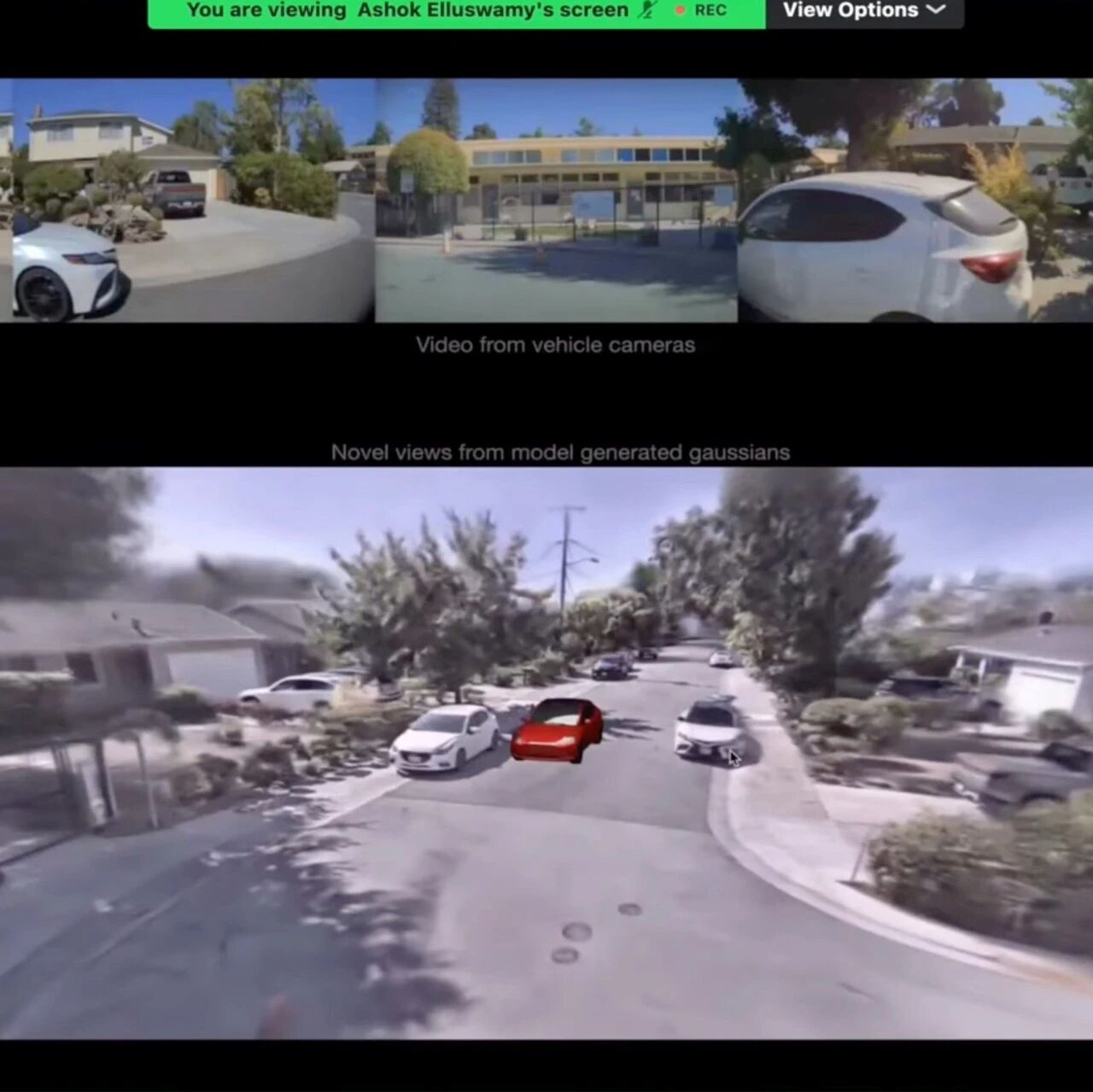
工业界大佬带队!三个月搞定3DGS理论与实战
自动驾驶之心· 2025-11-04 00:03
Core Insights - The article discusses the rapid advancements in 3D Generative Synthesis (3DGS) technology, highlighting its applications in various fields such as 3D modeling, virtual reality, and autonomous driving simulation [2][4] - A comprehensive learning roadmap for 3DGS has been developed to assist newcomers in mastering both theoretical and practical aspects of the technology [4][6] Group 1: 3DGS Technology Overview - The core goal of new perspective synthesis in machine vision is to create 3D models from images or videos that can be processed by computers, leading to numerous applications [2] - The evolution of 3DGS technology has seen significant improvements, including static reconstruction (3DGS), dynamic reconstruction (4DGS), and surface reconstruction (2DGS) [4] - The introduction of feed-forward 3DGS has addressed the inefficiencies of per-scene optimization methods, making the technology more accessible and practical [4][14] Group 2: Course Structure and Content - The course titled "3DGS Theory and Algorithm Practical Tutorial" covers detailed explanations of 2DGS, 3DGS, and 4DGS, along with important research topics in the field [6] - The course is structured into six chapters, starting with foundational knowledge in computer graphics and progressing to advanced topics such as feed-forward 3DGS [10][11][14] - Each chapter includes practical assignments and discussions to enhance understanding and application of the concepts learned [10][12][15] Group 3: Target Audience and Prerequisites - The course is designed for individuals with a background in computer graphics, visual reconstruction, and programming, particularly in Python and PyTorch [19] - Participants are expected to have a GPU with a recommended computing power of 4090 or higher to effectively engage with the course material [19] - The course aims to benefit those seeking internships, campus recruitment, or job opportunities in the field of 3DGS [19]