E³AD

Search documents
用人类脑电波教 AI 开车,这位清华 90 后学者直言隐式信号里藏着 AGI 的关键 | 万有引力
AI科技大本营· 2026-01-26 10:03
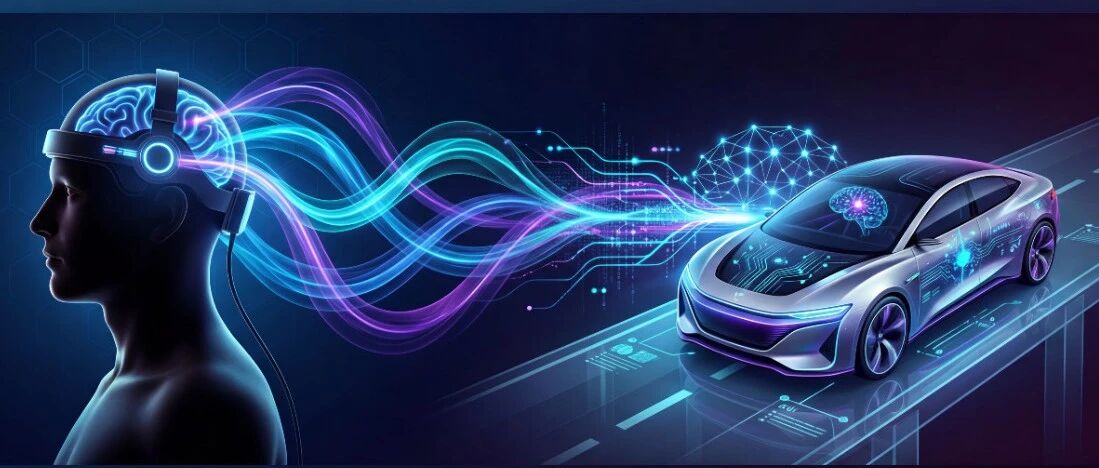
Core Viewpoint - The article discusses the innovative research by Tsinghua University's team, which aims to enhance autonomous driving systems by integrating human-like intuition through the use of brainwave signals, specifically focusing on a project named E³AD [4][36]. Group 1: Research Background and Development - The research team at Tsinghua University has developed a method to teach autonomous driving models to think like humans by using EEG signals from human drivers [4][36]. - The project is led by Dr. Gong Jiangtao, who has a background in computer science and neuroscience, emphasizing the importance of understanding human cognition in the development of intelligent systems [4][8][9]. Group 2: Human Intuition and AI - The concept of "driving intuition" is highlighted, where human drivers can subconsciously predict risks based on experience, a capability that current AI systems lack [3][4]. - The research aims to transfer this human ability to AI, allowing machines to not only execute tasks but also anticipate and avoid potential risks [35][36]. Group 3: Methodology and Implementation - The E³AD project utilizes non-invasive EEG to capture brain signals that indicate risk perception, which can then be used to inform the decision-making processes of autonomous vehicles [39][43]. - The integration of these signals into an end-to-end autonomous driving framework is proposed to enhance the system's ability to process information without losing critical details [43][44]. Group 4: Challenges and Future Directions - The article discusses the complexities of transferring human-like intuition to machines, particularly in the context of the physical world, which presents more variables and potential risks than the digital realm [34][35]. - Future research will focus on refining the integration of cognitive signals into AI systems, aiming for a more seamless interaction between humans and machines [56][59].