
Extra Leg Room

Search documents
Barclays LUV Upgrade, Stock Flies on 11-Day Winning Streak
Youtube· 2025-12-16 16:30
Core Viewpoint - Barclays upgraded Southwest Airlines to overweight from equal weight, raising the price target to $56 from $34, indicating a potential upside of over 30% from current levels [3]. Company Strategy - The upgrade is based on positive sentiment surrounding Southwest's new commercial strategy, which includes assigned seating and baggage fees, expected to drive revenue growth [3][4]. - Barclays anticipates that these changes will lead to significant improvements in revenue generation, particularly in early 2026 when the new options are fully implemented [4]. Market Performance - Southwest shares have reached a three-year high, with a 2.3% increase noted in the morning trade, reflecting strong market action and investor confidence [2]. - The stock has performed well, rising approximately 34% over the last six months [6]. Analyst Ratings - Other analysts have also raised their price targets for Southwest, with TD Cowan increasing theirs from $31 to $42, while Beimo Capital set a target of $43 and Citigroup at $38 [6][7]. - The average rating for Southwest remains a hold, with the average price target just below $39 [8].


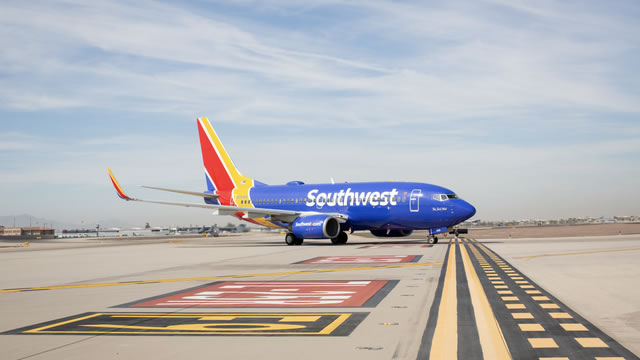
Southwest CEO: We're evolving and changing our business model around our product
Youtube· 2025-12-10 15:30
Core Viewpoint - Southwest Airlines is undergoing a significant transformation in its business model and product offerings while maintaining its core strengths, aiming for a more differentiated customer experience [2][3][4]. Company Initiatives - The company has introduced several new initiatives, including assigned seating, extra legroom, and free Wi-Fi for members, marking a substantial evolution in its service model [2][3]. - Southwest Airlines has added new products like Pete's Coffee and enhanced its online presence, allowing customers to book flights through platforms like Expedia and Google Flight Search [5]. Customer Experience and Market Position - The airline maintains a competitive edge with a domestic network that is considered the best in the industry, along with strong brand loyalty and a cost structure that is 20% lower than legacy carriers [4]. - Despite introducing baggage fees, the airline has seen no significant loss of customers, as evidenced by its stock reaching an all-time high of $38.90 [6]. Performance Metrics - The introduction of unbundled products has allowed customers to choose between basic and premium offerings, leading to a rebound in net promoter scores (NPS) [7]. - Aircraft retrofitted with extra legroom have shown significantly higher NPS, indicating positive customer reception to the changes [7].
Southwest Airlines(LUV) - 2025 FY - Earnings Call Transcript
2025-05-29 16:00
Financial Data and Key Metrics Changes - The company announced a significant increase in its cost reduction plan, raising the target from $500 million to over $1 billion by 2027, with $370 million in cost reductions expected this year [7][8] - The company reported strong cost discipline, with first-quarter results showing costs well below consensus, and a low single-digit CASM ex rate expected by the end of 2025 [9][10] - The company anticipates $4.3 billion in EBIT value in 2026 from various initiatives, indicating a substantial financial impact [10][22] Business Line Data and Key Metrics Changes - The introduction of a basic economy fare and changes to fare families were implemented recently, including charging for bags, which is expected to enhance revenue [5][6] - The company is set to begin selling assigned seating and extra legroom in the third quarter of this year, with operations starting in the first quarter of 2026 [7][8] - The initiatives are projected to contribute approximately $4.3 billion in incremental EBIT in 2026, with various components such as base business changes and assigned seating [26][28] Market Data and Key Metrics Changes - Demand has stabilized at lower levels than previously expected, with a noted decline of about six points from earlier projections [11][12] - The booking curve has shortened, indicating consumers are making travel decisions closer to their travel dates, leading to less visibility for summer bookings [15][16] - Business travel is holding up better than consumer travel, with government travel being the most affected segment [16][17] Company Strategy and Development Direction - The company is focusing on executing operational initiatives and maintaining strong performance despite macroeconomic uncertainties [13][21] - There is a shift towards cabin segmentation and offering a variety of fare products to meet changing consumer demands, moving away from a one-size-fits-all model [52][54] - The company is exploring broader access to international markets and considering future fleet diversification, although no immediate changes are planned [74][76] Management's Comments on Operating Environment and Future Outlook - Management expressed cautious optimism about the macroeconomic environment, noting that while consumer confidence is low, business travel remains stable [18][19] - The company is committed to executing its initiatives and believes that the financial benefits will materialize sooner than previously anticipated [61][62] - There is a recognition of the need to adapt to consumer preferences and market changes, with a focus on maintaining operational excellence [66][68] Other Important Information - The company has implemented several operational changes, including bag fees and basic economy, which are expected to enhance revenue without significant risk [28][29] - Management highlighted the importance of maintaining a strong balance sheet and financial discipline, with a focus on maximizing revenue per square foot in the cabin [88][90] - The company is optimistic about improvements in aircraft delivery from Boeing, expecting better quality and stability in future deliveries [92][93] Q&A Session Summary Question: What is the expected EBIT contribution from the new initiatives? - The company expects a $4.3 billion incremental EBIT contribution in 2026 from various initiatives, which includes base business changes and new revenue streams [25][26] Question: How does the company plan to manage potential overlaps in revenue from new initiatives? - Management clarified that the revenue figures provided are net contributions, accounting for any potential overlaps, ensuring conservative estimates [32][33] Question: What has changed in the company's approach to bag fees and seating assignments? - The company has shifted its strategy to include bag fees and assigned seating as part of a broader cabin segmentation approach, responding to consumer demand for more options [40][42]