FAST(500米口径球面射电望远镜)

Search documents
清风正气歌 | 忠诚如丹不可夺赤
Xin Lang Cai Jing· 2026-01-03 12:01
Group 1 - The core message emphasizes the importance of loyalty among Communist Party members, highlighting that true loyalty is reflected in dedication to the Party's beliefs and organization [2][3] - Historical examples of loyalty are provided, such as Liu Bojian's refusal to betray the Party even under duress, and Zhang Hai's steadfastness against personal temptations [2] - The narrative includes modern examples like Nan Rendong, who returned to China to contribute to scientific advancements despite better financial opportunities abroad, showcasing loyalty to the nation's progress [3] Group 2 - The article stresses that loyalty is not abstract but is demonstrated through concrete actions and commitments to the Party's mission [4] - It calls for all Communist Party members and revolutionaries to learn from historical figures, reinforcing the need to uphold ideals and contribute to national strength [4]


首次捕获!这一大国重器有重要发现
Ke Ji Ri Bao· 2025-10-18 06:07
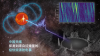
Core Insights - A research team led by Professor Tian Hui from Peking University has successfully detected millisecond-level radio burst signals from stellar sunspot regions using the FAST telescope, providing a new observational method for studying stellar magnetic activity and its origins [1] Group 1: Research Findings - The detection of radio signals indicates that magnetic activity in stellar sunspot regions can accelerate electrons to extremely high energies, which then produce unique radio emissions as they spiral in the magnetic field [1] - This breakthrough allows for direct analysis of the small-scale magnetic field structure on stellar surfaces, enhancing the understanding of complex stellar magnetic fields [1] Group 2: Technological Advancements - The success of this research is attributed to the high sensitivity and resolution of the FAST telescope, which has improved the time resolution of stellar radio observations to the sub-millisecond level, capturing minute variations in stellar radio emissions [1] - Currently, there are very few devices worldwide that can match the capabilities of FAST in this regard [1]
“中国天眼”立新功 首次捕获恒星黑子区射电暴信号
Ke Ji Ri Bao· 2025-10-18 03:24
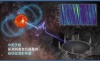
Core Viewpoint - The research team led by Professor Tian Hui from Peking University has successfully detected millisecond-level radio burst signals from the sunspot region of a star using the FAST telescope, providing a new observational method for studying stellar magnetic activity and its origins [1][4]. Group 1: Stellar Magnetic Activity - Sunspots are localized regions of strong magnetic fields on the surface of stars, and their magnetic activity can disrupt the space environment around Earth, affecting satellite operations and communication systems [4]. - Traditional methods for measuring stellar magnetic fields have struggled to capture small-scale magnetic structures, often only providing information on large-scale magnetic fields [4]. - The detection of a unique radio burst from the active red dwarf star AD Leo, with a frequency drift rate of approximately 8 GHz per second, indicates that the radiation source is from a high magnetic field region very close to the star's surface [4][5]. Group 2: Implications of the Discovery - The findings suggest that magnetic activity in stellar sunspot regions can accelerate electrons to high energies, producing unique radio emissions that allow for direct analysis of small-scale magnetic field structures on stars [5]. - The success of this research is attributed to the high sensitivity and resolution of the FAST telescope, which has improved time resolution to the sub-millisecond level, enabling the capture of minute variations in stellar radio emissions [5]. - This research opens new avenues for studying magnetic activity in late-type stars and exploring interactions between stars and planets, potentially aiding in the search for habitable exoplanets [5].