
Federal funds rate

Search documents
Fed officials split on where interest rates should go, minutes say
CNBC· 2026-02-18 19:00
Divided Federal Reserve officials at their January meeting indicated that further interest rate cuts should be paused for now but could resume later in the year only if inflation cooperates.While the decision to hold the central bank's benchmark rate steady mostly was met with approval, the path ahead appeared less certain, with members conflicted between fighting inflation and supporting the labor market, according to minutes released Wednesday from the Jan. 27-28 meeting."In considering the outlook for mo ...

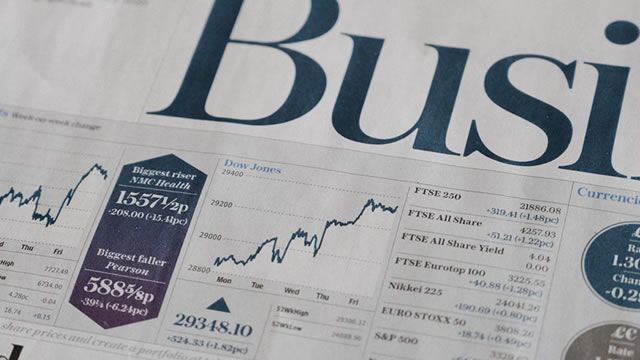
The Federal Reserve Meeting Starts Today—Here's What You Need to Know
Yahoo Finance· 2026-01-27 19:22
Core Insights - The Federal Reserve is expected to pause interest rate cuts during its upcoming meeting, with analysts looking for indications of potential future cuts later in the year [1][7] - The Fed has previously lowered interest rates three times in late 2025 to support a weakening job market, but the labor market is now stabilizing, supported by strong consumer spending [1][5] Interest Rate Outlook - Markets anticipate a delay in any potential interest rate cuts for 2026, with Fed Chair Jerome Powell's press conference being a focal point for validation of these expectations [2][4] - Powell is not expected to provide significant new information regarding the Fed's rate plans, but may hint at the possibility of future cuts without specifying a timeline [3][4] Economic Indicators - The Fed's actions influence a variety of interest rates, including those on credit cards and certificates of deposit, with the current federal funds rate set between 3.5% to 3.75% [4] - Recent economic data has shown a slight tilt towards hawkish sentiment within the Fed, with employment growth remaining sluggish and an unemployment rate of 4.4% [5] - Despite a government shutdown last year, real consumer spending growth was unaffected, leading to increased GDP projections following a rise in retail sales before the holidays [6]
Fed's Williams Sees Room for a Near-Term Rate Cut
Youtube· 2025-11-21 16:52
Group 1 - The monetary policy is focused on balancing downside risks to maximum employment and upside risks to price stability, with increased downside risks to employment as the labor market cools [1] - The Federal Open Market Committee (FOMC) has reduced the target range for the federal funds rate by 25 basis points in its last two meetings to restore inflation to a sustained 2% goal [2] - The current monetary policy is viewed as modestly restrictive, with potential for further adjustments to align the policy stance closer to neutral, maintaining a balance between employment and price stability goals [3] Group 2 - Future policy decisions will be based on the evolution of data, economic outlook, and the balance of risks related to maximum employment and price stability [4]

Fed's Logan calls for overhaul of central bank rate control toolkit
Yahoo Finance· 2025-09-25 17:42
Core Viewpoint - The Federal Reserve Bank of Dallas President Lorie Logan advocates for modernizing the management of money market conditions to better achieve monetary policy objectives, suggesting a shift from targeting the federal funds lending market to managing liquidity to control the tri-party general collateral rate (TGCR) [1][2][3] Group 1: Proposed Changes - Logan emphasizes the need for the Federal Open Market Committee to prepare to target a different short-term interest rate, specifically the TGCR, which is more active and manageable with existing tools [2][3] - The current practice of targeting the federal funds rate is deemed fragile, with potential risks that could disrupt monetary conditions, prompting the need for reform [3] Group 2: Current Monetary Conditions - The Federal Reserve's current federal funds rate is set between 4% and 4.25% following a recent quarter percentage point cut, with the rate influenced by two other rates that manage bank reserves and money market funds [6] - The federal funds market has become less active due to the Fed's extensive provision of reserves during the financial crisis and the COVID-19 pandemic, complicating the management of monetary policy [7] Group 3: Future Challenges - The Fed is expected to face challenges in maintaining its interest rate target as liquidity conditions may tighten, leading to increased cash flow into Fed liquidity facilities [4] - The ongoing reduction of the Fed's balance sheet could introduce unexpected volatility in money markets, further complicating the monetary landscape [5]
Federal funds rate: What it is and how it affects you
Yahoo Finance· 2024-04-10 19:44
Core Points - The Federal Open Market Committee (FOMC) lowered the federal funds rate for the first time in 2025 on September 17, with expectations of two more cuts by year-end [1] - The current federal funds rate is set between 4.00% and 4.25% [2][8] - The federal funds rate is the interest rate at which banks lend to each other for overnight loans, influencing overall borrowing costs in the economy [2][7] Summary by Sections Federal Funds Rate Overview - The federal funds rate is a target range set by the Federal Reserve for interbank overnight loans, with banks negotiating specific rates within this range [2] - The effective federal funds rate (EFFR) is the median rate charged for these loans, currently reflecting a real fed funds rate of 4.33% [8] Federal Reserve's Role - The Federal Reserve, through the FOMC, meets eight times a year to decide on adjustments to the federal funds rate, impacting economic conditions [4][5] - The Fed adjusts the rate to manage inflation and stimulate or slow down the economy as needed [6] Impact on Consumers and Markets - Changes in the federal funds rate affect consumer interest rates, including those for loans and credit cards, although they do not directly set mortgage rates [7][10] - The prime rate, which is typically about 3 percentage points higher than the federal funds rate, is currently at 7.50% and is expected to decrease following the recent rate cut [10][11]