Foldable smartphones

Search documents
Apple's 46% Land Grab: The North American Foldable Showdown Begins In H2 2026
Benzinga· 2026-03-17 15:29
Core Insights - Apple is projected to capture 46% of the North American foldable smartphone market by 2026, prompting competitors to adopt defensive strategies [1] - The competition for foldable smartphones is already underway, with OEMs focusing on larger, productivity-oriented devices [2] Market Dynamics - OEMs are enhancing their foldable offerings, with Samsung, Motorola, and Google refining their products to align with Apple's anticipated launch [2] - The foldable smartphone market is expected to grow by 20% year-over-year by 2026, with Apple's entry likely to influence market dynamics significantly [5] Competitive Advantage - Apple has a unique advantage due to its experience with large-screen software, which may transition foldables from experimental devices to productivity-centric products [3] - Early demand for foldables is expected to come from existing iPhone users, potentially affecting Android users' purchasing decisions [4] Regional Impact - North America is critical for Apple's success, where its market dominance poses the greatest risk to competitors [6] - The introduction of Apple's foldable devices could set a new competitive standard, influencing other regions as well [6]



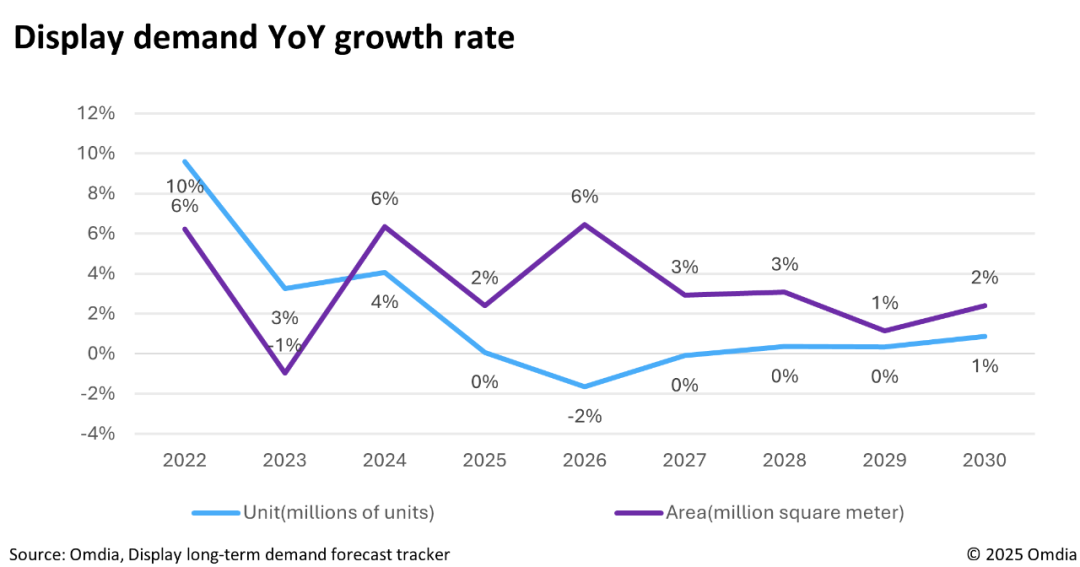
Omdia:预计2026年全球显示面板面积需求同比增长6% 出货量将下降2%
智通财经网· 2025-11-13 01:33
Core Insights - The global display panel area demand is expected to grow by 6% year-on-year in 2026, despite a projected 2% decline in shipment volume due to uncertainties in U.S. import tariffs and economic slowdown [1][4] - The demand for large-sized display panels is driving overall area demand, with significant growth anticipated in ultra-large televisions (70 inches and above) and large gaming monitors [4] Group 1 - Omdia forecasts a mere 2% growth in display panel market area demand for 2025, lower than in 2024, primarily due to supply chain changes from U.S. tariff policies and weak consumer demand [4] - The acceleration of large-size televisions and desktop monitors is expected to be the main growth driver, as consumer preference shifts towards larger screens [4] - The reduction in production costs, particularly with the depreciation of 10.5-generation LCD and 8.5-generation OLED factories, is anticipated to lower television prices and enhance consumer purchasing willingness [4] Group 2 - The demand for new technology products, such as foldable smartphones and the rise in AI-driven mobile PC demand, is also expected to significantly contribute to the growth in display panel area demand [4] - Panel suppliers are likely to maximize the utilization of existing 8th and 10th generation factory capacities, benefiting from increased demand for large-sized display panels [4]