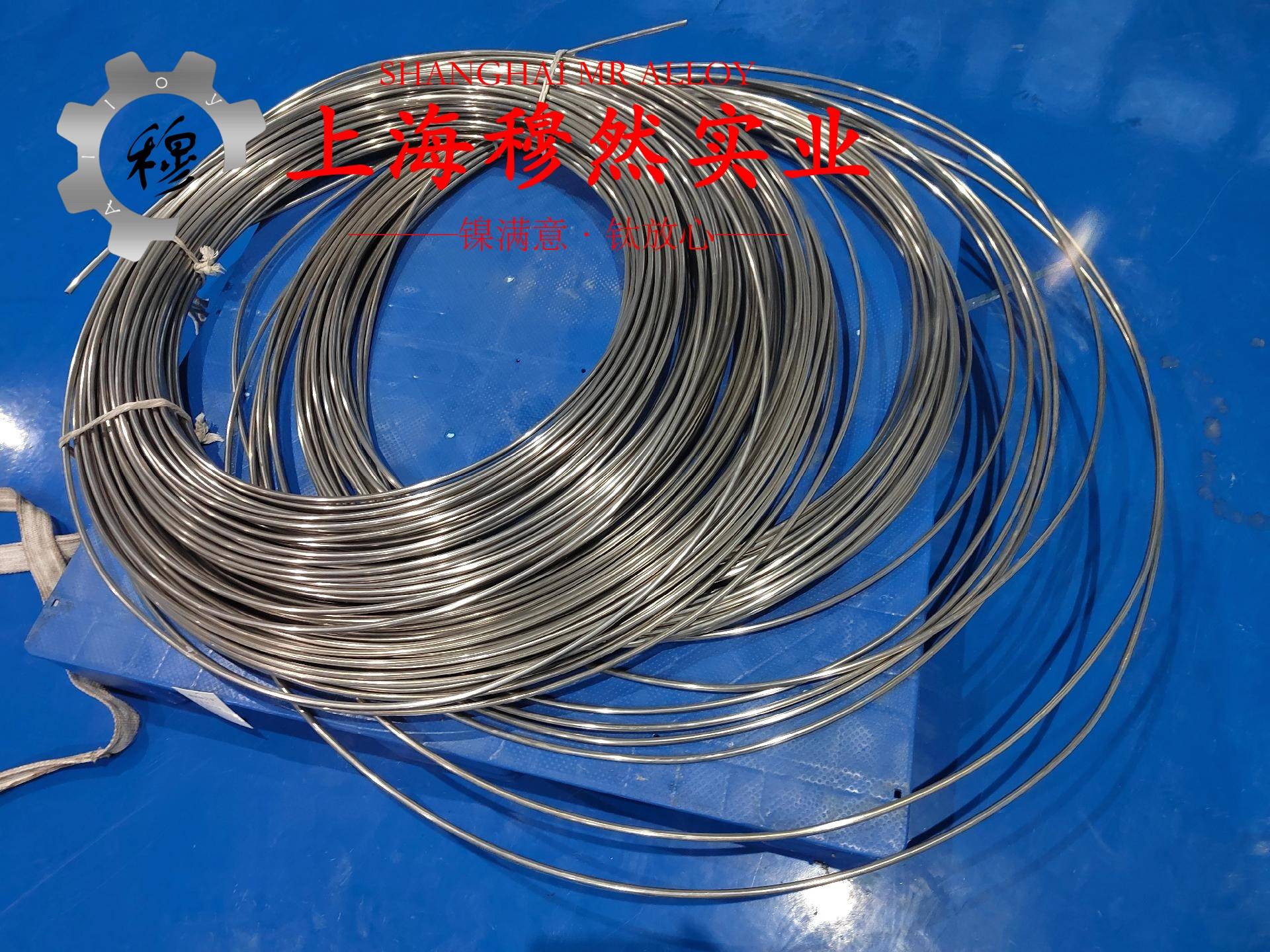
GH4141高温合金

Search documents
GH4141高温合金机械性能和高温氧化分析
Sou Hu Cai Jing· 2026-02-10 07:51
Core Viewpoint - GH4141 high-temperature alloy is recommended for applications in the 600–750°C range, showcasing a balance of strength and oxidation resistance [2][11]. Group 1: Material Properties - GH4141 has a room temperature ultimate tensile strength (UTS) of 1100 MPa and a yield strength of 950 MPa, with a tensile strength of 780 MPa at 650°C [2][3]. - The oxidation weight gain of GH4141 after 100 hours at 800°C is 0.35 mg/cm², which is between Inconel 718 (0.60 mg/cm²) and Haynes 230 (0.28 mg/cm²) [3][4]. Group 2: Microstructure Analysis - The microstructure of GH4141 features fine and uniform γ′ precipitates and carbide distribution, contributing to high-temperature creep resistance [4]. - The oxidation layer primarily consists of Cr2O3, which is attributed to the chromium content in GH4141, forming a dense oxide film at 800°C [4]. Group 3: Processing Techniques - There is a debate on whether GH4141 should adopt powder metallurgy (PM) combined with hot isostatic pressing (HIP) instead of traditional forging and aging processes [5]. - Proponents of the PM route argue it eliminates casting defects and improves uniformity, resulting in a 15% increase in fatigue life, albeit with a 30% increase in cost [5]. Group 4: Decision-Making Framework - For parts larger than 500 mm or geometrically complex and requiring low cost, traditional forging and aging should be prioritized [6]. - For fatigue or crack-sensitive small parts (less than 200 mm), PM and HIP should be considered to enhance density [6]. Group 5: Market and Cost Considerations - The current nickel price is approximately US$20,000 per ton on the LME and around ¥165,000 per ton on the Shanghai Metals Market, which directly impacts the production cost of GH4141 and the economic viability of the PM route [7]. Group 6: Common Misconceptions - A common misconception is to select materials solely based on room temperature strength, neglecting GH4141's high-temperature retention [8]. - Another error is equating GH4141 with Inconel 718, overlooking differences in chemical composition and oxidation behavior [9]. - It is also a misconception that PM is always superior to forging without considering cost, size, and post-processing requirements [10]. Group 7: Conclusion - GH4141 demonstrates balanced performance in high-temperature strength and overall properties, making it suitable for load-bearing components in the 600–750°C range [11]. - When selecting processing routes, it is essential to weigh cost, part type, and fatigue sensitivity, while avoiding common misconceptions to reduce design risks [11].

GH4141高温合金国军标的热处理制度
Sou Hu Cai Jing· 2025-09-11 08:54
Core Viewpoint - The article discusses the heat treatment system for GH4141 high-temperature alloy under the national military standard, focusing on stabilizing grain structure, repeatable mechanical properties, and good oxidation resistance [1]. Group 1: Heat Treatment System - The heat treatment system for GH4141 is designed to be operable in different task environments, emphasizing strict temperature control, precise holding times, and continuous monitoring of microstructure [4]. - The solution treatment occurs in the temperature range of 980–1050°C for about 1 hour, followed by aging/tempering at 720–760°C for 8–12 hours, with cooling to room temperature [5]. - Mechanical performance targets include a yield strength of approximately 900–1100 MPa and tensile strength of about 1100–1400 MPa at room temperature, with a creep resistance maintained above 750°C [5]. Group 2: Standards and Quality Control - The selection standards include AMS 2750F and ASTM E8/E8M for tensile and heat treatment monitoring methods, supplemented by national standards for heat treatment and material testing to ensure traceability and consistency of process parameters [5]. - Key quality control points are established during solution treatment and aging stages, with critical temperature points and holding times monitored to confirm grain coarsening and carbide distribution through metallographic and microscopic analysis [5]. - The necessity and cost-effectiveness of multiple aging cycles post-solution treatment are debated, with some applications advocating for multiple aging stages to enhance grain refinement and carbide control [5]. Group 3: Market Data and Cost Assessment - LME nickel price fluctuations significantly impact raw material costs, with recent prices ranging between $12,000 to $20,000 per ton [5]. - During the design phase, trend analysis using LME/Ni base prices is conducted, supplemented by weekly quotes from Shanghai Nonferrous Metals Network for localized cost assessment [5]. - The formation of process cards includes clear documentation of solution temperature ranges, aging temperatures and times, and compliance evidence under both AMS/ASTM and GB/T standards [5].