Happy Flower

Search documents
Tilray(TLRY) - 2026 Q1 - Earnings Call Transcript
2025-10-09 14:00
Financial Data and Key Metrics Changes - The company reported record first-quarter net revenue of $210 million, a 5% increase year over year, driven by increased cannabis sales in Canada and international markets [31][36] - Net income for the quarter was $1.5 million, compared to a net loss of $34.7 million in the prior year period, indicating a significant turnaround in profitability [35][36] - Adjusted EBITDA for the quarter improved to $10.2 million from $9.3 million last year, reflecting operational efficiency [36] Business Line Data and Key Metrics Changes - Cannabis revenue increased by 5% year over year to $64.5 million, supported by a 12% growth in adult use gross revenue and a 10% growth in international cannabis [31][36] - Beverage revenue reached $55.7 million, impacted by SKU rationalization but supported by new product contributions [32][36] - Wellness revenue grew by 3% year over year to CAD 15.2 million, driven by innovations in health-focused products [32][36] Market Data and Key Metrics Changes - The Canadian cannabis business reported revenue up 4% year over year to $51 million, reinforcing its position as the largest legal cannabis company in Canada by revenue [12][36] - International cannabis revenue grew by 10% year over year to $13.4 million, despite permit challenges in Portugal [14][36] - The distribution segment's revenue increased by 9% year over year to CAD 74 million, primarily due to a stronger euro [32][36] Company Strategy and Development Direction - The company aims to leverage its global platform to drive innovation in cannabis, beverage, and wellness sectors, focusing on sustainable growth and operational efficiency [5][7] - The strategic focus includes optimizing the craft beer SKU portfolio under Project Four Twenty, which has already realized $25 million in annual savings [20][21] - The company is well-positioned to capture growth opportunities in the U.S. medical cannabis market, anticipating a potential market share of 3% to 5% in a $10 billion market [11][36] Management's Comments on Operating Environment and Future Outlook - Management expressed optimism regarding the evolving regulatory landscape for cannabis, particularly in the U.S. and Europe, which could enhance patient access and market opportunities [10][11] - The company is confident in its ability to adapt to regulatory changes and is committed to continuous innovation and portfolio expansion [28][36] - Management acknowledged the challenges faced in the beverage segment but emphasized the long-term potential for growth and profitability [20][36] Other Important Information - The company reduced its outstanding debt by $7.7 million during the quarter, bringing its net debt to $3.9 million, which enhances financial flexibility for strategic opportunities [36][37] - The company has built a diversified global platform with over 40 unique brands in more than 20 countries, positioning itself as a leader in the cannabis, beverage, and wellness markets [8][9] Q&A Session Summary Question: International growth opportunities and permit delays - Management noted progress in obtaining permits in Portugal and expressed optimism about increasing production capacity in both Portugal and Germany [41][43][44] Question: Rescheduling opportunities in the U.S. - Management indicated readiness to leverage existing infrastructure and explore partnerships or acquisitions to capture opportunities in the U.S. medical cannabis market [48][51] Question: Canadian adult use market dynamics - Management highlighted a 1.3% decline in overall market pricing, with their pricing up 2% and volume growth of 6.5%, indicating strong performance relative to the market [67][70] Question: Beverage segment profitability improvement plans - Management discussed ongoing efforts in SKU rationalization and integration of acquired brands to improve margins in the beverage segment [75][78] Question: Managing risks in Portugal and Germany - Management emphasized commitment to the Portuguese market while also having contingency plans in Germany, including the ability to ship from Canada [81][84][90]

Tilray Expands Hemp-Derived Delta-9 THC Beverage Lineup with 10mg Drinks from Fizzy Jane's and Happy Flower Brands
GlobeNewswire News Room· 2025-08-12 11:00
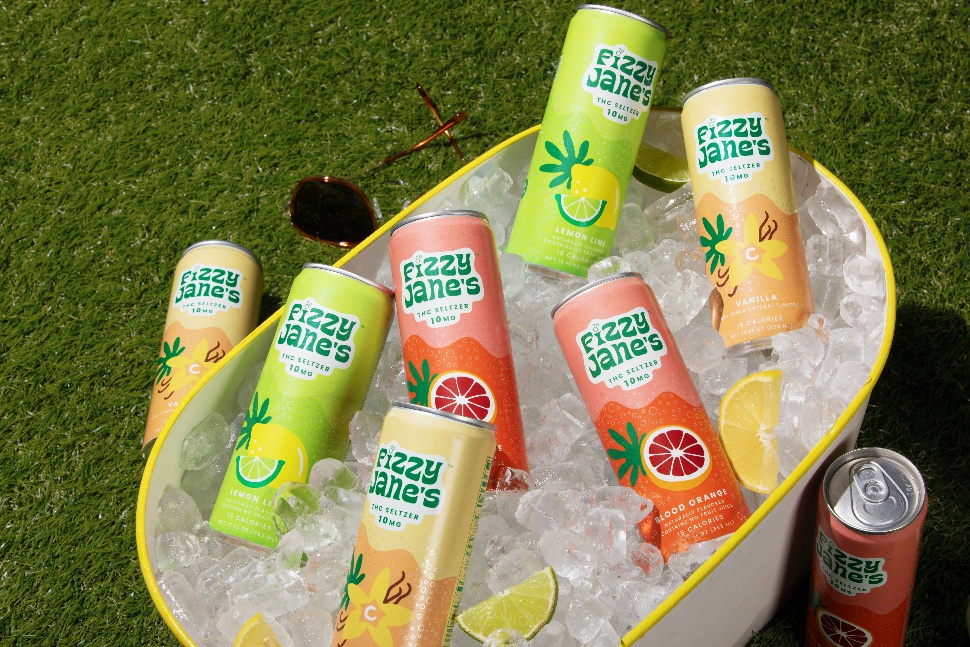
Core Insights - Tilray Brands, Inc. is expanding its hemp-derived Delta-9 THC beverage portfolio with new 10mg product formats from its brands Fizzy Jane's and Happy Flower [1][7] Product Offerings - Fizzy Jane's has introduced a 10mg HDD9 THC format to its sparkling seltzer line, which originally launched with a 5mg option. The new drinks are available in three flavors: Vanilla, Blood Orange, and Lemon Lime, with 15 calories or fewer per can [2][9] - Happy Flower, Tilray's first HDD9 beverage brand, is launching the "Super Bloom" Collection featuring 10mg versions of its popular flavors: Margarita, Strawberry Daiquiri, and Peach Bellini. This collection aims to provide a more robust experience while maintaining premium quality [4][8] - Happy Flower is also offering 6-count Variety Packs in both 5mg and 10mg formats, allowing consumers to sample different flavors [6] Market Availability and Pricing - Fizzy Jane's products retail for $15.99 for a 5mg 4-pack and $17.99 for a 10mg 4-pack, available online and in retail locations across 10 states including New Jersey, Ohio, and Florida [7] - Happy Flower's Super Bloom and Variety Packs are priced at $17.99 for 5mg 4-packs and $19.99 for 10mg options, available online and in select retailers [7] Consumer Trends - The THC beverage market is evolving, with consumers seeking variety in both flavor and experience. Tilray aims to meet this demand through its new product formats, designed for social occasions and summer enjoyment [7]


Tilray Expands Hemp-Derived Delta-9 THC Beverage Lineup with 10mg Drinks from Fizzy Jane’s and Happy Flower Brands
Globenewswire· 2025-08-12 11:00
Core Insights - Tilray Brands, Inc. is expanding its hemp-derived Delta-9 THC beverage portfolio with new 10mg product formats from its brands Fizzy Jane's and Happy Flower [1] Product Offerings - Fizzy Jane's has introduced a 10mg HDD9 THC format for its sparkling seltzers, which originally launched in a 5mg format. The new drinks are available in three flavors: Vanilla, Blood Orange, and Lemon Lime, with 15 calories or fewer per can. They are now sold online and in retail across 10 states including New Jersey, Ohio, and Florida [2][7] - Happy Flower, which launched with 5mg canned cocktails, is now offering the "Super Bloom" Collection featuring 10mg versions of its popular flavors: Margarita, Strawberry Daiquiri, and Peach Bellini. This new line aims to provide a more robust experience while maintaining high quality [4][7] - Happy Flower is also launching 6-count Variety Packs in both 5mg and 10mg formats, allowing consumers to sample different flavors. The Variety Pack is designed for summer enjoyment and is available online and in select retailers [6][7] Market Strategy - The company is responding to consumer demand for variety in the THC beverage market, focusing on both flavor and experience. The new formats are intended for social occasions and to enhance consumer engagement with the brand [7] - Pricing for Fizzy Jane's is set at $15.99 for a 5mg 4-pack and $17.99 for a 10mg 4-pack, while Happy Flower's Super Bloom and Variety Packs are priced at $17.99 for 5mg and $19.99 for 10mg options [7] Brand Positioning - Happy Flower is positioned as a modern, alcohol-free cocktail alternative, offering a flavorful experience with hemp-derived Delta-9 THC. Each can provides a calibrated dose of relaxation without alcohol or hangover effects [8] - Fizzy Jane's is marketed as a refreshing, lightly sparkling beverage infused with Delta-9 THC, designed for everyday enjoyment with low calorie content [9] Company Overview - Tilray Brands, Inc. is a leading global lifestyle and consumer packaged goods company with operations across multiple regions, including North America and Europe. The company aims to be a transformative force in the cannabis, beverage, wellness, and entertainment sectors [10][11]
Should You Buy, Hold or Sell TLRY Stock Post Q4 Earnings Release?
ZACKS· 2025-08-01 13:15
Core Insights - Tilray Brands reported its fourth-quarter results for fiscal 2025, with earnings exceeding estimates but sales falling short, both declining compared to the previous year [1][10] - Adjusted EPS was 2 cents, down 50% year over year, while revenues decreased by 2% to $224.5 million, primarily due to weak performance in cannabis and beverages [2] - The company expects adjusted EBITDA for fiscal 2026 to be between $62 million and $72 million, indicating a growth of 13-31% over the prior year [3] Financial Performance - Fiscal 2025 revenues reached $821 million, a 4% increase year over year, largely driven by non-cannabis business diversification [4] - Non-cannabis segments accounted for approximately 70% of total sales, with beverages contributing 29%, distribution 33%, and wellness 8% [5] - Beverage sales rose 19% year over year to $240.6 million, despite SKU rationalization efforts [6] Market Position and Strategy - Tilray has established a strong presence in the hemp market, holding nearly 60% branded market share in the U.S. and 80% in Canada [7] - The company is focusing on enhancing its global supply chain and cultivation footprint to meet growing demand, with expectations of benefiting from Project 420 in the second half of fiscal 2026 [8] - The cannabis segment saw a 9% decline in revenues to $249 million, with international cannabis sales growing 19%, although still a small portion of total cannabis sales [11] Competitive Landscape - Tilray faces intense competition from peers like Aurora Cannabis, Canopy Growth, and Curaleaf Holdings, all pursuing international expansion and cost optimization [12] - The company's stock has dropped 56% year to date, contrasting with a 6% growth in the industry, reflecting ongoing financial challenges and uncertainty around U.S. marijuana legalization [13] Investment Considerations - While Tilray's diversification into craft beverages and THC drinks shows strategic foresight, the decline in its core cannabis business and competitive pressures remain significant near-term challenges [15]