Home loan

Search documents
Home loan after 60: 5 ways pensioners can boost credit score, improve approval chances
MINT· 2026-03-30 12:35
Core Insights - The article emphasizes the challenges senior citizens face when applying for home loans, particularly due to fixed pension income and health uncertainties, while also highlighting strategies to improve their chances of securing loans [2][4]. Group 1: Home Loan Application Challenges - Senior citizens often encounter difficulties in securing home loans due to reliance on fixed income and higher health risks [2]. - Lenders closely analyze repayment potential, past debt history, and creditworthiness, making it crucial for seniors to improve their credit profiles [1][4]. Group 2: Strategies for Improving Loan Prospects - Strengthening credit profiles through strategies such as opting for joint home loans with younger co-applicants, reducing overall debt, and maintaining a healthy credit score is essential [2][7]. - A balanced debt-to-income ratio and a consistent repayment track record are critical for improving loan eligibility [2]. Group 3: Current Home Loan Rates - Home loan interest rates from leading institutions are as follows: - HDFC Bank: 7.90% onwards - State Bank of India: 7.25% – 8.70% - Axis Bank: 8.00% – 11.90% - ICICI Bank: 7.45% onwards - Kotak Mahindra Bank: 7.70% onwards [3]. Group 4: Importance of Credit Score - A strong credit score is vital for seniors as it signals financial discipline, improves eligibility, and can lead to better loan terms and interest rates [4]. Group 5: Tips for Boosting Credit Score - Key strategies for pensioners over 60 to enhance their credit score include: 1. Clearing high-value debt to improve credit utilization [7]. 2. Ensuring timely payments on all debts to build creditworthiness [7]. 3. Considering joint home loans with a high-scoring co-applicant [7]. 4. Avoiding multiple credit applications in a short time to prevent negative perceptions [7]. 5. Opting for shorter repayment terms to reduce overall repayment time and risk perception [7]. Group 6: Financial Advisory - Consulting with a certified financial advisor before taking on new loans is recommended to align decisions with long-term economic objectives [8].


Home loan book set to cross ₹10 lakh cr next fiscal year on strong demand: SBI chief
MINT· 2025-12-21 05:34
Core Insights - State Bank of India (SBI) is expected to achieve a home loan portfolio exceeding ₹10 lakh crore in the next fiscal year, driven by strong demand and a favorable low-interest-rate environment [1][2] - SBI's home loan portfolio recently surpassed ₹9 lakh crore, making it the largest mortgage loan provider in India [2] - The bank's home loan book grew by 14.4% year-on-year, closing FY25 at ₹8.31 lakh crore [2] Group 1: Home Loan Portfolio Growth - SBI's home loan portfolio has steadily increased from ₹1 lakh crore in March 2011 to ₹9 lakh crore in November 2025 [3] - The bank has maintained non-performing assets (NPAs) in the home loan segment at less than 1%, with a gross NPA of 0.72% at the end of FY25, one of the lowest in the banking sector [3] Group 2: Overall Credit Growth - SBI has revised its overall credit growth target from 12% to 14% for the current fiscal year, anticipating robust growth particularly from the Retail, Agriculture, and MSME (RAM) segments [4][5] - The RAM segment, which constitutes 67% of SBI's total loan portfolio, crossed the ₹25 lakh crore milestone in September [4] - The MSME sector is experiencing growth rates of 17-18%, while agriculture and retail are growing at around 14% [5]

SBI home loan EMIs to reduce as PSU bank cuts lending rates: Check latest SBI EBLR, MCLR, base rates
The Economic Times· 2025-12-13 02:33
Group 1: MCLR Adjustments - SBI has revised its Marginal Cost of Funds-based Lending Rate (MCLR) across various tenors, resulting in modest reductions for borrowers [1][6] - The overnight and one-month MCLR rates have been cut from 7.90% to 7.85% each, while the three-month rate has been trimmed from 8.30% to 8.25% [1][6] - The six-month MCLR now stands at 8.60%, down from 8.65%, and the one-year benchmark has been lowered from 8.75% to 8.70% [1][6] - Two-year and three-year MCLR rates have been reduced by 5 basis points each, now at 8.75% and 8.80% respectively [1][6] Group 2: EBLR and RLLR Adjustments - SBI has announced a reduction in its External Benchmark Lending Rate (EBLR) from 8.15% + Credit Risk Premium (CRP) + Bank Spread (BSP) to 7.90% + CRP + BSP, effective December 15, 2025 [3][5] - The benchmark portion of EBLR has decreased by 25 basis points, with the final rate depending on individual CRP and BSP [3][5] - The Repo Linked Lending Rate (RLLR) has been lowered from 7.75% + CRP to 7.50% + CRP, also reflecting a 25-basis point cut [4][5] Group 3: BPLR and Base Rate Adjustments - SBI has revised its Benchmark Prime Lending Rate (BPLR) to 14.65% per annum [6] - The Base Rate has been adjusted to 9.90%, effective December 15, 2025 [6] - These reductions in lending rates are expected to ease borrowing costs and lower EMIs for both retail and corporate customers [6]

Fixed-Term Employment (FTE) and Gratuity Rules New Labour codes
SIMPLE TAX INDIA· 2025-11-30 07:35
Group 1 - The document contains various references to tax-related topics, including due dates for ETDS returns and changes in excise duty rates, indicating ongoing regulatory updates in the financial sector [1][2] - There are mentions of specific financial instruments such as fixed deposits and mutual funds, highlighting investment opportunities available to individuals and businesses [2] - The document discusses the implications of the Goods and Services Tax (GST) and its impact on various sectors, suggesting a significant shift in the tax landscape [2] Group 2 - The document outlines the importance of compliance with tax regulations, emphasizing the need for timely filing of returns and payments to avoid penalties [1][2] - It includes references to financial planning and investment management, indicating a growing focus on personal finance and wealth management strategies [2] - The document also touches on the role of financial services in supporting economic growth, suggesting that the sector is adapting to new challenges and opportunities [2]
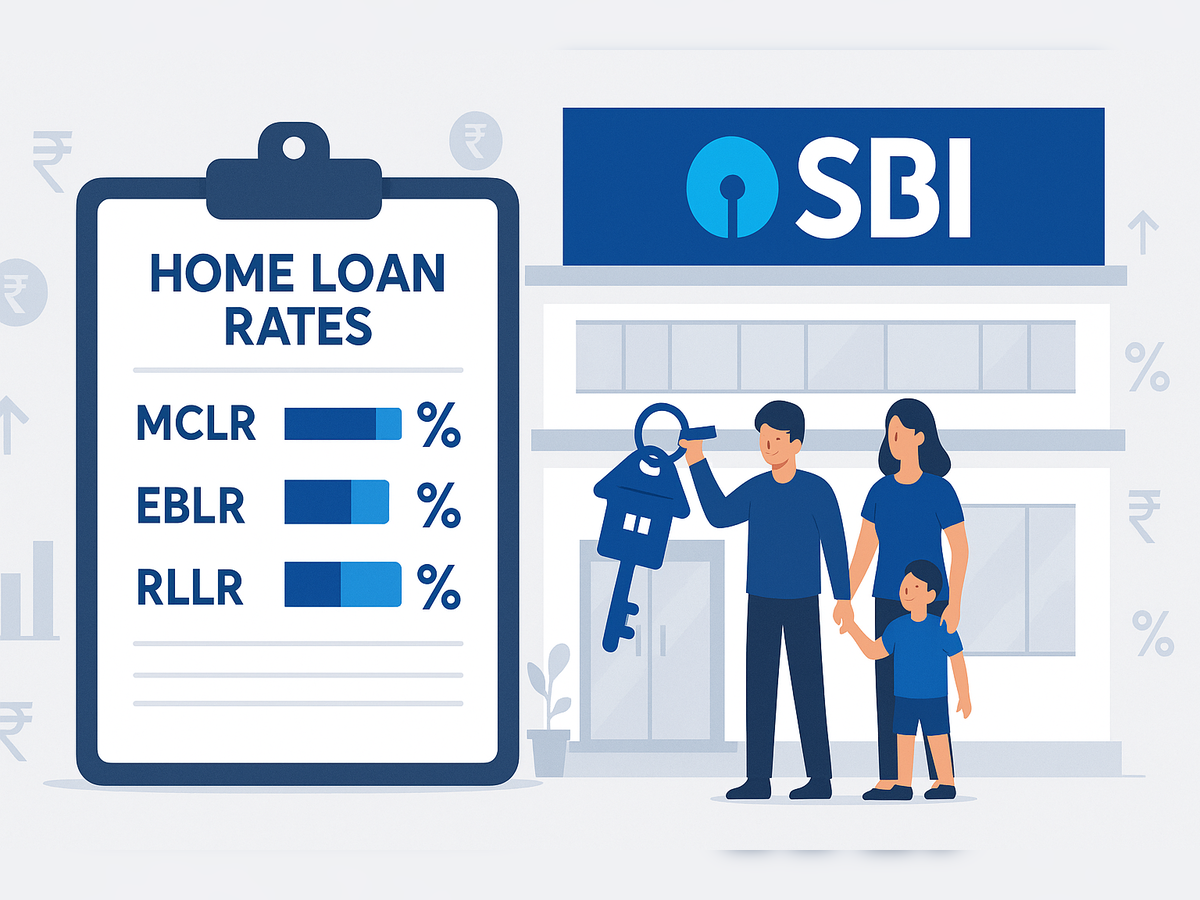
SBI loan interest rates September 2025: Check State Bank of India’s latest home loan rates, MCLR, EBLR and RLLR here
The Economic Times· 2025-09-15 06:23
Core Viewpoint - State Bank of India (SBI) has decided to keep its key lending rates unchanged for September 2025, indicating a stable interest rate environment for borrowers [1] Lending Rates Summary - The Marginal Cost of Funds based Lending Rate (MCLR) remains between 7.90% and 8.85% [1] - Home loan interest rates are set between 7.50% and 8.70% [1] - The External Benchmark Linked Rate (EBLR) is established at 8.15% plus the Credit Risk Premium (CRP) and Benchmark Spread (BSP) [1] - The Repo Linked Lending Rate (RLLR) is fixed at 7.75% plus the CRP, effective from June 15, 2025 [1]
Bank gold loans on a tear as customers want more for their pledge
MINT· 2025-09-15 00:00
Core Insights - The surge in gold loans is driven by rising gold prices and a tightening of unsecured lending options like personal loans and credit cards [1][4][12] Group 1: Gold Loan Market Dynamics - In FY26, banks disbursed ₹85,432 crore in gold loans, surpassing home loans which totaled ₹70,675 crore [2] - Gold prices increased by 23% this fiscal year, reaching ₹109,390 per 10 grams, allowing borrowers to secure larger loans against the same amount of gold [3] - Gold loan disbursals grew by 40.9% since the end of March and 122% year-on-year, while home loans only rose by 2.3% since end-March [5] Group 2: Borrower Behavior and Trends - Approximately 60-70% of gold loan customers are repeat borrowers, indicating a reliance on gold loans for urgent financial needs [6] - The tightening of unsecured lending channels has led small businesses to utilize gold loans for working capital [4] Group 3: Competitive Landscape - Traditional non-bank financial companies (NBFCs) have seen increased competition from banks entering the gold loan market, with major public sector banks like SBI and BoB actively promoting gold loans [7][11] Group 4: Regulatory Environment - The Reserve Bank of India (RBI) has allowed banks to lend more against gold by increasing the loan-to-value ratio, contributing to the growth of the gold loan sector [10] - Regulatory changes are addressing the classification of gold loans, preventing banks from misclassifying regular loans as agricultural loans, which previously allowed for higher lending limits [14][15]

Kvika banki hf.: Joint press release from Kvika and Arion
Globenewswire· 2025-07-21 16:00
Merger Announcement - Kvika banki and Arion Bank have initiated discussions on merging, signing a letter of intent to combine their strengths and create a robust financial institution [1][2] Merger Process - The merger is one of the largest in the Icelandic financial market, with the process expected to take time and regular updates to be provided [2] - Initial steps include due diligence reviews and merger negotiations, with preliminary discussions planned with the Icelandic Competition Authority in August [3] - The aim is to finalize contracts and complete the due diligence review in the coming months, with formal announcements to regulators and shareholder meetings contingent on successful preliminary discussions [3] Benefits of the Merger - The merger is expected to enhance banking services for retail, corporate, and investor customers, providing opportunities for risk distribution and diverse revenue streams [4] - It aims to create a more effective business model and improve efficiency within the Icelandic financial market [4] Market Position - Kvika has been a competitive player in recent years, particularly through its brand Auður, which has significantly impacted the deposits market and successfully entered the home loan market [5] - Post-merger, both companies' brands will continue to play a crucial role for customers [5]