
INMO Go3

Search documents
中国AI眼镜军团CES霸场,27家公司组团秀肌肉,2026百镜大战
Xin Lang Cai Jing· 2026-01-09 09:01
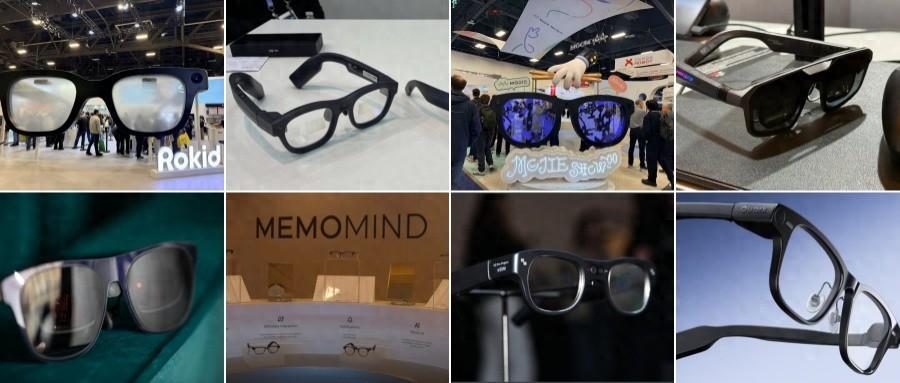
Core Insights - The CES 2023 showcased a significant presence of Chinese manufacturers in the smart glasses and VR/AR market, indicating a shift in industry dynamics with local players gaining traction [2][44] - The Chinese smart glasses market is projected to see substantial growth, with shipments expected to reach 623,000 units by Q3 2025, reflecting a year-on-year increase of 62.3% [4][46] - The event highlighted the competitive landscape, with numerous companies unveiling innovative products, suggesting a "battle of the glasses" in the coming years [42][85] Group 1: Major Players - Rokid attracted attention with its giant glasses display and launched the Rokid Style, claimed to be the lightest full-feature AI glasses at 38.5 grams, starting at $299 [7][48] - INMO introduced two key products: INMO Go3, which offers real-time translation in 261 languages, and INMO AIR3, the first mass-produced 1080P wireless AR glasses, which sold out quickly [9][53] - XREAL showcased the ROG Xreal R1, the first gaming glasses with a 240Hz refresh rate, and announced the upcoming XREAL 1S, featuring a proprietary chip for 3D content conversion [14][57] Group 2: Cross-Industry Innovations - Alibaba presented the Quark AI glasses S1, which allows interaction through voice commands and boasts a battery life of 7 hours, powered by dual flagship chips [22][66] - XGIMI launched its MemoMind AI glasses, marking its entry into the smart glasses market with two series [27][70] Group 3: Emerging Startups - Gyges Labs introduced the world's first AI note-taking ring, which gained significant media attention for its unique functionality [30][73] - MicroVision unveiled the M6 series of AR glasses, which feature hardware that can be sustainably upgraded without replacing the entire device [32][75] - Various smaller companies showcased innovative products, contributing to a diverse and competitive landscape in the smart glasses sector [40][83]

干货满满!2025自发光显示产业研讨会亮点一览
WitsView睿智显示· 2025-10-30 10:20
Core Viewpoint - The self-emissive display industry is experiencing rapid advancements, particularly in Micro LED and Mini LED technologies, which are expected to drive significant growth and innovation in various applications, including automotive displays, wearables, and cinema technology [2][4][62]. Group 1: Micro LED Developments - Micro LED technology is accelerating commercialization in wearable devices, large displays, and automotive applications, despite challenges such as high costs and power consumption [4][6]. - Major manufacturers like Samsung, LG, and BOE are prioritizing the mass production of Micro LED displays larger than 100 inches, focusing on cost reduction through chip size miniaturization [4][6]. - Micro LED is also showing potential in non-display applications, such as adaptive headlights and AI server interconnects, with major companies like Apple and Microsoft evaluating these technologies [6][8]. Group 2: MIP Technology - MIP technology is enabling the display industry to innovate by achieving "packaging as a module," which addresses cost advantages and modularity, facilitating broader market applications [8][11]. - The MIP technology is evolving faster than expected, moving from niche products to commercial viability, with applications expanding into automotive displays and home theater systems [8][11]. Group 3: Industry Challenges and Compliance - The LED display industry faces challenges such as irrational competition, lack of standards, and safety compliance issues, with a call for a shift towards high-quality development and compliance with regulations [14][16]. - The prevalence of non-compliant products poses risks to public safety, necessitating stricter enforcement of regulations and industry standards [14][16]. Group 4: Cinema Technology Innovations - The cinema industry is leveraging LED technology to enhance viewing experiences, with solutions like the HeyLED movie screen that surpass traditional DLP technology in brightness and contrast [22][25]. - The integration of immersive live streaming and AIGC technology is expected to redefine cinema experiences and expand operational capabilities [25][22]. Group 5: Market Outlook - The global LED display market is projected to grow slightly to $7.5 billion by 2025, with significant contributions from the LED integrated machine and movie screen segments [62][64]. - The competition is intensifying as major LCD manufacturers enter the LED display market, leading to a more defined industry structure and increased pressure on smaller companies [62][64]. Group 6: Emerging Technologies - Innovations in Micro LED technology, particularly in AR/MR applications, are being driven by advancements in silicon substrate GaN technology, which is expected to facilitate larger substrate sizes and lower costs [32][34]. - The introduction of new driving technologies, such as the Infinity MLED solution, is enhancing display performance through improved brightness, color accuracy, and energy efficiency [37][39]. Group 7: Smart Glasses and AI Integration - The smart glasses market is rapidly evolving, with AI applications poised to address existing challenges and enhance user experiences, particularly in the consumer market [56][58]. - The development of AI-powered glasses is seen as a stepping stone towards broader AR integration, with a focus on lightweight designs and practical applications [56][58].
