LongStream

Search documents
破解在线长时序重建难题!纯视觉、单卡实时的公里级流式3D重建|CVPR'26
量子位· 2026-03-24 04:59
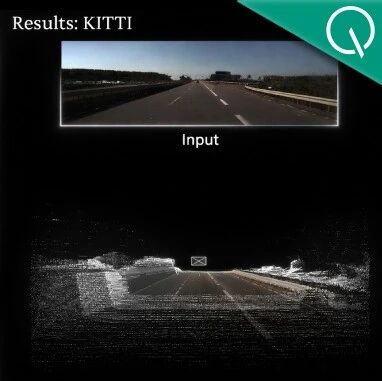
Core Viewpoint - The article discusses the challenges and advancements in 3D reconstruction for long sequences in real-time settings, highlighting the introduction of LongStream as a solution to these challenges [1][2]. Group 1: Challenges in Long Sequence 3D Reconstruction - Existing methods perform well in short sequences but struggle with real-time long video scenarios, leading to significant issues in accuracy and stability [2]. - Key problems include reliance on the first frame for pose anchoring, attention sink phenomena, and KV cache pollution, which degrade performance over time [5][6]. Group 2: Innovations of LongStream - LongStream introduces a Gauge-decoupled streaming visual geometry architecture that addresses the limitations of traditional methods by: 1. Eliminating first-frame anchoring, allowing for relative pose predictions that enhance robustness in long sequences [10]. 2. Implementing cache-consistent training to minimize the training-inference gap and reduce attention sink effects [11]. 3. Utilizing periodic cache refresh to mitigate memory saturation and geometric drift, maintaining reconstruction consistency [11]. Group 3: Experimental Results - LongStream demonstrates competitive performance across various benchmarks, including KITTI, Waymo, and TUM-RGBD, achieving stable reconstruction with low memory usage and maintaining 18 FPS streaming inference [12][16]. - In comparison to baseline methods, LongStream shows significantly lower Average Trajectory Error (ATE) across multiple datasets, indicating superior long-sequence stability and accuracy [17][18]. Group 4: Importance of LongStream - The significance of LongStream lies in its ability to support continuous online 3D world modeling, which is crucial for applications in robotics, autonomous driving, AR glasses, and embodied AI [19][21]. - This approach shifts the paradigm from offline reconstruction to real-time world maintenance, making it a vital development for future visual systems [22].