MOTOmed康复自行车

Search documents
让瘫痪患者重新行走!脊髓电刺激+康复机器人 | Science子刊
机器人大讲堂· 2025-10-26 10:03
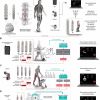
Core Insights - The research team from EPFL has developed an innovative implantable closed-loop spinal neuroprosthesis system that successfully helps paraplegic patients regain walking ability by integrating spinal cord electrical stimulation with rehabilitation robots [1][3]. Rehabilitation Technology - Rehabilitation robots have made significant advancements over the past decades, but they face a fundamental challenge: paraplegic patients cannot generate sufficient muscle activity [5]. - The core mechanism of gait rehabilitation is to promote activity-dependent reorganization of the nervous system, which requires strong, coordinated, and repetitive activation of the neuromuscular system [5]. - Traditional solutions like Functional Electrical Stimulation (FES) have limitations, including cumbersome electrode placement and muscle fatigue, and they do not accurately simulate natural neural control patterns [5][6]. Innovative Approach - The Swiss team's approach involves activating spinal motor neurons through epidural electrical stimulation (EES) rather than directly stimulating muscles, leading to more natural and coordinated muscle activity patterns [6]. - The developed system can adjust stimulation parameters in real-time based on different rehabilitation robots and exercise modes, achieving "activity-dependent biomimetic electrical stimulation" [6]. Closed-Loop Control System - A flexible and precise closed-loop control system is essential for the integration of spinal cord stimulation and rehabilitation robots [8]. - Key components include an implantable pulse generator and an electrode array with 16 electrodes for precise targeting of spinal segments controlling lower limb muscles [8]. - A real-time control platform allows for adjustments based on external sensor signals, with a latency of only 134±26 milliseconds [8]. Sensor Technology - The system employs various sensor modalities, including: - Inertial Measurement Units (IMUs) for detecting limb movement and key gait events [9]. - Ergonomic buttons for patients to actively trigger stimulation [9]. - Force-sensing pedals for bicycle training to measure applied force and adjust stimulation intensity accordingly [9]. Clinical Testing and Results - The system was tested on five spinal cord injury patients, covering a range of rehabilitation activities from bed rest to outdoor activities [11]. - In tests with the Lokomat exoskeleton, patients showed significant muscle activity improvement and better timing of muscle activation, indicating increased active participation in movement [12]. - The system allowed patients to walk independently on various terrains and even participate in a charity run, demonstrating its effectiveness in real-world scenarios [12][14]. Long-Term Rehabilitation Effects - Long-term follow-up of four chronic spinal cord injury patients revealed improvements in lower limb motor scores, even after electrical stimulation was turned off, indicating true rehabilitation effects [14][15]. - Patients gradually reduced their reliance on robotic assistance, showcasing the combined effect of robotic support and electrical stimulation [17]. - The technology does not require modifications to existing rehabilitation equipment, making it easier for therapists to implement [18]. Future Directions - The current neurostimulator is adapted from deep brain stimulation devices and needs a dedicated hardware platform for spinal stimulation [18]. - Larger clinical trials are necessary to validate the findings, but the research opens new avenues for rehabilitation of spinal cord injury patients [18].